
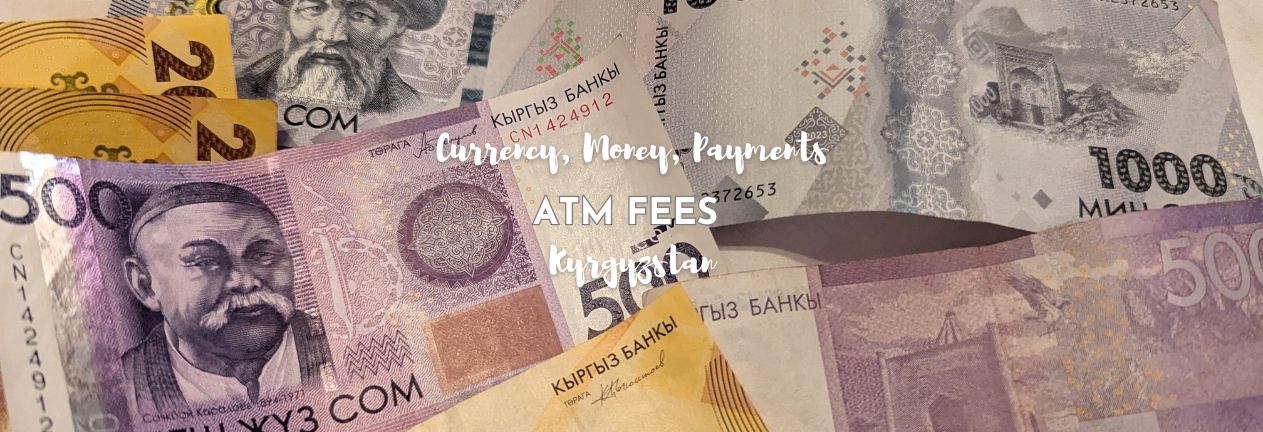
Traveling in Kyrgyzstan is straightforward once you understand how the local currency works. The country is cash-based, especially outside Bishkek and Osh, though ATMs are reasonably available in cities. The official currency is the Kyrgyzstani som, and while dollars are handy to bring, you’ll be using soms for everyday expenses, such as marshrutkas, food, and guesthouses. With the right mix of cash and card, you’ll avoid stress and enjoy Kyrgyzstan’s stunning landscapes. Here’s my guide to paying, currency, and ATM fees in Kyrgyzstan.
THIS POST MAY CONTAIN COMPENSATED AND AFFILIATE LINKS MORE INFORMATION IN OUR DISCLAIMER
PRACTICAL TRAVEL TIPS
- 🛡️ Get Travel Insurance: Civitatis includes medical expenses, repatriation, theft, luggage delays. No deductibles or upfront payments. Get a quote here.
- 🛏️ Sea view? Laundry? Private bath? Book a Room.
- 🔌 Be ready for the plug, socket & power situation.
- 📶 Get online EASILY & cheaply – One eSim for the world. Data never expires
Kyrgyzstan Currency at a Glance
- Currency: Kyrgyzstani som (KGS) – note this is spelled “COM” in Cyrillic.
- Currency symbol/code: KGS
- Credit cards: Visa and Mastercard are accepted in Bishkek, Osh, big hotels, and modern cafés/restaurants, but are rare elsewhere. American Express is rarely accepted.
- Contactless/mobile payments: Limited in major cities, but not widely available elsewhere.
- ATMs: Widely available in cities, limited in rural/mountain areas
- Cash needed for: Marshrutkas, markets, small shops, homestays
- Best to carry: US dollars (clean and new notes) for exchange, use KGS for daily use
- Tipping: Not expected, but rounding up small amounts is appreciated
What is the Currency in Kyrgyzstan?
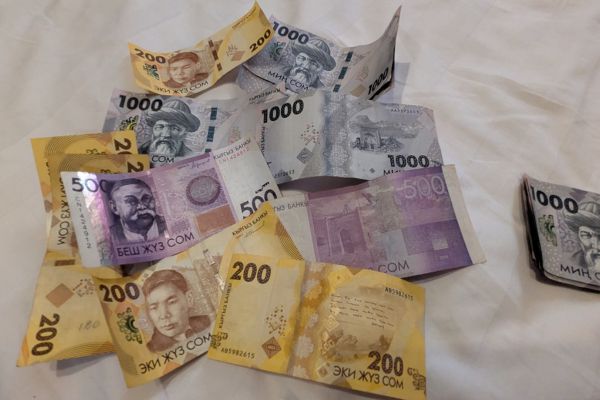
The Kyrgyzstani som (KGS) is the official currency. One som is divided into 100 tyiyn, though coins are uncommon. Banknotes range from 20 to 5,000 soms, with 50, 100, and 200 soms used daily. As of early 2026, 1 US dollar equals roughly 87-90 soms. Kyrgyzstan is inexpensive by global standards, so your cash should go a relatively long way.

Practicalities of Kyrgyzstan Payments
Whether you’re trekking, hiking, exploring the national parks of Kyrgyzstan, or the cities, it’s important to understand the details of how to pay for your travels. Here are the practicalities of payments, cash, cards, and Kyrgyzstani currency. If you’re traveling independently in Kyrgyzstan, then you should read our guide to independent travel in Kyrgyzstan here.
Paying in Kyrgyzstan
Cash is the default everywhere outside big cities in Kyrgyzstan. Public transport, the bazaars, guesthouses, and petrol stations are almost always cash-only. You should keep smaller notes for drivers and markets, as well as making it easier on you and them, it’s a safer way to pay. Kyrgyzstan is generally safe, but we always follow the rules of not displaying cash or wealth when we travel. There are some mobile payments that exist but are mostly used by locals with Kyrgyz SIMs and bank accounts. For foreign travelers, cash is still king. An eSIM can’t give you a Kyrgyz number to use for this mobile payment option, but it’s still invaluable – read my guide to SIM cards in Kyrgyzstan here. xxxx
Exchanging Money in Kyrgyzstan
It is a good idea to bring some cash with you when you’re traveling through Central Asia, and US dollars are still the most useful foreign currency to bring, followed by euros. If you’re paying for adventures like the Pamir Highway, then you should confirm with your tour company what currency they want you to pay in before converting your cash. Foreign Exchange offices are plentiful in Bishkek, Osh, and Issyk-Kul region towns like Karakol. Rural areas may not have formal exchanges, so swap money before heading to the mountains. All notes that you want to swap must be in excellent condition — old or marked dollars will be refused. Rates in exchange offices are generally good, better than at airports or hotels.
If you’re arriving from Tajikistan via the Pamir Highway, then you’ll want to exchange any Tajik somoni as soon as you can. Once you get beyond Osh, you’ll struggle to exchange them. In for currency exchanges in Osh, head for Gapar Aytiev (see here) or the currency exchange by the Pekin Hotel for the exchanges that accept Tajik somoni.
If you’re leaving Kyrgyzstan, like we did, to go from Bishkek to Almaty, then there is a currency exchange at the bus station. You’ll want to have some Kazakh tenge for when you cross the border, so it’s a good idea. However, they speak little English, gave us the wrong amount of currency (in our favor), and would NOT engage after we exchanged and tried to tell them the amount was wrong.
Using Credit Cards in Kyrgyzstan
Credit and debit card use is increasing in Bishkek and Osh, especially in international hotels, supermarkets, and some cafés. Visa is generally more widely accepted than Mastercard. Outside the cities, assume you’ll need cash for everything. Even in places that take cards, the machines sometimes go down, so carry soms as backup.
We paid for our hotel in Osh (the Ave Hotel, I recommend it) with a card. In Bishkek, we stayed in an apartment (it’s way easier to do your laundry with your own washing machine!), and despite booking it through Booking.com could only pay the owner in cash (US Dollars).
Contactless payment is very limited; I’ve only read reports about it, but haven’t seen it at all.
ATMs in Kyrgyzstan
ATMs are widely available in Bishkek, Osh, and larger towns, including Issyk-Kul resorts. You’ll find machines at banks, malls, and supermarkets, and they tend to be clearly marked on Google Maps. Some dispense both soms and US dollars.

In mountain villages and yurt camps, ATMs don’t exist, so stock up on cash before traveling. Machines generally work with Visa and Mastercard, but daily withdrawal limits vary.
If you need more cash than the ATMs will give you, then go inside a bank branch with your card and passport and take cash out from the teller.
What are the ATM withdrawal limits in Kyrgyzstan?
Most ATMs in Kyrgyzstan have a maximum limit per transaction of 20,000 – 25,000. The most we could get out (with either Visa or Mastercard) on each transaction was 20,000. That said, you can make multiple withdrawals. The limit on the number of withdrawals depends on the machine. If you need that much cash, then I recommend you head inside a bank branch and ask the teller to make a withdrawal. Take your passport.
Do ATMs in Kyrgyzstan have language options?
Yes. ATMs in Kyrgyzstan usually have the option of Kyrgyz, Russian, and English.
What currency can you withdraw from Kyrgyzstan ATMs?
Kyrgyzstan ATMs dispense Kyrgyzstan Som (KGS). Some ATMs also offer the option to withdraw U.S. dollars.

ATM Fees by Bank (Kyrgyzstan)
| ATM Provider | Typical Withdrawal Limit | Observed Fees | Notes | Date of Info |
| Companion Bank (Komnahboh) | 20,000 | No fees | Both KGS and USD are available, but NEVER had any cash | September 2025 |
| Optima Bank | 20,000–30,000 KGS | 2% | Large network in Bishkek and Osh. Reliable for foreign cards. | 2025 |
| Demir Bank | 20,000 KGS | 600 KGS fee on 20k, 300 KGS fee on 10k | Turkish-owned, with good international connectivity. | September 2025 |
| KICB (Kyrgyz Investment & Credit Bank) | 20,000–25,000 KGS | 2% | Was free until 2021 | 2025 |
| RSK Bank | 15,000–20,000 KGS | 2% | State-owned, common ATMs are less reliable in rural areas. | 2025 |
| Bakai Bank | 20,000 KGS | 2% | No longer free withdrawals | 2025 |
| Keremet Bank | 10,000–15,000 KGS | 2–3% | Smaller network, mostly in Bishkek. | 2025 |
*Note: Fees are based on our experience and personal reports. If you have more information, drop a comment, or send an email to sarah at asocialnomad.com, and we’ll update this community resource.
Withdrawal limits vary by machine and card.*
Tips for Managing Money in Kyrgyzstan
- Bring USD in clean, crisp notes to exchange.
- Change Tajiki somoni in Osh, if you’re coming from the Pamir
- Withdraw cash before going into the mountains or small towns.
- Keep small soms for drivers, shops, and homestays.
- Don’t rely on cards outside Bishkek and Osh. – or for getting between Osh and Bishkek, you’ll need to pay cash for this trip.
- Always have backup cash, as ATMs can be empty during holidays or weekends.
FAQs about Cash, Currency, and ATMs in Kyrgyzstan
Here are the questions that we had and questions we’ve answered since putting this guide on Kyrgyz ATMs and currency. If you’ve got more questions, then drop us a comment.
Are there foreign banks and ATMs in Kyrgyzstan?
Yes. But you won’t find many of the banks that you’re used to at home. There are no Citibanks, Barclays, HSBC, or Bank of America banks here.
Are there fee-free ATMs in Kyrgyzstan?
We only found on – the Companion Bank (Komnahboh) – but we were never able to get cash from it, so I don’t think that counts! Let me know if you find differently!
Are there limits on what cash you can bring into Kyrgyzstan?
Yes. You can bring up to the equivalent of USD$3,000 into (or out of) Kyrgyzstan without a declaration. If you’re moving money of more than that, then you must declare it to customs.
Are there ATMs at Bishkek Airport?
Yes, you’ll find ATMs at Bishkek Airport. They are just after customs, and there are several of them. There is also a money exchange there.
Final Words on Money, Currency, and ATM Fees in Kyrgyzstan
The som is the currency you’ll use daily in Kyrgyzstan, and cash is essential almost everywhere. ATMs are easy to find in Bishkek and Osh, but you won’t see them in mountain areas, so plan ahead. We had no problems paying for things in Kyrgyzstan, once we’d planned how to get cash, changing our Tajiki somoni and finding an ATM in Osh and Bishkek. With a combination of soms for everyday use and US dollars as backup, it worked well for our travel through Kyrgyzstan.
ASocialNomad is a participant in the Amazon Services LLC Associates Program, an affiliate advertising program designed to provide a means for sites to earn advertising fees by advertising and linking to amazon.com, amazon.co.uk, and amazon.ca. Amazon and the Amazon logo are trademarks of Amazon.com, Inc. or its affiliates. As an Amazon Associate, I earn from qualifying purchases.

