
If you’re anything like me, packing for a trip always includes that last-minute scramble to find the right charger or adapter. And if you’re heading to Vietnam, you’ll definitely want to make sure your electronics will actually work once you get there. From keeping your phone charged for Google Maps and Grab rides to powering your camera or laptop, a travel adapter isn’t just a “nice-to-have”—it’s a must. In this guide, I’ll walk you through exactly what kind of electricity setup Vietnam uses, what type of plugs and voltage to expect, whether your devices will work as-is, and what kind of adapter or converter (if any) you’ll need to bring. I’ll also compare it to what’s used in countries like the US, UK, Australia, and across Europe—so no matter where you’re coming from, you’ll know what to do.
THIS POST MAY CONTAIN COMPENSATED AND AFFILIATE LINKS MORE INFORMATION IN OUR DISCLAIMER
Vietnam has its own electrical standards, and unless you’re traveling from a country that uses the same voltage and plug types, you’re probably going to need some kind of adapter (and maybe even a converter). The good news? It’s not as complicated as it sounds—and I’ve broken it all down for you right here.
TOP PRODUCT PICK
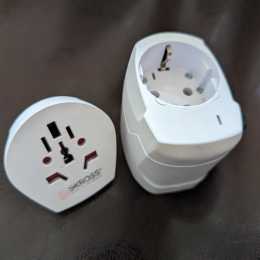
This fabulous adapter will cover you no matter where you’re from. And it’ll cover you wherever you’re going to.
This isn’t a tech manual—it’s a simple, practical guide for real travelers who just want to keep their phones charged and their gadgets safe. I’ll keep things jargon-free, explain everything clearly, and help you avoid wasting money on the wrong gear or blowing a fuse (literally).
What’s the Electricity Supply Like in Vietnam?
Let’s start with the basics—Vietnam runs on a 220-volt electricity supply, and the frequency is 50 Hz. That’s the standard across the country, whether you’re in a high-rise hotel in Ho Chi Minh City or a beach bungalow in Phu Quoc. The power is relatively stable in cities and major tourist areas, but in rural zones, don’t be surprised by the occasional blackout or flicker. It’s not usually a big deal—just something to keep in mind if you’re charging up overnight.
If you’re coming from a country like the United States, where the voltage is 110-120V, that’s a significant difference. Some of your devices might be fine with that change—others, not so much. We’ll cover that more when we talk about converters, but for now, know that the voltage can matter depending on what you’re plugging in.
One thing to note is that not all sockets are well-grounded in Vietnam. That means sometimes you’ll plug something in and feel a little buzz or tingling sensation on metal surfaces like your laptop case. It’s not dangerous, but it is weird if you’ve never felt it before. It’s just a grounding issue, and it’s really common across Southeast Asia.
The Vietnam Electrical Standards (Voltage, Plugs and Sockets)
Vietnam uses 220 volts and 50 Hz frequency, which puts it in line with most of Europe, Asia, and Australia. If your devices are dual voltage (and most phones, tablets, cameras, and laptops are these days), you’re good to go. Just check your charger—if it says something like “Input: 100–240V, 50/60Hz,” it’ll work in Vietnam without a converter. You’ll just need the right plug adapter.
Now, let’s talk about plug types. Vietnam commonly uses Type A, Type C, and Type D plugs. Here’s a quick breakdown:
- Type A has two flat pins (used in North America and Japan).
- Type C has two round pins (common across Europe).
- Type D is the one with three round pins
The good news? Most of the outlets in Vietnam are really forgiving. They’re designed to accept a mix of plug shapes, which means your Type A or Type C charger will probably slot right in without too much drama. But it’s not guaranteed—some hotels or cafés might only support the round pin styles. That’s why having a universal adapter is a safe bet.
As for sockets, you’ll mostly see the two-pin style—either recessed or flat. Very few places will have grounded three-prong sockets like you’d find in the UK or the US. So if your device has a chunky three-prong plug, it’s going to need a bit of help.
So to recap:
- Voltage = 220V
- Frequency = 50 Hz
- Plug types = A, C, F
- Most devices work with an adapter—no need to panic
Next, we’ll talk about what to do if your device isn’t dual voltage—because yes, that matters.
Does It Matter If the Voltage Is Different in Vietnam from Your Home?
Yes—it definitely matters. If the voltage in Vietnam doesn’t match what your device is built for, and you plug it in without thinking, you could fry your electronics in seconds. Not exactly the souvenir you were hoping for, right?
As we mentioned, Vietnam runs on 220 volts. But if you’re coming from countries like the USA, Canada, or Japan, your standard voltage back home is usually 110–120V.
The key thing to check is whether your device is dual voltage. That means it can handle a range, usually from 100 to 240 volts. Most modern electronics—like smartphones, tablets, laptops, and camera chargers—already are. You can find this info printed on the charger itself, in tiny lettering. It’ll say something like: Input: 100–240V, 50/60Hz
If your device says that, you’re safe. All you’ll need is a plug adapter—not a voltage converter.
Now, here’s where it gets tricky. If you’re traveling with older appliances (think hair dryers, curling irons, or electric razors), many of those aren’t dual voltage. Plug one of those into a 220V socket without a converter and you’ll either kill the device or trip the power. (Worst case: flames. Not fun.)
So yes—voltage matters, but it’s not scary once you know what you’re dealing with. Check your gear, bring a proper adapter, and leave the non-dual-voltage gadgets behind unless you’ve got a solid converter. Up next, we’ll talk about exactly what kind of converter you need—if any.
What Converter Do You Need for Vietnam
Let’s clear up one of the most confusing things about charging devices abroad—do you actually need a converter in Vietnam? For most travelers, the answer is no. But for some, it’s a definite yes.
Here’s the rule of thumb:
If your device isn’t dual voltage, and you’re coming from a country that uses 110–120V (like the US, Canada, or Japan), then yes—you’ll need a voltage converter to safely use that device in Vietnam’s 220V power supply.
Voltage converters do exactly what they sound like—they convert the local voltage (220V) down to what your device is expecting (usually 110V). Without one, a single plug-in could fry your gear or even blow a fuse. Not the kind of drama anyone wants on vacation.
Your phone, laptop, tablet, camera, Kindle, and even electric toothbrush chargers are probably dual-voltage already. Just check the fine print on the plug or charger. If it says 100–240V, you’re good—just bring a plug adapter and you’re all set.
So what does need a converter? Typically, high-powered appliances like:
- Hair dryers
- Curling irons or straighteners
- Electric shavers
- Older power tools or specialty electronics
If you absolutely must bring one of these, you have two choices:
- Buy a dual voltage version before your trip (many travel dryers have a switch).
- Bring a travel voltage converter, but keep in mind they can be bulky, heavy, and don’t always work well with high-wattage devices.
The Type of Plugs You Need in Vietnam
Let’s talk plug types—because even if your device is dual voltage, it’s not much use if the prongs don’t fit the wall socket. Vietnam uses a mix of plug types, and depending on where you’re coming from, yours might work… or it might not.
Here’s the deal: in Vietnam, you’ll commonly find Type A, Type C, and Type D sockets.
- Type A is the two flat pins—like what’s used in the USA and Japan.
- Type C has two round pins—common across Europe.
- Type D has three round pins
A lot of Vietnamese sockets are designed to accept multiple plug shapes, especially in newer buildings or hotels that cater to international guests. So if you’ve got a Type A or Type C plug, you might be able to plug straight in without an adapter. But don’t count on it everywhere—especially in older places or budget guesthouses where sockets tend to be less forgiving.
If you’re traveling from the UK, Australia, or New Zealand, your plugs won’t fit at all without an adapter. UK plugs (Type G) are especially large and incompatible with anything in Vietnam, and the angled pins from Aus/NZ (Type I) also won’t stuff into Vietnamese sockets.
The safest move? Bring a universal travel adapter—one of those compact ones that fits all plug types and has USB ports built in. It’ll save you a headache and help you charge multiple devices at once.
Quick bonus tip: get an adapter with built-in surge protection. Power surges can happen during storms or random outages, especially in rural areas. A surge-protected adapter adds a layer of safety for your more delicate electronics like laptops and phones.
What Types of Sockets Are Used in Vietnam?
When you’re traveling, it’s not just the shape of your plug that matters—it’s the shape of the socket you’re plugging into. And in Vietnam, the sockets are a bit of a mix.
Here’s what you’ll most commonly find:
- Type A sockets, which take two flat parallel pins (like in the US and Japan).
- Type C sockets, which accept two round pins (common across Europe).
- Type D sockets, which have three pins in a triangular shape
The good news? A lot of Vietnamese wall outlets are built to accept both flat and round pin plugs. So if you’re coming from Europe or the US, chances are you’ll be able to plug in without too much trouble—if your device uses Type A or C.
One more practical note: wall sockets in Vietnam aren’t always located in the most convenient spots. Sometimes they’re high up on the wall or halfway across the room from your bed. A lightweight extension cord or multi-USB charger can be a lifesaver, especially if you’ve got multiple devices to charge overnight.
Bottom line? Expect to see sockets that take flat or round pins—but don’t gamble on it. Pack a compact adapter, and you’ll be ready for whatever the wall throws at you. Up next: how Vietnam’s plugs and sockets compare to other countries you might be familiar with.
How Do Plugs and Sockets in Vietnam Compare to Other Countries?
If you’ve traveled a bit, you’ve probably noticed that plug types can vary wildly depending on where you are. Vietnam’s setup might feel familiar—or totally foreign—depending on your home country. So let’s break it down and compare.
USA & Canada
Plugs: Type A & B
Voltage: 110–120V
In Vietnam, Type A plugs (two flat pins) will sometimes fit into local sockets. But not always. And the voltage is double what you’re used to, so unless your devices are dual voltage, you’ll need a converter. No question—bring a plug adapter.
United Kingdom
Plugs: Type G (three chunky rectangular pins)
Voltage: 230V
This is where things definitely don’t line up. UK plugs won’t fit into Vietnamese sockets without an adapter—period. But on the plus side, the voltage is close enough, so no converter is needed if your devices are dual voltage (which they probably are). Just pack an adapter.
Australia & New Zealand
Plugs: Type I (two angled flat pins with an optional ground)
Voltage: 230V
Again, different plug shape—Vietnam won’t accept Aussie or Kiwi plugs. But voltage-wise, you’re in the clear. An adapter is essential, but no converter needed for dual-voltage gear.
Most of Europe
Plugs: Type C, E, F
Voltage: 220–240V
This one’s the easiest match. Vietnam uses the same voltage and accepts both Type C and F plugs. In many cases, you’ll be able to plug in directly without an adapter—especially if you’re coming from places like Germany, France, or Spain. Still, it’s wise to have an adapter just in case.
Do You Need a Voltage Converter in Vietnam?
This is one of the most common questions travelers ask before visiting Vietnam—and the answer depends entirely on what kind of devices you’re bringing.
Let’s recap the basics first: Vietnam uses 220 volts and 50 Hz frequency. That’s nearly double the voltage in countries like the USA, Canada, and Japan, which operate on 110–120 volts. So if you’re bringing devices from those countries, you might need a converter—but not always.
You do not need a voltage converter if…
- Your device is dual voltage (look for “100–240V” on the charger).
- You’re coming from a country that already uses 220–240V (like most of Europe, the UK, Australia, or New Zealand).
You do need a voltage converter if…
- Your device is not dual voltage (many older or high-wattage appliances fall into this category).
- You plan to bring devices like hair dryers, curling irons, electric shavers, or steamers from countries with 110V.
Keep in mind, voltage converters are bulky, sometimes unreliable, and generally more trouble than they’re worth unless you absolutely need them. A better option? Buy a travel-friendly version of your device that’s built for 220V.
Here’s the golden rule: check the label on your device. If it doesn’t say 100–240V, assume you’ll need a converter or leave it behind.

Also, don’t confuse a plug adapter with a voltage converter—they do completely different jobs. An adapter just makes your plug fit. A converter actually changes the power. Using the wrong one can lead to fried electronics, blown fuses, or worse.
So—do you need a voltage converter in Vietnam? For most travelers, the answer is no. Your laptop, phone, camera, and chargers are probably ready to go with just an adapter. But for anything old-school or high-powered, check it twice or prepare to leave it at home.
Next, we’ll revisit plug types with a specific focus on what exactly you should pack.
What is the Recommended Power Adapter for Vietnam?
If you’re only going to buy one travel adapter for your Vietnam trip, make it a universal power adapter with built-in USB ports and surge protection. Trust me—this little gadget can save your sanity (and your devices) when you’re hopping between hotels, cafés, and night buses.

Here’s what to look for when choosing the right adapter for Vietnam:
Universal Compatibility
Pick an adapter that covers Type A, C, and F plug types—those are the most common in Vietnam. Many universal adapters come with sliders or interchangeable prongs that let you switch between countries with ease. Bonus if you’re also traveling to other places in Southeast Asia, since many of them use similar sockets.
USB-A and USB-C Ports
Let’s be honest—most of us are charging phones, tablets, and Bluetooth earbuds more than anything else. A good adapter will have multiple USB ports so you can charge everything at once without needing extra bricks. Look for at least two USB-A ports and one USB-C if you want to stay future-proof.
Surge Protection
Vietnam’s power grid is generally reliable in cities, but power surges can happen, especially during storms or in remote areas. Surge protection adds a buffer between your expensive electronics and an unexpected power spike. It’s a small feature that makes a big difference.
Compact and Travel-Friendly
Go for something lightweight and durable. Foldable prongs and a small form factor make a huge difference when you’re trying to pack light. Some even come with carrying cases to keep everything together.
One last tip: don’t wait to buy this at the airport—you’ll overpay and get fewer features. Order it online or grab one at a travel gear store before your trip.
Travel Tips for Exploring Vietnam
- Get Travel Insurance: Civitatis includes medical expenses, repatriation, theft, luggage delays. No deductibles or upfront payments. Get a quote here.
- Get online immediately with an eSIM – one SIM for the whole world, data never expires.
- Download a VPN BEFORE you travel to Vietnam > discount coupon here
- Read our guide to transportation in Vietnam here.
- Prearrange your airport transfer with Welcome Pickups.
- Book the best Vietnam tours and guides on Klook or Get Your Guide
- Book Buses in Vietnam with 12goAsia
- Book accommodation in Vietnam with Booking
Final Words on Travel Adapters for Vietnam
If you’re heading to Vietnam and want to keep your gear powered up without frying it (or losing your mind), here’s the bottom line: know your voltage, know your plug type, and don’t assume anything. And honestly, investing in a decent travel adapter is one of those small things that makes your trip way smoother. No panicking when your phone’s at 3% and the plug won’t fit. No hunting around Hanoi for a converter after dark. Just plug in, power up, and get back to enjoying Vietnam.
ASocialNomad is a participant in the Amazon Services LLC Associates Program, an affiliate advertising program designed to provide a means for sites to earn advertising fees by advertising and linking to amazon.com, amazon.co.uk, and amazon.ca. Amazon and the Amazon logo are trademarks of Amazon.com, Inc. or its affiliates. As an Amazon Associate, I earn from qualifying purchases.

