
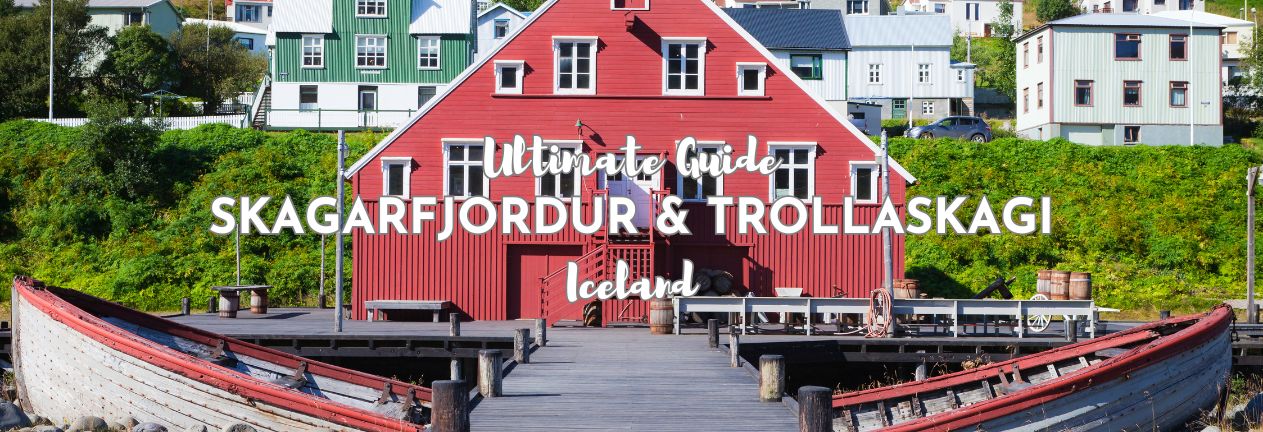
We ended up here almost by accident, chasing more affordable accommodation than what Akureyri had on offer, and discovered an entire peninsula most Iceland Ring Road trips never see. That’s the honest story behind this guide. Skagafjörður and Tröllaskagi sit just west of Akureyri, and skipping them means missing Iceland’s tallest mountains outside the Highlands, a truly stunning coastal drive if the weather cooperates, and a handful of the best small-town finds in the north. Here’s our Skagafjörður & Tröllaskagi travel guide…
THIS POST MAY CONTAIN COMPENSATED AND AFFILIATE LINKS MORE INFORMATION IN OUR DISCLAIMER
If you’re planning a detour off the Ring Road, here’s what this one covers: what these two areas actually are and how they fit together, full details of the stops worth knowing about, how to get here and whether it’s worth pairing with a North Iceland stay, where to stay, and where to eat once the restaurant options disappear, because they do up here.
PRACTICAL TRAVEL TIPS
- 🛡️ Get Travel Insurance: Civitatis includes medical expenses, repatriation, theft, luggage delays. No deductibles or upfront payments. Get a quote here.
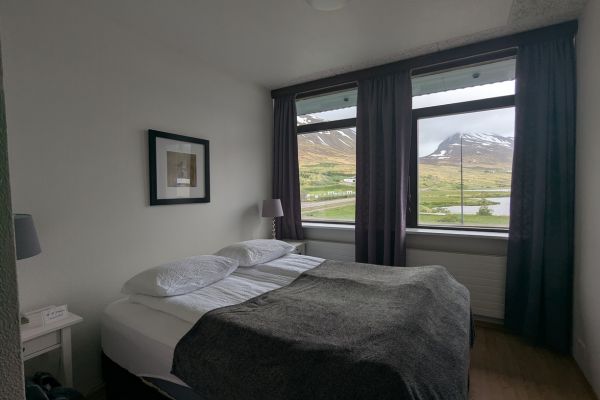
- 🛏️ Sea view? Laundry? Private bath? Book a Room.
- 🔌 Be ready for the plug, socket & power situation.
- 📶 Get online EASILY & cheaply – One eSim for the world. Data never expires
What Are Skagafjörður and Tröllaskagi?
These are two adjacent but distinct areas, easy to conflate if you haven’t looked closely at a map. Skagafjörður is the fjord and surrounding lowland region to the west, home to Sauðárkrókur, Hofsós, and Glaumbær. Tröllaskagi, “Troll Peninsula,” is the mountainous finger of land between Skagafjörður to the west and Eyjafjörður, Akureyri’s fjord, to the east, home to Siglufjörður, Ólafsfjörður, and Dalvík. Together they form one natural driving loop, Route 76 running from Varmahlíð to Ólafsfjörður, then Route 82 carrying you the rest of the way to Akureyri, which is exactly why this guide treats them as one region rather than two separate detours.
TOP THING TO DO
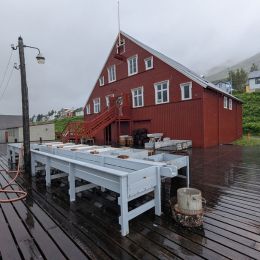
The Herring Era Museum in Siglufjörður is the absolute stand out place to visit on the Peninsula. Five buildings make up the museum and your ticket gets you into all of them PLUS two more museums in town.
What to See in Skagafjörður & Tröllaskagi
There are fourteen stops below, and they run anti-clockwise starting from Akureyri, because that’s the way round that we did it. The roads throughout are paved and manageable in a standard car, no 4×4 required, though there are one-way tunnels to be aware of further along. This peninsular is on of several on Iceland’s Arctic Coast Way – which you can read about here.
Dalvík
The largest town on the peninsula, less immediately picturesque than some of its neighbors, but an actually useful stopover. Ferries leave from here for Hrísey Island (30 minutes each way) and Grímsey Island (about 3 hours each way, the only part of Iceland that sits north of the Arctic Circle, you’ll want to read about it in my guide to unique things to do in Iceland). Whale watching tours also run from Dalvík, with noticeably better odds than Reykjavik, though Húsavík still edges it out if you can make the detour. There’s more on whales in Iceland in my guide here.
- How to get to Dalvik: on Route 82, between Árskógssandur and Ólafsfjörður.
- How long to spend in Dalvik: an hour or two, longer if you’re catching a ferry.
Ólafsfjörður
Ólafsfjörður is a lovely, small seaside town, reached through a one-way tunnel that can mean a short wait depending on traffic timing. (more on single lane tunnels in my guide to driving in Iceland here) It’s worth a stroll if you’ve got the time, kayaking is an option here and Mígandifoss, a small waterfall just south of town, is an easy add-on too.
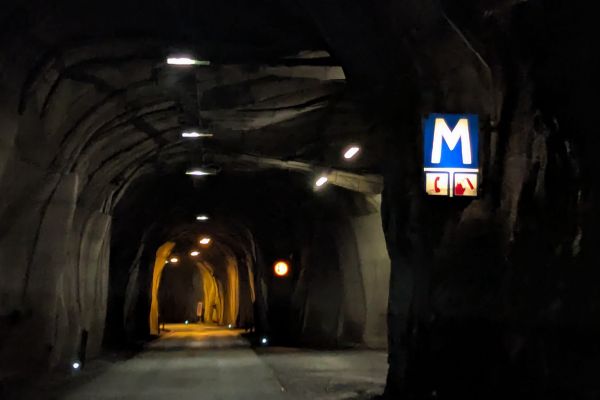
- How to get to Ólafsfjörður: via Route 82, through the tunnel from Dalvík.
- How long to spend at Ólafsfjörður: 30-45 minutes.
- Parking at Ólafsfjörður: free in town.
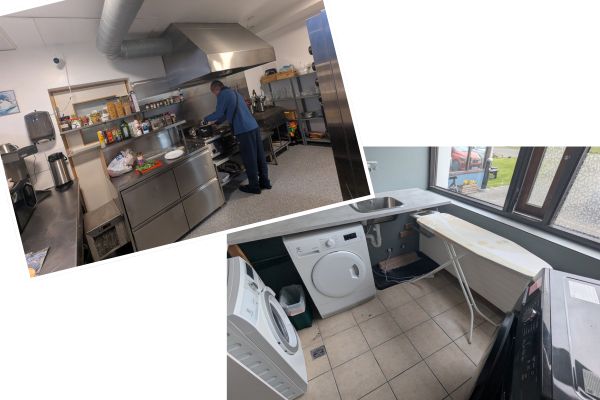
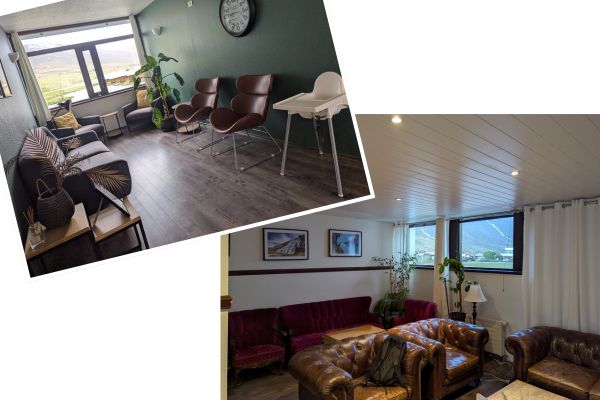
Ólafsfjörður is home to the fabulous Northern Comfort Inn, which was our cheapest stay in Iceland with the best facilities bar none.
Siglufjörður
Siglufjörður is the gem of the peninsula, a truly beautiful, colorful fishing town tucked into a fjord and hemmed in by mountains. Just walking the streets and admiring the buildings is worth an afternoon on its own, and it’s the obvious place to base yourself overnight if you’re spending more than a day here. The Icelandic TV series Trapped (Ófærð) was filmed here, and its worth watching before you go if you want to experience the atmosphere properly.
There are several museums in town that are well worth making the trip specifically for. There’s more on unique museums to visit in Iceland in my guide here
- How to get to Siglufjörður: via Route 76, through the shorter of the peninsula’s two one-way tunnels.
- How long to spend at Siglufjörður: half a day at least, more if you’re staying overnight.
The Herring Era Museum (Siglufjörður)
One ticket here also gets you into two other museums in town, Þjóðlagasetur, the Folk Music Centre, and the Saga Fotographica Museum, which focuses on the history of photography in Iceland, so budget more time than you’d expect for what looks like one stop. But let’s not get ahead of ourselves, the Herring Era Museum is a superb place to visit to understand the economy and changes to Iceland. You can buy your ticket here.
There are five separate buildings included in this museum and it covers Siglufjörður’s herring boom through the 1940s and 50s, a re-created fishing dock, an original processing factory, and the actual living quarters of the “herring girls” who worked here, bunks, hanging dresses, and all.
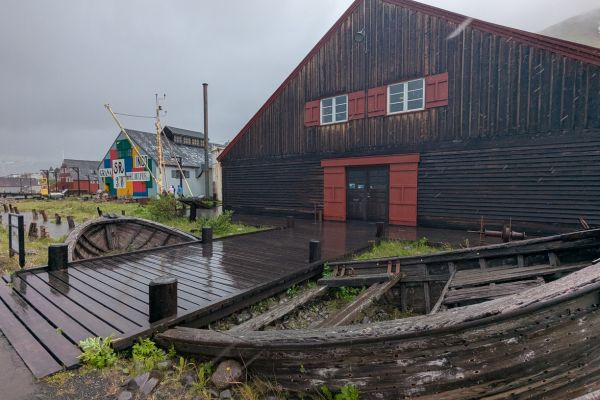
The Boathouse at the Herring Era Museum
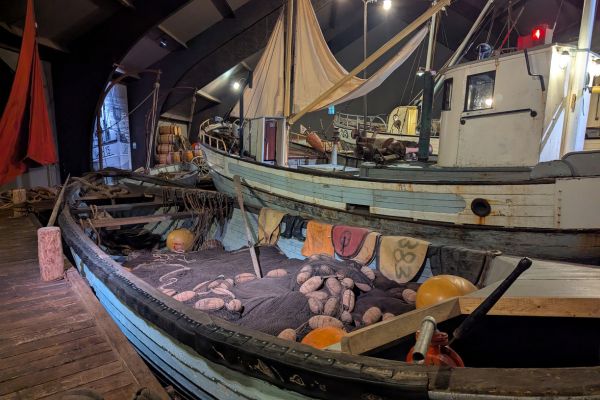
The Boathouse was built in 2003-2004 and inaugurated by Norway’s Crown Prince Håkon in 2004. Inside, eleven boats of varying sizes recreate a working North Iceland herring port from 1938-1954, alongside audio-visual material on the herring fisheries of the era. The lobby also holds a recreated fisherman’s store and smaller displays on Siglufjörður’s harbor, marine research, and how herring shoals were once located. There are eleven boats here, all set up in the display, as they would have been used.
Among the eleven boats: Týr SK 33, a 1946 oak vessel that fished out of Sauðárkrókur until 1988; two purse-seine boats, Skjöldur SI 82 and one from Brávellir, both likely built in the 1940s-50s; Sigurvin SI 16, whose owner donated his fishing income to overseas missionary work for children; Draupnir EA 70, a 1954 oak boat rigged for drift-net herring fishing; and a handful of smaller rowing and harbor boats, including a lifeboat from the Stígandi ÓF, which sank in 1967.
Róaldsbrakki
Róaldsbrakki is a former Norwegian salting station built in 1907, and something of a monument to Norway’s influence on Iceland’s herring industry. The ground floor covers fishing and salting through artifacts, photographs, and text, while the first floor turns to how herring products were exported and administered, alongside smaller exhibits on European herring fisheries and Norway’s specific role in the trade, plus historic film and hundreds of photographs.
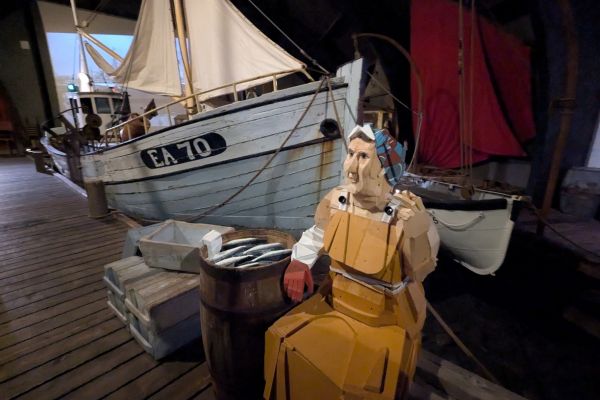
Upstairs, the building has been left largely untouched, the actual dormitory rooms where dozens of “herring girls” lived each summer, and the herring speculator’s own office. Outside on the pier, a local theatrical group occasionally performs, recreating the working life, and the dancing, that once filled these docks.
Njarðarskemma
Njarðarskemma is a 1930 herring warehouse now filled with the technical and electrical side of the industry: the factory’s old spare parts garage, the laboratory once used to test meal and oil quality, and the machinery behind Siglufjörður’s power supply. Highlights include equipment from the 1913 Hvanneyrará hydro station, one of Iceland’s oldest, and the 1945 Skeiðsfoss station that later electrified the town’s booming herring factories.
Grána
Grána recreates a 1930s-1950s fish meal and oil factory, once Iceland’s first heavy industry and so profitable it was said the factories were grinding gold rather than herring. The building itself is modeled on the original Grána factory that ran in Siglufjörður from 1919 to 1950, built using machinery painstakingly dismantled from two of Iceland’s most remote “ghost factories,” at Ingólfsfjörður and Hjalteyri, and shipped back here piece by piece. It’s a rare, hands-on look at how herring was actually turned into meal and oil, and at an industry so lucrative it reshaped entire Icelandic towns, then vanished almost overnight. It is a truly fascinating place to visit.
- How to get to The Herring Era Museum: in Siglufjörður town center.
- Herring Era Museum Opening Times: June, July & August: 10:00-17:00, May & September: 13:00-17:00. October-April: by appointment.
- Herring Era Museum Ticket Prices: Buy your ticket here. Adults: 2,400 ISK, Seniors: 1,300 ISK.
- How long to spend at The Herring Era Museum: 1.5-2 hours, longer if you plan on visiting the additional museums included in your ticket.
- Parking at The Herring Era Museum: free nearby. Do NOT park in the lot for the Fire Service.
Þjóðlagasetur – Folk Music Center
The Þjóðlagasetur, or Folk Music Center, is housed in the “Madame House,” once home to Reverend Bjarni Þorsteinsson, the priest who spent decades collecting and preserving Icelandic folk songs before they were lost. The folk music center was founded in 1999, the center displays his collection alongside recordings, instruments, and information on Iceland’s folk music tradition, and occasionally hosts live concerts in the same building. It’s a quick stop if you’ve got extra time built into your Herring Era Museum ticket.
- Address of Þjóðlagasetur: Norðurgata 1, 580 Siglufjörður.
- Ticket Prices of Þjóðlagasetur: included in the Herring Era Museum ticket.
- How long to spend at Þjóðlagasetur: 20 minutes.
Saga Fotografica Museum
Saga Fotografica is a small museum dedicated to photographer Vigfús Sigurgeirsson, whose images captured everyday life in Siglufjörður between 1929 and 1952, right through the peak of the herring boom this whole cluster of museums is built around. It’s a quieter, more intimate stop than the Herring Era Museum’s larger exhibits, black-and-white portraits of herring girls, fishermen, and the town itself, rather than machinery and boats.
- Address of Saga Fotografica Museum: Vetrarbraut 17, 580 Siglufjörður.
- Ticket Prices of Saga Fotografica Museum: included in the Herring Era Museum ticket.
- How long to spend at Saga Fotografica Museum: 20 minutes.
Langhús Farm
This is one of a few places on the peninsula offering Icelandic horse riding, and easily reached between Hofsós and Siglufjörður. Options range from short rides to full Viking-themed rides through the mountains or along black sand beaches. For more on what makes these horses worth riding in the first place, see our Icelandic horses guide.
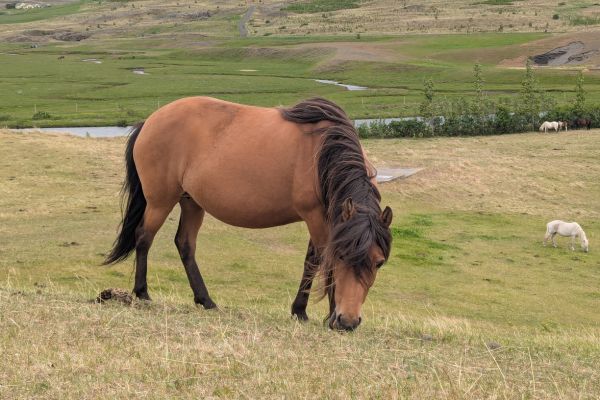
You can book a horse riding tour, or find out more information about the farm here.
- How to get to Langhús Farm: between Hofsós and Siglufjörður, off Route 76.
- How long to spend at Langhús Farm: 1-2 hours, depending on the tour.
- Parking at Langhús Farm: free on site.
Hofsós Swimming Pool
This is one of two reasons Hofsós shows up on people’s radar at all, it’s a swimming pool perched right on a cliff edge overlooking Skagafjörður. It’s not technically an infinity pool, but it feels like one, and there’s a smaller hot tub if the main pool’s temperature is a bit cooler than you’d like.
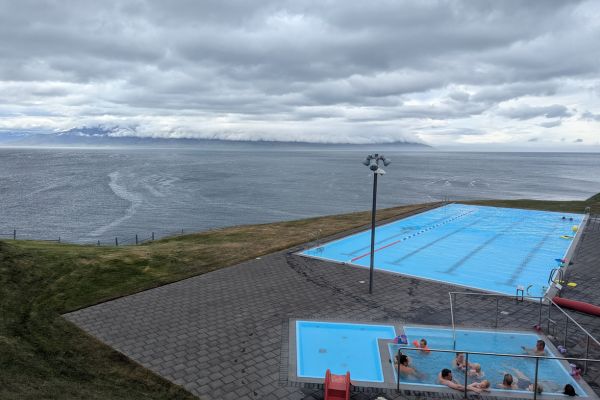
The main pool is 25.5 meters (84 feet) and 0.8 meters to 1.8 meters (2.6 to 5.9 feet) deep and is around 30-31°C (86-88°F) and the hot tub is 38-39°C (100-102°F).
- How to get to Hofsós Swimming Pool: in the village of Hofsós.
- How long to spend at Hofsós Swimming Pool: 1-1.5 hours.
- Opening hours of Hofsós Swimming Pool: Summer opening from June 1 to August 23, weekdays 07:00-20:00, weekends 10:00-20:00. Winter opening from September 28 to May 30, weekdays 07:00-13:00 & 17:00-20:00, weekends 11:00-16:00.
- Ticket Prices of Hofsós Swimming Pool: 1,400 ISK for adults, 426 ISK for children 6-17 and 67+, free under 6. Official pool info here.
- Parking at Hofsós Swimming Pool: free on site.
Hofsós (Basalt Columns)
Right next to the pool, the Staðarbjörg basalt columns run along the fjord’s edge, rows of tall, elegant columns similar in character to Stuðlagil Canyon back in East Iceland, though on a smaller, more coastal scale. A walking path continues past them for further views.
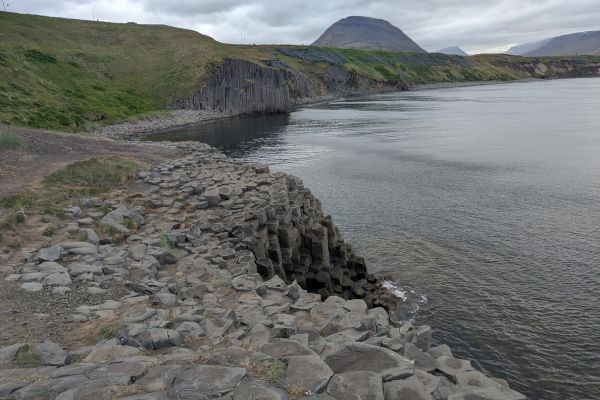
Park next to the swimming pool, and follow the trail down the side of it. You can clamber on the top of the columns and walk down the coast.
- How to get to Hofsós (Basalt Columns): adjacent to Hofsós Swimming Pool.
- How long to spend at Hofsós (Basalt Columns): 30-45 minutes.
- Ticket Prices of Hofsós (Basalt Columns): free.
- Parking at Hofsós (Basalt Columns): free, shared with the pool.
Grafarkirkja
Grafarkirkja is thought to be Iceland’s oldest surviving turf church, built in the 17th century, on the outskirts of Hofsós. What sets it apart from Iceland’s other turf-roofed churches is the interior, hand-carved wooden beams, and its setting, framed against the mountains behind it. Getting there means opening and closing a gate yourself, as you’re driving and then walking across private farmland. From the small parking area its then a short walk up to the church.
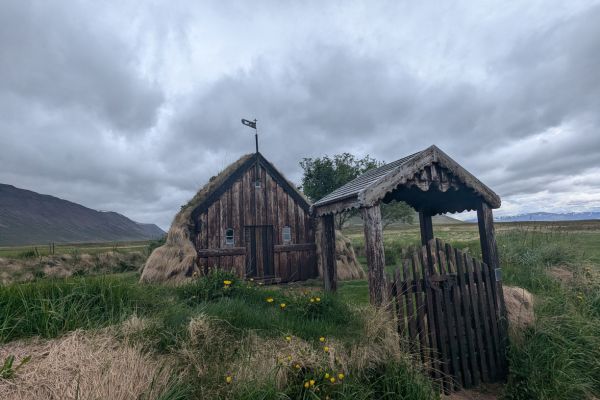
This turf church in Iceland, is however, the only one with a circular turf wall around the church and the graveyard.
- How to get to Grafarkirkja: a short detour off the main road near Hofsós.
- How long to spend at Grafarkirkja: 20 minutes.
- Ticket Prices of Grafarkirkja: free.
- Parking at Grafarkirkja: free, small gravel area by the gate.
The Icelandic Horse History Centre
This fabulous history center about the Icelandic Horse is based at Hólar í Hjaltadal, a historic site in its own right, once an Icelandic bishopric and now home to an agricultural university, this center covers the breed’s history in proper depth and is worth pairing with Langhús Farm if horses are a priority for this leg of your trip. There’s more on Icelandic Horses in my guide here.
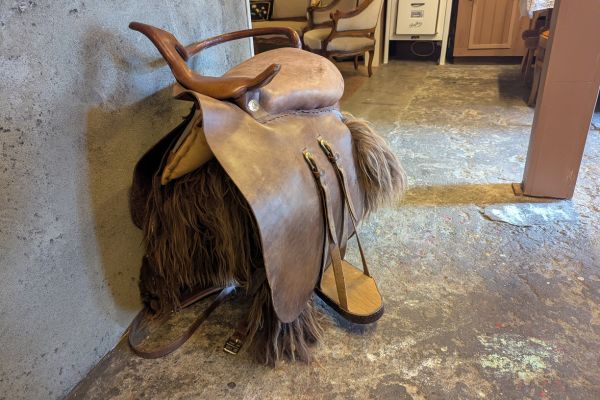
- How to get to Icelandic Horse History Centre: at Hólar, in Hjaltadalur valley, a short detour off Route 76.
- How long to spend at Icelandic Horse History Centre: 45-60 minutes.
- Opening Hours of the Icelandic Horse History Center: June 1 – August 31: 11:00-17:00, closed on Mondays. September 1 – May 31: closed.
- Ticket Prices of Icelandic Horse History Centre: Adults: 1,500 ISK, Groups, students, and seniors (67+): 1,300 ISK, Children (0-17 years): free, needs a current price check. Tickets include a free audio guide, which is a fascinating listen. You can read more on their website here.
- Parking at Icelandic Horse History Centre: free on site.
Sauðárkrókur Beach
This is a black sand beach with real mountain views and, unlike Reynisfjara, hardly any crowds. We saw two other people here. Sauðárkrókur is also the departure point for tours to Drangey Island, a nature reserve with puffins and other seabirds, though at 3.5-4 hours round trip, it’s only worth it if you’re spending several days on the peninsula rather than passing through.
The town is a good stop off if you need supplies at the supermarket.
- How to get to Sauðárkrókur Beach: in the town of Sauðárkrókur, off Route 75.
- How long to spend at Sauðárkrókur Beach: 30-45 minutes at the beach; the Drangey tour is a half-day commitment on its own.
- Parking at Sauðárkrókur Beach: free.
Glaumbær Turf Farm & Museum
Glaumbær Turf Farm is a well-preserved cluster of turf houses showing how Icelanders actually lived here for centuries, low doorways, dark interiors, and a real sense of how much the elements shaped daily life before modern building materials arrived.
- How to get to Glaumbær Turf Farm & Museum: just off Route 75, near Varmahlíð.
- How long to spend at Glaumbær Turf Farm & Museum: 45-60 minutes.
- Opening Hours of the Glaumbær Turf Farm & Museum: 10:00-18:00 daily.
- Ticket Prices of Glaumbær Turf Farm & Museum: 2,200 ISK.
- Parking at Glaumbær Turf Farm & Museum: free on site.
Reykjafoss + Fosslaug
NOTE July 2026: this is currently closed off and you cannot access either the waterfall or the hot spring pool.
The waterfall here would be worth the stop on its own, but the real draw is Fosslaug, a natural hot pot sitting right at the waterfall’s edge. A properly good soak with a view most geothermal pools can’t match. Make sure you’re navigating to the Reykjafoss parking lot specifically, and when walking to Fosslaug, you’ll want to follow Maps.me.
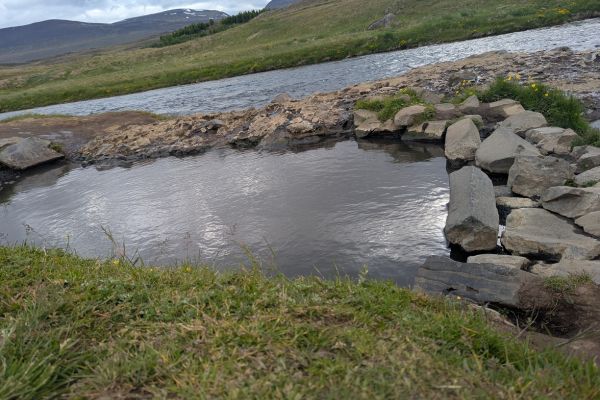
From the parking area it’s a short, 12-15 minute walk to the waterfall and then a further 5-6 minutes onto Fosslaug. We weren’t brave enough to jump in the water here, it was cold, but a family of four were in, it’s not very deep, and said it was “pleasant”.
- How to get to Reykjafoss + Fosslaug: near Varmahlíð, off Route 752.
- How long to spend at Reykjafoss + Fosslaug: 45-60 minutes, longer if you’re soaking.
- Ticket Prices of Reykjafoss + Fosslaug: free.
- Parking at Reykjafoss + Fosslaug: 1,500 ISK (when open). Pay via QR code.
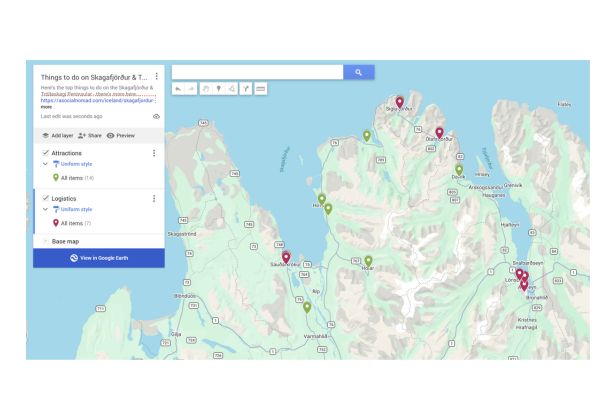
Map of Attractions in Skagafjörður & Tröllaskagi
Here’s our map of all the stops in this guide, you can also see the map here.
Visiting Skagafjörður & Tröllaskagi
The direct Ring Road route between Varmahlíð and Akureyri takes about 70 minutes and, honestly, has very little to see along the way. Detouring north via the glorious Siglufjörður instead adds roughly two hours and forty minutes to that drive, and includes some of the most dramatic scenery in the country. It’s a truly worthwhile trade. So you’re going to want to add more than just the drive time to explore. This pairs naturally with a North Iceland stay too, see our North Iceland guide for the wider region, since Siglufjörður works well as a base for both.
Roads throughout this route are paved and manageable in a standard car, no 4×4 needed, but there are two one-way tunnels to know about, a shorter one near Siglufjörður and a longer one near Ólafsfjörður. Both are free to use, just follow the traffic lights and only enter when they’re green. Be ready to reverse out if another driver misjudges it, which does happen. There are passing places, and the traffic lights will tell you when to stop. Make sure you obey them!
How to Get to Skagafjörður & Tröllaskagi
From Reykjavik, follow Route 1 north toward Varmahlíð, then pick up Route 76 for the coastal detour rather than continuing straight to Akureyri. If you’re doing this as a single long day, consider overnighting in Blönduós beforehand rather than attempting the whole stretch from Reykjavik or Snaefellsnes in one push.
Where to Stay to Explore Skagafjörður & Tröllaskagi
Siglufjörður is the obvious place to base yourself if you’re staying overnight on the peninsula. A quieter alternative is the glorious Ólafsfjörður.
- Siglo Hotel — a proper standout hotel, with hot pools overlooking the harbor.
- Northern Comfort Inn — the same property we rated highly in our North Iceland guide, a free washing machine, a properly well-equipped professional self-catering kitchen, a fabulous living room and plenty of space.
How Long to Visit Skagafjörður & Tröllaskagi for
A full day covers the main highlights if you’re efficient about it, but two days lets you actually enjoy Siglufjörður rather than rushing through it, and leaves room for the Hofsós pool and a proper soak at Fosslaug rather than a five-minute stop at each.
Grocery Shopping in Skagafjörður & Tröllaskagi
Options within the peninsula itself are in short supply, so Akureyri, at the beginning (or end) of this loop, is actually the best place to stock up properly, both Bónus and Krónan, plus a Vínbúðin for alcohol, although there’s both a supermarket and Vínbúðin at Sauðárkrókur too. We’ve covered this in more depth in our North Iceland guide. If you’re arriving from the Reykjavik side rather than from Akureyri, plan to stock up before you commit to the detour.
Food & Drink Options in Skagafjörður & Tröllaskagi
Self-catering is the practical default out here, as restaurant options reduce significantly once you leave Akureyri. Our self-catering guide has tips and easy recipes worth reading before you go. Self-catering is always a good fallback, as especially if you’re visiting Iceland during the summer months you’re likely to get caught up in exploring, forgetting that you might not find somewhere open to eat at 23:00 when its still broad daylight!
For a practical fallback rather than a real recommendation, Sauðárkrókur has a large N1 gas station with an actually decent food selection (Icelandic hotdogs I’m looking at you!!), which is worth knowing about after a long, quiet stretch of driving.
FAQs on Skagafjörður & Tröllaskagi
Got questions about visiting Skagafjörður & Tröllaskagi? Here are quick answers to what we’re asked most.
Is Skagafjörður & Tröllaskagi worth the detour?
Yes, and it’s a smaller detour than it sounds at first, roughly an extra hour and a half of driving compared to the direct Ring Road route, for some of the best scenery in North Iceland.
How far is it from Akureyri?
Siglufjörður, the peninsula’s main town, is about an hour’s drive from Akureyri via Route 82. The full loop, including the Skagafjörður side, adds up to a longer day, so budget your time accordingly.
Can you combine this with North Iceland?
Yes, easily, and it’s arguably the natural way to do it. Siglufjörður or Ólafsfjörður work well as a base for both this peninsula and a wider North Iceland stay.
Do you need a 4×4 to drive this route?
No, the roads are paved and manageable in a standard car year-round in normal conditions. Winter still calls for caution given the twisty, largely unguarded mountain roads west of Siglufjörður, but a 4×4 isn’t a requirement.
ICELAND TRAVEL RESOURCES
AIRPORT TRANSFERS
24/7 pickup & drop off. Trusted, local English speaking drivers. Prebook & prepay online with cards.
Book a Transfer
HOTELS AND APARTMENTS
See choices here
Rooms with a view? Budget rooms? Need a washing machine? The best choice of hotels & apartments.
TOURS & ATTRACTIONS
Most excursion choices, small group tours, skip-line tickets, free cancellation and top local guides.
Top options here.
CAR RENTAL OPTIONS
Choose cars here
Best choice of vehicles, automatics, large or small cars, child seats. Book early for more options.
Final Words on Skagafjörður & Tröllaskagi
This is the part of North Iceland most people never even know they skipped. We loved it. And I’m torn between here and Borgarfjordur eystri as being my favorite places. A clifftop swimming pool, the oldest-surviving turf church, and a fishing town that might be the prettiest we’ve seen in the north, all reachable with an extra hour and a half of driving most Ring Road itineraries never budget for. Do yourself a favor and schedule in the detour.
ASocialNomad is a participant in the Amazon Services LLC Associates Program, an affiliate advertising program designed to provide a means for sites to earn advertising fees by advertising and linking to amazon.com, amazon.co.uk, and amazon.ca. Amazon and the Amazon logo are trademarks of Amazon.com, Inc. or its affiliates. As an Amazon Associate, I earn from qualifying purchases.

