
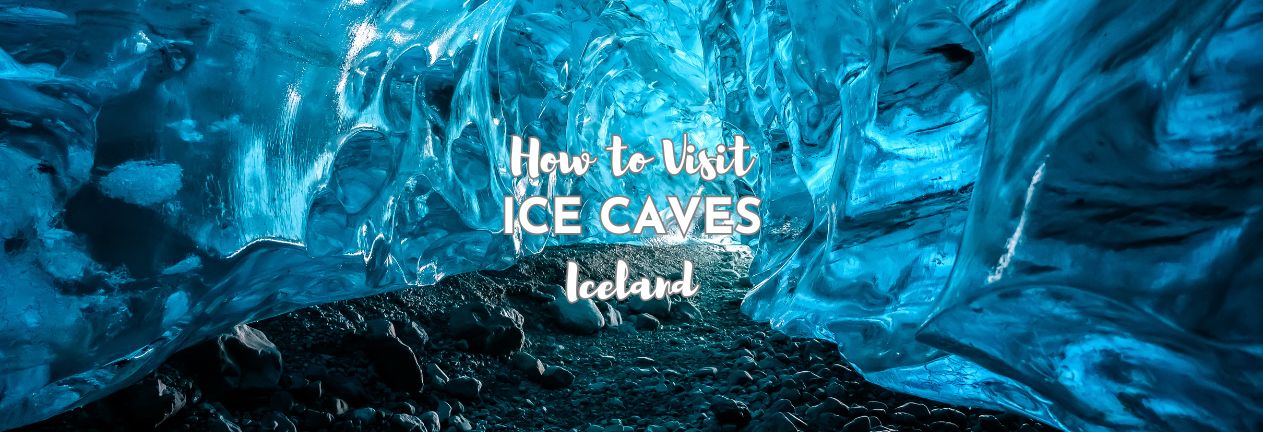
Ice caves are one of Iceland’s most surreal experiences, and also one of the most misunderstood logistically. People picture themselves wandering into a blue-lit tunnel on their own, when the reality is far more structured, far more seasonal, and far more guide-dependent because of the real safety issues than most people expect. Here’s our guide to visiting an ice cave in Iceland…
THIS POST MAY CONTAIN COMPENSATED AND AFFILIATE LINKS MORE INFORMATION IN OUR DISCLAIMER
We’ll cover what ice caves actually are and how they form, where to find them by name, when to go depending on which cave you’re after, what an actual ice cave tour looks like from pickup to the cave itself, what to wear and bring, and how far ahead you need to book.
PRACTICAL TRAVEL TIPS
- 🛡️ Get Travel Insurance: Civitatis includes medical expenses, repatriation, theft, luggage delays. No deductibles or upfront payments. Get a quote here.
- 🛏️ Sea view? Laundry? Private bath? Book a Room.
- 🔌 Be ready for the plug, socket & power situation.
- 📶 Get online EASILY & cheaply – One eSim for the world. Data never expires
What Is an Ice Cave (and How It Forms)
Meltwater flows beneath a glacier, carving tunnels and chambers as it goes. When winter arrives, the water freezes, and the tunnels remain, hollow spaces inside solid ice. It’s the light filtering through the thinner sections of that ice that produces the electric blue color these caves are known for, and no two caves look alike since each one is shaped by its own glacier’s history, sometimes streaked with volcanic ash, sometimes clear as glass. Caves reshape themselves every year as glaciers move and melt, so a cave visited one winter may not exist in the same form the next. There’s more on the glaciers themselves in Iceland in my guide here.
Natural ice caves and man-made ice tunnels are not the same thing, even though people use the terms interchangeably. Natural caves are carved by meltwater and change constantly. Man-made tunnels are cut into glacier ice using specialized equipment, built for stability rather than for how they naturally occur, and that difference is exactly what makes some of them accessible year-round while the natural ones are not.
TOP ICE CAVE TOUR
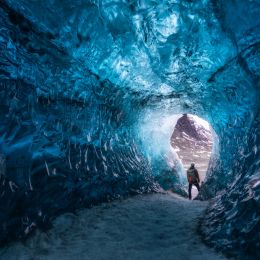
Explore the natural Ice Cave at Katla Glacier on an exclusive small group experience. Enjoy convenient pickup and drop-off in Vík, and travel into the highlands to Katla Glacier in a Super Jeep
Where to Find Ice Caves in Iceland
Most ice cave tours are run out of southeast and south Iceland. Vatnajökull, Europe’s largest glacier by volume, sits in the southeast and creates most of the country’s best-known natural ice caves, with tours typically departing from Jökulsárlón Glacier Lagoon or the nearby town of Kirkjubæjarklaustur. Mýrdalsjökull, further west along the South Coast near Vík, sits over the active Katla volcano and has its own distinct ice cave, aka the Katla Ice Cave, shaped by that volcanic activity. Langjökull, in West Iceland, roughly two hours from Reykjavik, is home to a man-made ice tunnel rather than a natural cave. It’s between these three glaciers that nearly every ice cave tour in the country operates.
Ice Caves in Iceland By Name
Here are the four ice cave experiences worth planning your visit around, in the order we’d recommend considering them.
Katla Ice Cave (Mýrdalsjökull)
Katla is the exception to almost every rule in this post: it’s one of the only natural ice caves in Iceland that is open year-round, thanks to the volcanic structure underneath it rather than surface conditions that come and go with the seasons. So yes, you can book a Katla Ice Cave tour in summer.
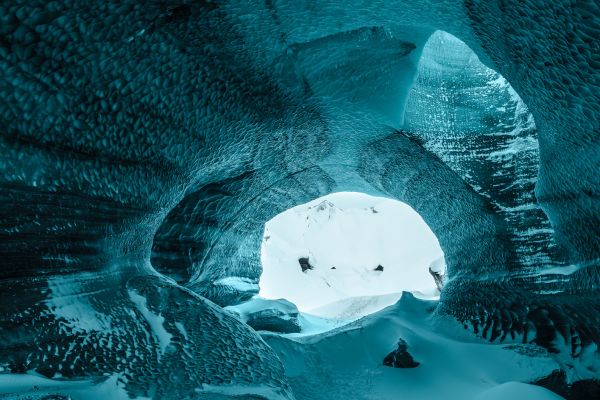
Inside, black volcanic ash streaks through blue ice, a very different look from the cleaner blue of Vatnajökull’s caves. The cave sits under Katla, which is an active volcano (Iceland has 32 active volcano systems, compared to Hawaii’s 6), though Iceland’s volcanoes are continuously monitored and any warning signs would suspend tours well ahead of actual danger. Katla’s well-known ice arch collapsed in July 2024, and the site and the visit have changed as a result, but if you’ve never been before, you won’t miss it.
Tours of Katla depart from Vík, under an hour away, or from Reykjavik, which are roughly 2.5 to 3 hours each way by road, and tours typically take about three hours total once you’re on-site.
- Location of Katla Ice Cave: Mýrdalsjökull glacier, near Vík, South Iceland.
- Opening Months for Katla Ice Cave: year-round, the only natural cave on this list with no closed season.
- Cost of Visiting Katla Ice Cave: tours from US$182 per person. Check current pricing here.
The Crystal Ice Cave (Vatnajökull)
This is Iceland’s most photographed ice cave. You’ll see vivid blue ice inside Europe’s largest glacier, just a short distance from Jökulsárlón Glacier Lagoon. Read more about glaciers in Iceland in my guide here. It’s open roughly from mid-October to March, and tours typically depart from Jökulsárlón itself or Kirkjubæjarklaustur. It’s about a five-hour drive from Reykjavik, making it a stop most people build a South Coast or Ring Road trip around rather than a day trip from the capital.
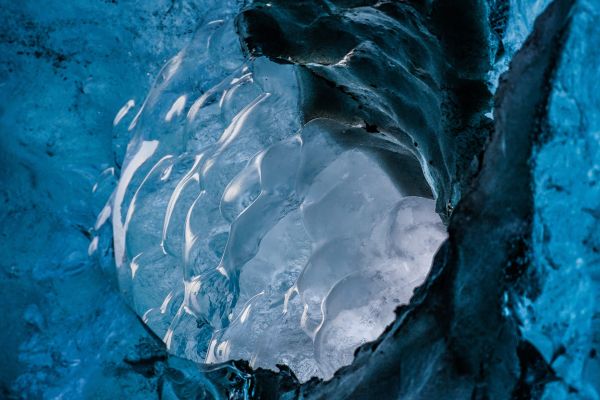
A regional variant that’s worth knowing is that the ice caves at nearby Skaftafell form differently each year and are often roof-less, more like a canyon cut into the ice than a fully enclosed chamber. If being inside an enclosed cave doesn’t appeal to you, Skaftafell’s open-topped version is the one to ask your tour operator about specifically.
- Location of Crystal Ice Cave: Vatnajökull glacier, near Jökulsárlón Glacier Lagoon, southeast Iceland.
- Opening Months for Crystal Ice Cave: roughly mid-October to March.
- Cost of Visiting Crystal Ice Cave: tours from US$161 per person. You can check current pricing and book here.
Into the Glacier (Langjökull)
Into the Glacier is Iceland’s man-made ice tunnel. It’s cut directly into Langjökull glacier and built to run regardless of season or weather. It’s about two hours from Reykjavik or from Gullfoss, close enough that people regularly combine it with a Golden Circle day rather than treating it as a separate trip. The tunnel includes educational sections on glacial formation alongside the ice itself, a different kind of experience from the raw, ever-changing feel of a natural cave, but a truly useful fallback if your travel dates don’t land inside natural ice cave season.
- Location of Into the Glacier: Langjökull glacier, near Húsafell, West Iceland.
- Opening Months for Into the Glacier: year-round, unaffected by season since it’s man-made.
- Cost of Visiting Into the Glacier: tours from US$180 per person. Reserve your spot here.
Perlan Ice Cave (Reykjavik)
Perlan takes a different approach entirely: they’ve created a man-made ice tunnel built from real snow, housed inside the Perlan Museum in Reykjavik itself, open year-round with no glacier travel required. It’s shorter and smaller in scale than any of the three tours above, no crampons, no super jeep, no multi-hour drive, just a walk through an actual ice environment as part of the wider Wonders of Iceland exhibition. This is a good option for families, a solid plan for a bad-weather day in the city, or a way to experience the concept of an ice cave without committing to the full glacier version, rather than a substitute for the real thing if a proper glacier tour is within reach on your trip. Of course, at Perlan, you also get to experience a slice of Iceland in a single day without leaving the city.
- Location of Perlan Ice Cave: Perlan Museum, Öskjuhlíð, 105 Reykjavik.
- Opening Months for Perlan Ice Cave: year-round, indoors and unaffected by weather.
- Cost of Visiting Perlan Ice Cave: tickets from US$58 per person. Buy skip-the-line tickets here.
The Best Time of Year for Ice Caves in Iceland
“Winter-only” is the general rule for natural ice caves in Iceland, but it isn’t a blanket one, as the exceptions above make clear.
Ice Caves in Winter
From roughly October or November until March is the main season for visiting Iceland’s natural ice caves. This is when consistently cold temperatures keep the ice stable and at its bluest. This is also, unsurprisingly, the busiest stretch for ice cave demand specifically. Of Iceland’s roughly 2 million-plus people arriving each year, an estimated 600,000 or so arrive during these winter months, so tours can and do sell out.
Ice Caves in Summer
Once the glacier starts melting, most natural ice caves become unstable and inaccessible, which is why Crystal Ice Cave and the Skaftafell variant both close for the season. Katla is the one natural exception, staying open regardless of time of year thanks to its volcanic structure. Into the Glacier’s tunnel and Perlan’s museum cave are both entirely unaffected by season, since neither depends on natural ice conditions at all.
What an Ice Cave Tour Is Actually Like
Most ice cave tours start with a pickup from a set meeting point, Jökulsárlón, Vík, Húsafell, or a Reykjavik hotel, depending on which cave and tour you’ve booked. A safety briefing comes first, covering the day’s plan and current glacier conditions. From there, a super jeep, a specially modified 4×4 built for icy terrain, takes you up onto or alongside the glacier itself. Your guide fits you with crampons, a helmet, and sometimes an ice axe, and explains the route before you set off. The hike to the cave entrance varies by location, sometimes a short walk, sometimes 20 to 30 minutes across the glacier, with your guide setting the pace throughout.
Once inside, you’ll have time to look around, take photos, and hear your guide explain how the specific cave formed, including pointing out ash layers or other features in the walls. Time inside tends to be relatively short given safety limits on how long groups linger in any one formation, but it’s enough to properly take in the blue light and the scale of it. The trip back typically retraces the same route, ending with a return transfer to your pickup point. You can read more reviews on ice cave tours here
What to Wear & Bring on an Ice Cave Tour
Guides supply the technical gear: crampons, a helmet, and often an ice axe. Everything else you’ll need to bring. You should start with a warm base layer, merino wool or a synthetic thermal rather than cotton, which holds moisture and won’t keep you warm once damp. Add an insulated mid-layer, a fleece or a light jacket, so you can adjust as your activity level changes through the day. A waterproof outer shell, both jacket and pants, matters more than people expect; glacier surfaces are wet as often as they’re dry. Sturdy hiking boots with good ankle support round out the base layers, since the terrain underfoot is uneven and icy. Read my guide on what to pack for Iceland here.
For accessories, bring a warm hat, waterproof gloves with enough grip to handle a camera or an ice axe, and sunglasses, since glare off snow and ice is real even under cloud cover. Hand warmers are a small addition that makes a longer tour noticeably more comfortable. A day pack with room for spare layers, water, and snacks finishes what you’ll want on hand. Your tour guide will also recommend anything additional that you might need.
Booking Tips for Iceland’s Ice Cave Tours
Book well ahead. Ice cave tours regularly sell out, especially in the busiest winter months, and waiting until you’re already in Iceland can mean missing out on the specific cave you wanted. The cost varies by operator (but not by much), cave, and tour length, but expect somewhere in the US$120 to US$200 range for a standard one-day tour to Katla or Vatnajökull, with Into the Glacier and Perlan both priced lower given their shorter, easier format. Weather-dependent cancellations are normal, but operators reschedule or refund rather than simply canceling a booking outright.
FAQs on Visiting Ice Caves in Iceland
Here are quick answers to the questions we hear most about visiting an ice cave in Iceland.
Can you visit Iceland’s ice caves in summer?
Most natural ice caves, no, they’re unstable once the glacier starts melting. Katla, Into the Glacier, and Perlan are all exceptions that run regardless of season.
Are ice cave tours safe in Iceland?
Yes, when done with a certified guide. Glacier conditions change constantly, and guides monitor stability daily and choose which caves are safe to enter on any given day.
How much does an ice cave tour cost?
An ice cave tour costs roughly US$120 to US$200 for a standard one-day tour to Katla or Vatnajökull. Into the Glacier and Perlan both cost less, given their shorter format and easier access. You can check current pricing here.
Do I need any special fitness level for an ice cave tour?
No. You’ll need to be reasonably mobile and comfortable walking on uneven, sometimes slippery ground, but no climbing or hiking experience is required.
What’s the difference between an ice cave and a glacier cave?
In everyday use, these terms are treated as interchangeable. The more useful distinction is natural vs. man-made: natural ice caves form and change on their own, while tunnels like Into the Glacier and Perlan’s are cut using specialized equipment and built for year-round stability.
Can kids go on ice cave tours?
Generally yes, kids can go on ice cave tours in Iceland. Most operators welcome children, though it’s worth checking any minimum age with the specific tour, since some man-made tunnels like Perlan are easier for younger kids than a full glacier hike.
Are all ice caves natural?
No. Into the Glacier at Langjökull and the ice tunnel at Perlan are both man-made, cut into real ice using specialized equipment rather than formed naturally by meltwater.
What’s the closest ice cave to Reykjavik?
Perlan, right in the city itself, if a museum-scale ice tunnel counts. For an actual glacier experience, Into the Glacier at Langjökull is closest, at around two hours away.
ICELAND TRAVEL RESOURCES
AIRPORT TRANSFERS
24/7 pickup & drop off. Trusted, local English speaking drivers. Prebook & prepay online with cards.
Book a Transfer
HOTELS AND APARTMENTS
See choices here
Rooms with a view? Budget rooms? Need a washing machine? The best choice of hotels & apartments.
TOURS & ATTRACTIONS
Most excursion choices, small group tours, skip-line tickets, free cancellation and top local guides.
Top options here.
CAR RENTAL OPTIONS
Choose cars here
Best choice of vehicles, automatics, large or small cars, child seats. Book early for more options.
Final Words on Visiting Ice Caves in Iceland
An ice cave is one of those experiences that’s truly as good as the photos suggest, but only once you know what you’re actually booking. Match the cave to your trip: Katla or Vatnajökull for the full glacier experience, Into the Glacier if your dates fall outside natural ice cave season, and Perlan if you want the concept without leaving Reykjavik. However you get there, book early, dress properly, and let your guide do exactly the job they’re there for.
ASocialNomad is a participant in the Amazon Services LLC Associates Program, an affiliate advertising program designed to provide a means for sites to earn advertising fees by advertising and linking to amazon.com, amazon.co.uk, and amazon.ca. Amazon and the Amazon logo are trademarks of Amazon.com, Inc. or its affiliates. As an Amazon Associate, I earn from qualifying purchases.

