
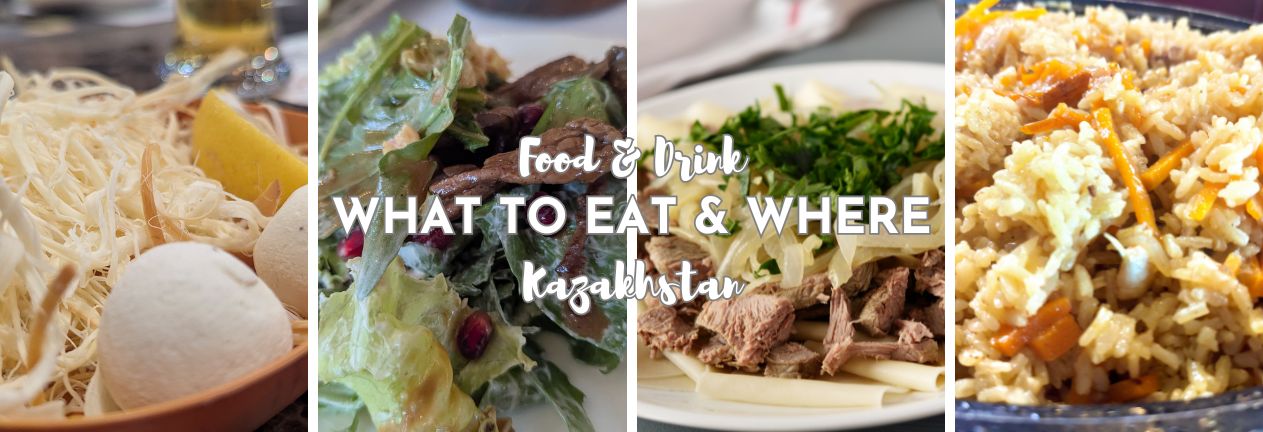
Kazakh food is shaped by centuries of nomadic life on the steppe. It’s meat- and dairy-heavy, built around hospitality and shared plates, with Silk Road influences layered on top- think noodles and spices, loaded onto older steppe traditions of horse, mutton, and fermented mare’s milk. This isn’t a cuisine that’s easy to take to. It does not get dressed up for tourists; it’s worth a foray. Here’s our guide to what you’re actually going to eat in Kazakhstan, and why it’s worth trying.
THIS POST MAY CONTAIN COMPENSATED AND AFFILIATE LINKS MORE INFORMATION IN OUR DISCLAIMER
This guide covers the traditional Kazakh dishes worth seeking out, the everyday food you’ll actually eat most days, the more adventurous end of the menu, snacks worth bringing home, where to eat, prices, and vegetarian and vegan options. If you want someone else to do the ordering for you, there’s a Kazakh food tour in Almaty worth booking, and I’ll point you back to it a few times below.
If you’re on a wider Central Asia trip, there’s a good chance you’ll be plov-ed out by the time you reach Kazakhstan. And likely heavy meat dieted out too. Unless this is your starting point, in which case Almaty and Astana are great places to eat internationally too, and a welcome break from the meat-heavy diet of the steppe.
Traditional Kazakh Foods to Try
These are the dishes that define Kazakh cuisine, the ones you’ll be offered at a celebration meal or find on the menu at any restaurant serious about local food.
Beshbarmak
Kazakhstan’s national dish, boiled meat, usually lamb, beef or horse, served over wide flat noodles. The speciality is horse. Traditionally it’s eaten by hand; ‘besh barmak’ translates roughly to ‘five fingers’, and it’s central to hospitality and celebration meals here.
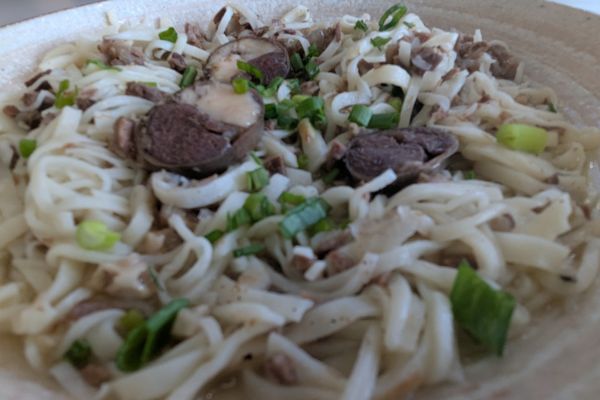
It’s a strong taste, and your best bet is trying it at one of the chain restaurants below or on a food tour rather than guessing at a random spot. Places like Sandyq or Navat are a good option. We tried it at Navat.
Kazy & Horse Meat
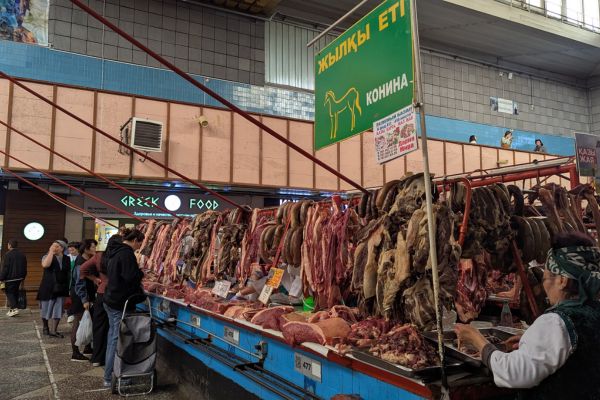
Kazy is a traditional horse-meat sausage, one part of a much wider role horse meat plays in Kazakh cuisine, also served smoked or cured. It’s a very strong, acquired taste. You’ll see plenty of it at the Green Bazaar in Almaty if you want to try some without committing to a full restaurant plate. There’s more on the Green Bazaar and food and drink in Almaty in my guide here.
Plov (Kazakh Pilaf)
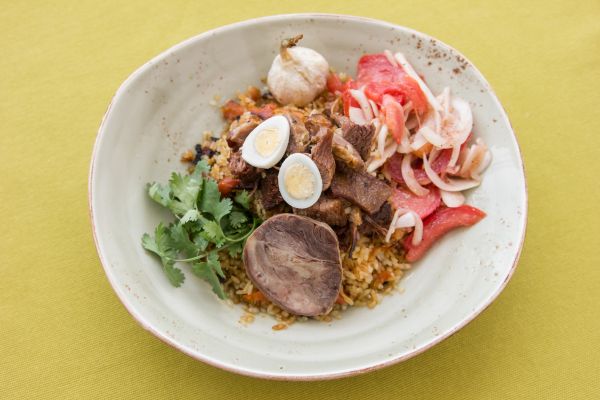
This is THE dish of Central Asia. It’s a rice pilaf with meat, carrots and onions, a dish shared with regional variations right across Central Asia. You’ll find it everywhere here, and if you’re eating on a budget, this is the dish to lean on; it’s filling, cheap and reliably good.
Baursak
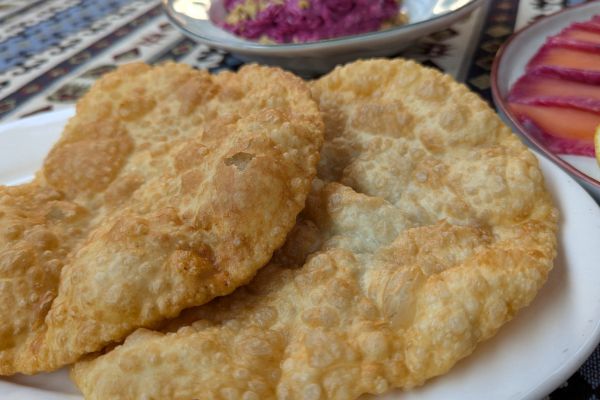
When you’ve traveled a lot, you’ll find that every country has its own version of these. Small pieces of fried dough, often served alongside tea or as part of a wider spread. Usually sweet, often sprinkled with icing sugar. Baursak are a staple at Kazakh tables, simple, a little sweet, and easy to eat far too much of.
Kumis & Shubat
Kumis, fermented mare’s milk, and shubat, fermented camel milk, are traditional steppe drinks, mildly alcoholic in kumis’s case, valued for taste and for traditional health beliefs. They’re definitely worth trying once.
We first tried mare’s milk in Mongolia in 2014, and it hasn’t changed much in the last 12 or so years! Camel’s milk is a lot stronger and you’ll definitely only want a small amount of both.
Take a tour in Almaty and visit the Green Bazaar, and you’ll get to taste both. Or buy yourself a bottle. You can also try them in neighboring countries. We tried horse milk on a visit to Issyk-Kul from Bishkek, an entire 750ml bottle bought roadside. It’s strong. There were bits in it, and we didn’t finish much of it.
Modern & Everyday Kazakh Food
In the main, the dishes that I’ve covered are ones that you’ll likely try once, maybe twice. And if you’re traveling the Silk Road and onto the rest of Central Asia, you’ll likely eat plov regularly. But below, here’s what you’ll actually eat most days here, alongside the traditional dishes above.
Lagman Noodles
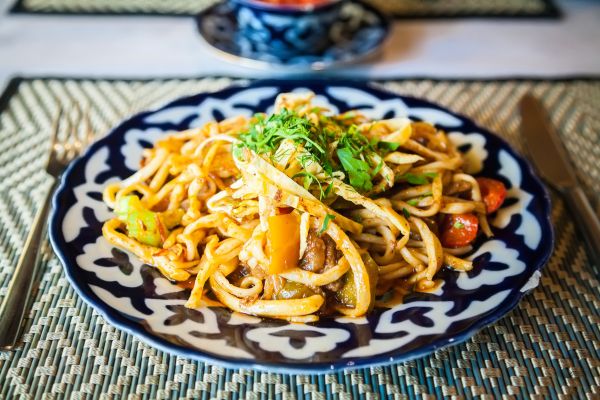
These are hand-pulled noodles in a meat and vegetable broth or stir-fry, a Silk Road dish you’ll also find as common dining-car fare on overnight trains here. It’s a good go-to dish wherever you find it. We first tried it in Dushanbe, before heading off on the Pamir Highway, and it’s been a reliable order across Central Asia ever since.
Shashlik
Skewered grilled meat, widely available from street vendors and restaurants alike, a staple right across Central Asia. Cheap, reliable, and a good option when you just want something quick between sights.
Samsa
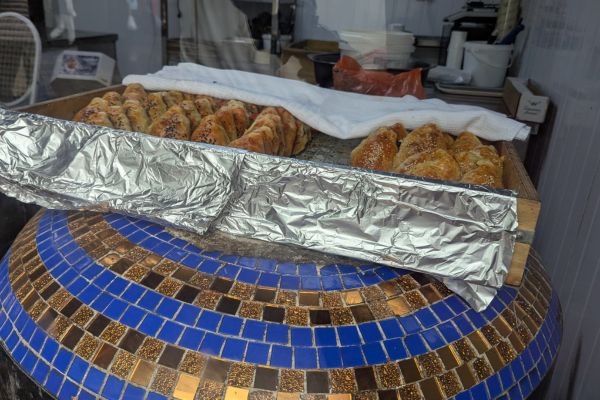
A savory baked or fried pastry, usually filled with meat and onion, a common street food and bakery item. A fabulous option, and the fillings vary around the country. Meat versions tend toward gristly cuts, though to be fair, meat quality generally runs lower here anyway, so don’t read too much into it. The samsa that you get here in Kazakhstan is different from that in neighboring Kyrgyzstan.
Kazakh Snacks & Treats
A few things worth picking up, whether you’re snacking on the road or bringing something home. Not all of these are strictly Kazakh in origin, but you’ll find them everywhere here.
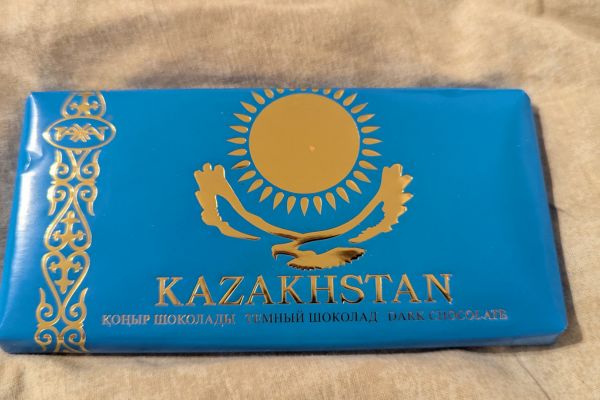
Rakhat chocolate: the famous chocolate factory in Almaty, instantly recognizable by its blue and turquoise packaging with a golden eagle motif. The Kazakhstan bar is the best-selling one and the easiest souvenir to grab from any supermarket.
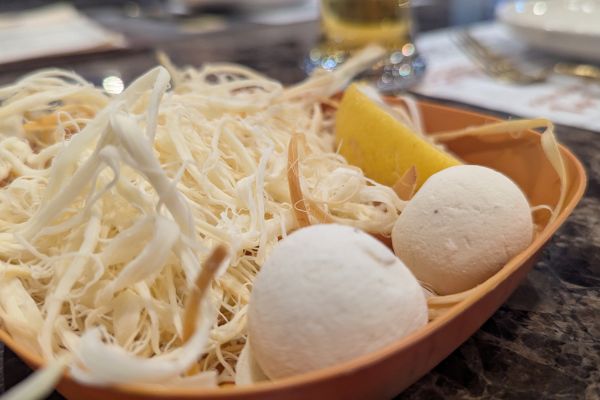
Sulguni smoked cheese: a beer snack you’ll see all the way through Central Asia, first tried in Tbilisi, Georgia. It’s fabulous with a cold beer.
Kurt (dried cheese balls): salty, dense, dried curd cheese balls, a steppe staple that keeps for months without refrigeration. It’s a very acquired texture, but worth trying at least once. You can buy vacuum-sealed bags at the supermarket and take it home as a gift (!)
Where to Eat in Kazakhstan
For the full restaurant roundups in each individual city, see my Almaty, Astana, Shymkent and Turkestan travel guides. Here I’m covering the country-wide chains worth knowing about, since you’ll spot them wherever you go.
A Few Favorite Places to Eat
Chains are the easiest way to eat well here, especially if you’re moving between cities. These three turn up again and again on this trip.
Sandyq
An upscale Kazakh restaurant chain with branches across the country, including Almaty, Astana and Shymkent. Expect traditional dishes built around horse, lamb and beef, cooked the way they’ve been cooked here for generations, alongside a proper pot of tea and a really nice dining room.
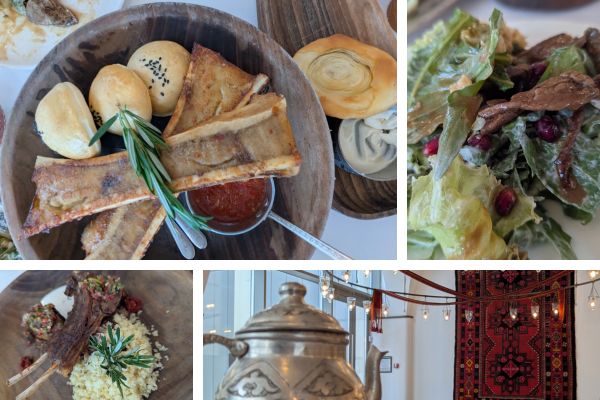
We tried the house salad with its pomegranate dressing and horse meat, katama bread, roasted bone marrow, and slow-roasted lamb. Website: sandyq.kz.
Address of Sandyq (Shymkent): Baydibek Bi Avenue, 126, Shymkent
Address of Sandyq (Almaty): Alimzhanov Street, 55
Address of Sandyq (Astana): Saraishyk Street, 34/3
Navat
An Uzbek restaurant chain doing excellent plov and fresh bread, with several branches around Almaty, so double-check which one you’re heading to before you set off.
Address of Navat (Abay Avenue branch): Abay Avenue, 164к2, Almaty
Bauyrdaq
A Kazakh fast-food chain, the quick, casual counterpart to the sit-down places above, good for a fast beshbarmak or samsa between sights without the full restaurant experience. There are multiple branches across Almaty.
Address of Bauyrdaq (Abylai Khan branch): Abylai Khan Avenue, 27, Almaty
Vegetarian & Vegan Options in Kazakhstan
Kazakh cuisine is meat-heavy by tradition, so honestly, it’s not easy going vegetarian or vegan here, particularly once you’re outside Almaty and Astana. That said, there are always options if you know what to look for.
Potato or pumpkin manty: steamed dumplings filled with potato, pumpkin or onion. Always confirm they’re not cooked with animal fat.
Oroma: a large rolled pastry that can be ordered with pumpkin or potato filling.
Samsa: baked pastries that commonly feature a pumpkin filling.
Baursak: fried, fluffy dough balls that are vegan-friendly and often served plain or with jam.
Salads: simple fresh tomato and cucumber salads are widely available, though stick to cooked vegetables in rural areas to avoid stomach issues.
Food Tours in Kazakhstan
Almaty is the easiest place to book a proper food tour here. There’s an authentic Kazakh food tour in Almaty run by an English-speaking guide, which covers a good chunk of what’s in this guide in one afternoon, including a stop at the Green Bazaar for kumis and shubat.
FAQs on Kazakh Food
Here’s a little more detail on Kazakh food
Is Kazakh food spicy?
No, it tends toward the bland end of the spectrum. If you like heat, bring your own chili sauce.
Do I have to try horse meat?
No. It’s common and traditional here, not mandatory.
What’s a typical Kazakh breakfast?
Strong black tea served with milk or cream is the absolute centerpiece of the morning meal, alongside freshly baked flatbreads like nan or taba naan and fried dough balls, baursak, usually with butter, jam, or honey. Rich dairy shows up too, kaymak cream, dried curd cheese called kurt, and soft cheeses like irimshik, all built for long-lasting energy. Savory horsemeat sausages, like kazy or zhaya, often turn up alongside eggs for a heavier start to the day.
Are there good vegetarian options in Kazakhstan?
Vegetarian food in Kazakhstan is workable rather than easy; see the vegetarian and vegan section above for what to look for.
What is beshbarmak?
Beshbarmak is Kazakhstan’s national dish, boiled meat over flat noodles.
What should I drink in Kazakhstan?
Tea comes first; it’s everywhere, and it’s taken seriously. Beyond that, try kumis and shubat at least once, and otherwise you’ll find the usual range of beer, wine and soft drinks in restaurants and cities. Almaty and Astana have a fabulous craft beer scene. And the Arba wine is really rather good (you can wine-taste at their stores in Almaty and Astana, and I wrote about our Astana experience here)
PRACTICAL TRAVEL TIPS
- 🛡️ Get Travel Insurance: Civitatis includes medical expenses, repatriation, theft, luggage delays. No deductibles or upfront payments. Get a quote here.
- 🛏️ Sea view? Laundry? Private bath? Book a Room.
- 🔌 Be ready for the plug, socket & power situation.
- 📶 Get online EASILY & cheaply – One eSim for the world. Data never expires
Final Words on Kazakhstan’s Food Scene
Kazakh food isn’t something that you’re going to rush back for, but there are some interesting dishes to try. It’s built for a cold climate and a nomadic history, heavy on meat and dairy, light on spice, and warm in the hospitality that comes with it. It’s easy to try the foods that are somewhat curious to us, and you certainly won’t go hungry while you’re here.
ASocialNomad is a participant in the Amazon Services LLC Associates Program, an affiliate advertising program designed to provide a means for sites to earn advertising fees by advertising and linking to amazon.com, amazon.co.uk, and amazon.ca. Amazon and the Amazon logo are trademarks of Amazon.com, Inc. or its affiliates. As an Amazon Associate, I earn from qualifying purchases.

