
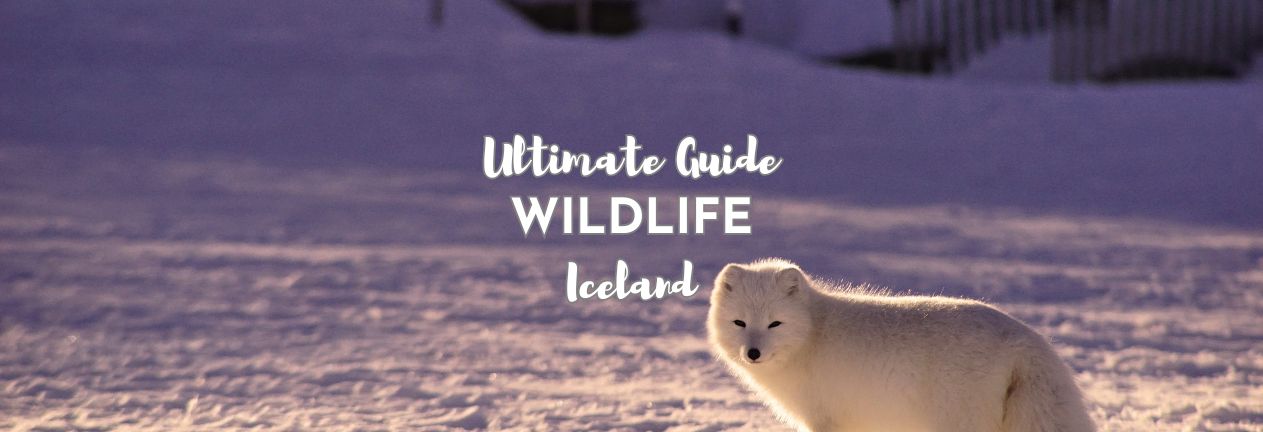
Everyone lands in Iceland already expecting whales, puffins, and those famously friendly horses. Fair enough, they earn the hype. But spend more than a few days here, and you’ll notice there’s a quieter cast of characters running alongside them: if you’re extremely lucky, an Arctic fox picking its way across a scree slope, a seal hauled out on a sandbar, and even a reindeer herd if you head east. Here’s our guide to wildlife in Iceland…
THIS POST MAY CONTAIN COMPENSATED AND AFFILIATE LINKS MORE INFORMATION IN OUR DISCLAIMER
If you’re trying to work out what you’ll actually see beyond the big three (and a reminder, that’s puffins, whales, and Icelandic horses), here’s the rundown: Arctic foxes and where your odds are genuinely good, seals and the two species that call Iceland’s shores home, the wild reindeer herds of the East, the sheep and sheepdogs that outnumber the humans here several times over, what’s turned up uninvited over the centuries, and the rest of Iceland’s remarkable birdlife. I’ll also point you toward our full guides on puffins, whales, and Icelandic horses, because those three genuinely deserve their own deep dives rather than a mere paragraph or two each here.
PRACTICAL TRAVEL TIPS
- 🛡️ Get Travel Insurance: Civitatis includes medical expenses, repatriation, theft, luggage delays. No deductibles or upfront payments. Get a quote here.
- 🛏️ Sea view? Laundry? Private bath? Book a Room.
- 🔌 Be ready for the plug, socket & power situation.
- 📶 Get online EASILY & cheaply – One eSim for the world. Data never expires
What Wildlife You Can Actually See in Iceland
Let’s set expectations honestly. Iceland has exactly ONE native land mammal. Everything else walked, swam, flew, or arrived in someone’s boat. That’s not a knock on the wildlife (and domesticated animals) here; it’s actually part of what makes it interesting, but if you’re picturing dense forests full of deer and bears, that’s a different country entirely.
EASIEST WILDLIFE EXPERIENCE

Encounter charismatic puffins and other sea birds close-up from Reykjavik: Sail to Akurey, Engey or Lundey to see the puffin breeding grounds, you’ll get up-close views via the free on-board binoculars
Are There Any Dangerous Animals in Iceland?
The short answer is no. No snakes, no bears, no large predators of any kind, nothing that’s going to ruin your hike. The closest thing to danger is an Arctic tern deciding your head is a threat to its nest and dive-bombing you accordingly (it happens, it’s more startling than dangerous, and it’s genuinely funny once it’s not happening to you).
The prize for most annoying goes to the gnats at Mývatn, and yes, you will definitely need one of these if you’re heading there in spring, summer, or autumn.
Polar bears are the one asterisk here, and it’s worth explaining properly rather than leaving it as a rumor. They’re not native; they don’t live here, but every so often one drifts across from Greenland on sea ice and washes up, usually in the Westfjords. They might have travelled 300 kilometers (186 miles) without food by the time they get here. When that happens, the bear is almost always starving and considered a serious threat, and Icelandic authorities put it down rather than attempt a costly relocation. It’s a genuinely rare event, not something to plan around or worry about.
It’s illegal to kill a polar bear while it’s swimming in the ocean, but it becomes a genuine threat once it’s on land in Iceland. It doesn’t happen often; there are only 600 documented arrivals since the settlement of Iceland, and the last observation was at Höfðaströnd in Jökulfirðir in September 2024.
Arctic Foxes in Iceland
Arctic foxes are Iceland’s only native land mammal, here since before humans, having walked across the sea ice during the last ice age and then got stuck when it melted. That’s either a great origin story or a rough one depending on how you look at it.

Your best chances by a long way are in the Hornstrandir Nature Reserve, up in the far north of the Westfjords. This isn’t a drop-in kind of place; there are no roads, so you’re looking at a guided hike or a multi-day guided trip, not a detour on a Ring Road drive. If the Westfjords are already part of your plans, read our full Westfjords guide for how to actually get up there. The best time to see them is between June and August, when they’re raising their young.
There’s an Arctic Fox center in Súðavík, near Isafjörður – it’s not open particularly long hours, but you can book tickets to visit here. You’ll get to discover the Arctic fox up close, learn about their biology and history, and also about the conservation efforts to protect the Arctic fox population.
It’s worth knowing that Icelandic Arctic foxes come in two color types: white foxes that go fully snow-white for winter and brown for summer, and blue foxes that keep the same darker coat year-round but bleach a little lighter through summer. Either way, they’re properly adapted to this place in a way almost nothing else here is.
And no, we didn’t get out to Hornstrandir, so we didn’t have the chance to see one.
Seals in Iceland
Two seal species live permanently around Iceland’s coast, harbor seals and grey seals, and between them they turn up all around the country, visible year-round rather than on some tight seasonal window. Your best odds are the Vatnsnes Peninsula in the north, often called the country’s seal capital, where big colonies haul out at Ósar beach and Illugastaðir (the latter has a proper viewing hide, so you can watch without disturbing them). Ytri Tunga Beach on the Snæfellsnes Peninsula is another reliable one, especially around low tide. Further east, Jökulsárlón does something none of the others can: seals swimming among floating icebergs, and you can get properly close on a seasonal amphibian or Zodiac boat tour on the lagoon itself.
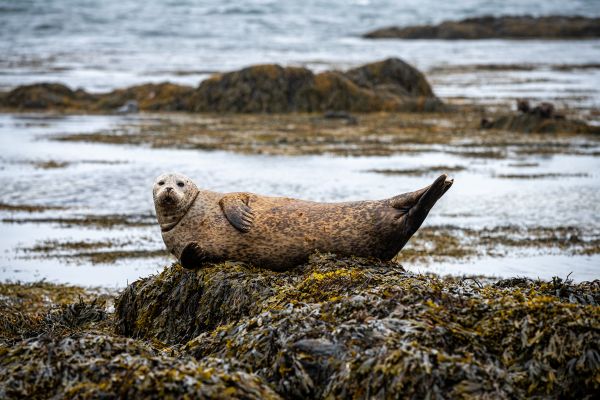
If you want to map out sightings properly, the Icelandic Seal Center in Hvammstangi is worth a stop. (Prebook your tickets here) And if you’re already doing the South Coast, our South Coast guide covers Jökulsárlón and where seals tend to show up along the way.
One that’s definitely gone rather than just rare: walruses used to have a real population here, hunted to extinction back in the 17th century. Every so often one still turns up as a stray visitor, but it’s not something to plan a trip around.
Reindeer in Iceland
I must admit to having a bit of a head swivel when we were in East Iceland. Reindeer. Hmm. Wasn’t expecting that at all! There’s even a reindeer museum and a reindeer park for rescued animals (established in 2021) here.
However, reindeer aren’t native either; they were brought over in the 18th century for farming, the farming attempt never really took, and the population went fully wild instead. There are somewhere around 4,000 of them now, and they’re an East Iceland animal specifically, concentrated around Snæfell Mountain, up in the highlands through summer and down into the lowlands come winter. You can see exactly where they hang out here.
You’re likely to see reindeer in the East Fjords, but if you specifically want to see them, head to the Reindeer Park.
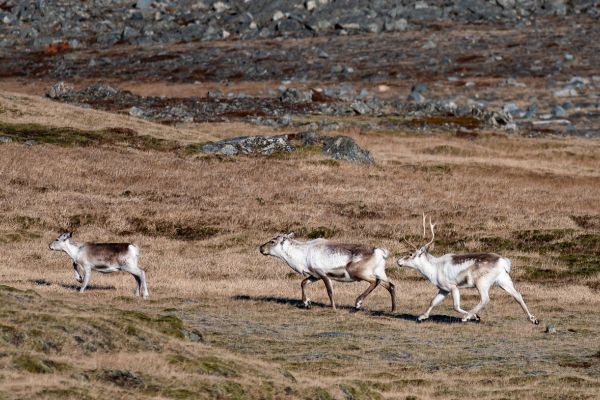
You should also head to the East Iceland Heritage Museum, which has a permanent exhibition on Icelandic reindeer, covering their life and survival in East Iceland, the natural and human threats they face, reindeer research, hunting history, and the various uses of reindeer products in food and craft. Visitors can watch the 1940s film Á hreindýraslóðum – On the Reindeer Trail by Eðvarð Sigurgeirsson, hear stories from reindeer hunters, and see photographs and artifacts from the collection.
You’ll find the museum at East Iceland Heritage Museum, Laufskógar 1, 700 Egilsstaðir. Map reference here.
If you’re driving the East Fjords at the right time of year, spotting a herd is likely, not a long shot. Their numbers are managed with controlled culls, mostly to stop them competing with Iceland’s sheep for the same grazing land, which tells you something about just how seriously sheep are taken here, which leads me nicely onto the next topic…
Icelandic Sheep
Sheep aren’t glamorous, I’ll grant you that, but you cannot spend two days in Iceland without understanding how much this country runs on them. There are roughly 800,000 sheep here, more than double the human population, and for centuries their wool and meat were the difference between surviving an Icelandic winter and not.
Every summer they’re set loose to roam the highlands and graze on wild herbs, which is also why Icelandic lamb has that distinct, slightly gamey flavor; it’s basically free-range in the truest sense. You’ll find them wandering down the middle of the road in plenty of places, so beware.

Come September, they all have to be found and brought home again, which is where réttir comes in, the annual sheep round-up, when farmers head out on horseback and foot to gather the flocks and sort them back to their rightful farms. It’s a proper community event, food, drink, and a fair bit of chaos, and if you’re driving anywhere rural in September, you’ll almost certainly meet a road full of sheep having a very bad day about it.
The Icelandic Sheepdog
Where there are sheep, there’s usually one of these close behind. The Icelandic Sheepdog is Iceland’s only native dog breed, brought over by the Vikings more than a thousand years ago, and it’s been earning its keep ever since, herding sheep, horses, and cattle across some particularly difficult terrain.
It’s even got its own museum (!), or heritage center, although it’s only been open since 2025. Here you can learn all about the names of the dogs, their stories, and their heritage. There’s more about the museum here.

The Icelandic Sheepdog very nearly didn’t make it. Disease wiped out huge numbers of the breed in the late 19th century, to the point where it came close to disappearing entirely, and it took dedicated breeding efforts to bring the population back. These days it’s a recognized, protected breed, still doing the job it’s always done, and also, somewhat unexpectedly, trained for Search and Rescue work, including avalanche searches. Not bad for a dog that started purely as a farmhand.
Unsurprisingly, réttir is basically its Super Bowl. If you’re around for the September round-up, you’ll see exactly why this breed and Icelandic sheep have been inseparable for over a millennium.
What Other Icelandic Animals Arrived Uninvited
Iceland’s wildlife isn’t all charming, and I’d rather tell you that honestly than pretend otherwise. Feral mink, originally brought over for fur farming, escaped decades ago and are now firmly established, and they’re not popular; ask any chicken farmer. Rabbits are a newer problem, mostly descended from released pets, and they’ve caused real damage gnawing through roots and fences in a couple of Reykjavik’s green spaces. Rats and mice came over the old-fashioned way, on ships, and have simply spread from there.
None of this is dangerous to you as a visitor; it’s more a reminder that the “untouched wilderness” is never quite as untouched as the postcards suggest.
Other Icelandic Birdlife Beyond Puffins
Puffins get all the attention (fairly, they’re truly spectacular), but Iceland’s birdlife has a lot more going for it than just one species. Arctic terns are the ones you’ll actually notice yourself, mostly because they’ll notice you first and let you know about it. Beyond them, the cliffs and wetlands host guillemots, gulls, gyrfalcons, and a huge range of freshwater birds, particularly around Mývatn, where over a dozen duck species alone nest each summer.
And no honest account of Icelandic birdlife skips the raven. It’s not rare, it’s not even unique to Iceland, but it’s held in real regard here, tied up in folklore and old belief in a way most birds never are.
Puffins in Iceland
Iceland holds roughly 60% of the world’s Atlantic puffin population, and between April and August they’re really one of the easiest wildlife experiences in the country to plan around, provided you time it right.
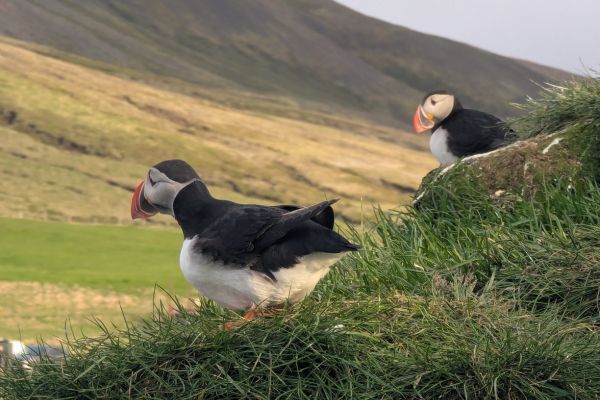
We’ve written a full guide to when, where, and how to see them responsibly; read our puffins guide for all of it.
Whales in Iceland
Iceland’s sub-Arctic waters are some of the best whale-watching territory anywhere in the world, and there’s a nice bit of language trivia worth knowing before you go: the Icelandic word “hvalreki” means both “windfall” and “beached whale,” a leftover from the days when a stranded whale was not just a stroke of luck, but sometimes a life saver for a coastal community. For where to go, when to go, and what an actual tour looks like, read our whale watching guide.
You should be aware that whaling is legal in Iceland. It’s controversial, and commercial hunting began again in the summer of 2026, with a quota for 150 fin whales and 168 minke whales issued to the controversial Hvalur hf. company, led by Kristján Loftsson.
Icelandic Horses
They’re smaller than most breeds, rarely over 150 centimeters, but don’t let that fool you; they’re famously friendly, curious, and capable of gaits most other horses simply don’t have. They’re the only domesticated animal that is kept outdoors year-round in Iceland. Yes, that’s how hardy they are.
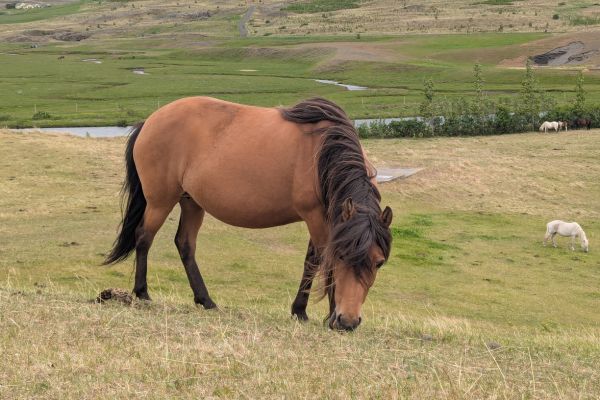
These gorgeous creatures were brought over to Iceland by the Vikings in the late 9th century, and in 982 AD, the Icelandic Parliament passed a law banning the import of horses into the country, a law that’s still in place today. Once an Icelandic horse leaves Iceland, it can never return, which is exactly how the breed has stayed this pure for over a thousand years. Around 3,000 are exported each year, never to come home again, and it’s part of why there are now more Icelandic horses living abroad (around 100,000) than at home (around 80,000). Icelandic horses are unique in their small stature, naming, colors, and gaits.
For where to see and ride them, read our full Icelandic horses guide.
FAQs on Wildlife in Iceland
Got questions about Iceland’s wildlife? Here are quick answers to what we’re asked most.
Are there any dangerous animals in Iceland?
No. There are no snakes, no bears, and no large predators native to Iceland. The rare exception is an occasional stranded polar bear drifting over from Greenland, which is uncommon and not something to plan around.
Where can I see Arctic foxes in Iceland?
Your best chance by far is Hornstrandir Nature Reserve in the Westfjords, though it takes a guided hike or multi-day trip to get there properly. You can get there easily on this trip.
Do you need a guide to see Arctic foxes?
For Hornstrandir specifically, yes, effectively. There are no roads in, so most visitors go with a guided hiking trip or multi-day tour rather than attempting it independently.
Are there reindeer in Iceland?
Yes, around 4,000 of them, living wild in East Iceland, mostly around Snæfell Mountain.
Where can I see seals in Iceland?
The Vatnsnes Peninsula and the Jökulsárlón area on the South Coast are the two most reliable spots. your best place to start is the Icelandic Seal Center. You can get tickets here.
Can I see puffins all year round in Iceland?
No, puffins are only around from April through mid-August; they spend the rest of the year out at sea.
Is wildlife watching better in summer or winter?
Summer, by a wide margin, for almost everything covered here: puffins, seals, and birdlife especially. Reindeer and Arctic foxes are visible year-round, though winter access is harder.
Are there polar bears in Iceland?
There’s no permanent population here, but very occasionally one drifts over from Greenland on sea ice. It’s rare and not a genuine concern for visitors.
ICELAND TRAVEL RESOURCES
AIRPORT TRANSFERS
24/7 pickup & drop off. Trusted, local English speaking drivers. Prebook & prepay online with cards.
Book a Transfer
HOTELS AND APARTMENTS
See choices here
Rooms with a view? Budget rooms? Need a washing machine? The best choice of hotels & apartments.
TOURS & ATTRACTIONS
Most excursion choices, small group tours, skip-line tickets, free cancellation and top local guides.
Top options here.
CAR RENTAL OPTIONS
Choose cars here
Best choice of vehicles, automatics, large or small cars, child seats. Book early for more options.
Final Words on Wildlife in Iceland
Whales, puffins, and horses will always get top billing, and they’ve earned it. But wildlife in Iceland is bigger and stranger than that headline act: foxes that walked here on ice, sheep that outnumber people several times over, a dog that nearly vanished and came back, and a whole quieter world worth slowing down for. Give it some of your trip, and you’ll come away with a fuller picture of the place than the postcards ever show you.
ASocialNomad is a participant in the Amazon Services LLC Associates Program, an affiliate advertising program designed to provide a means for sites to earn advertising fees by advertising and linking to amazon.com, amazon.co.uk, and amazon.ca. Amazon and the Amazon logo are trademarks of Amazon.com, Inc. or its affiliates. As an Amazon Associate, I earn from qualifying purchases.

