
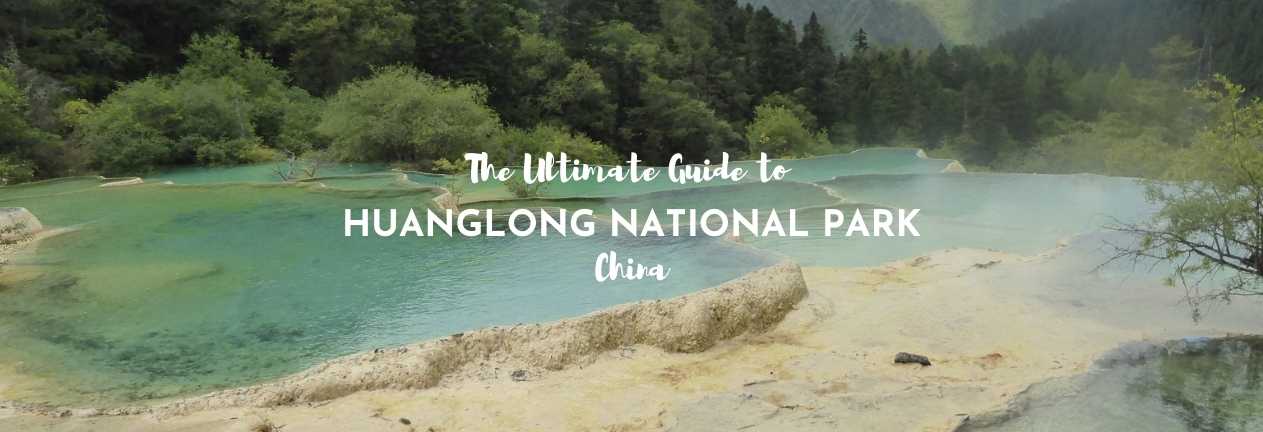
Huanglong National Park is one of China’s and Sichuan Province’s most glorious natural sites. It is quite simply a valley of cascading, mineral blue and turquoise pools set against snow-capped mountains, and it’s usually visited alongside its more famous and equally stunning neighbor, Jiuzhaigou. We spent a full day here as part of a longer China trip, and it remains one of the most striking places we’ve walked through. Here’s everything you need to know to plan your own visit to Huanglong, including current ticket purchasing options, the cable car, altitude, and how to get there.
THIS POST MAY CONTAIN COMPENSATED AND AFFILIATE LINKS MORE INFORMATION IN OUR DISCLAIMER
PRACTICAL TRAVEL TIPS
- 🛡️ Get Travel Insurance: Civitatis includes medical expenses, repatriation, theft, luggage delays. No deductibles or upfront payments. Get a quote here.
- 🛏️ Breakfast Included? Laundry? Private bath? Book a Room.
- 🔌 Be ready for the plug, socket & power situation.
- 📶 Get online EASILY & cheaply – Get a China eSIM
- 🚄 Book trains in China – quickly easily. Use Trip.com
EASIEST WAY TO VISIT
This 3 day tour is a glorious way to visit both Huanglong and Juizhaigou – you’ll get to see the top spots in both of these stunning National Parks!
Why Visit Huanglong
You’re not going to stumble across Huanglong by accident; you’ll need to make a plan to visit (and you’ll want to tie it in with a visit to Jiuzhaigou and perhaps a few other spots that I’ll detail later), but here’s why you should visit this glorious UNESCO World Heritage site in China.
The Colorful Pools and Travertine Terraces
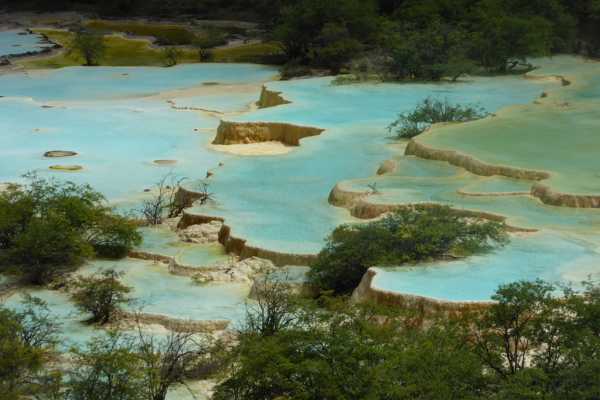
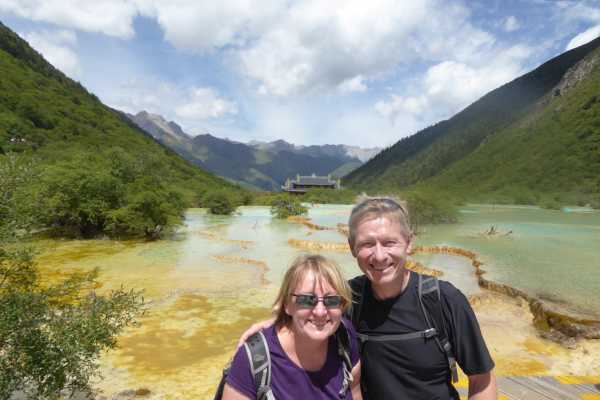
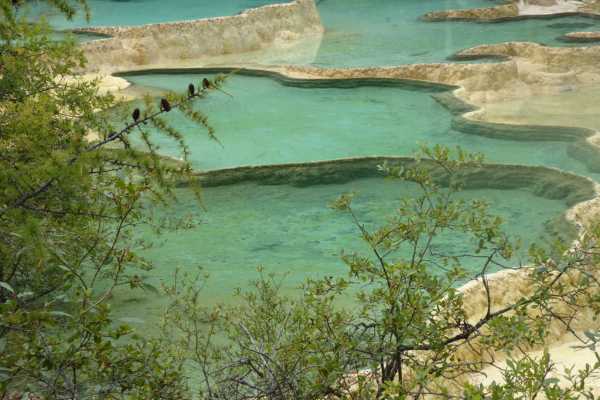
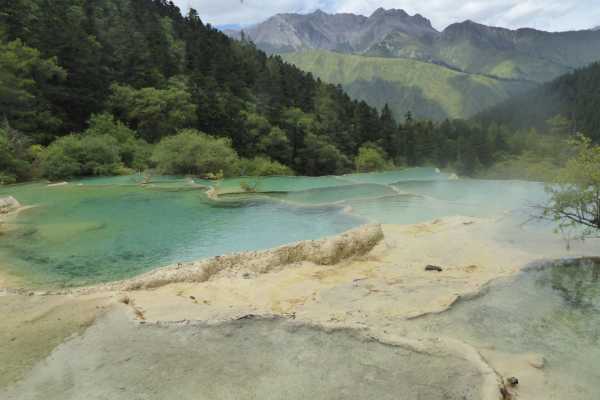
Huanglong’s defining feature is travertine, a type of limestone deposited by mineral-rich spring water. Travertine terraces are what we saw at Pamukkale in Türkiye, but this is a whole different league. Over thousands of years, the travertine has built up into natural dams that separate the valley’s water into thousands of individual pools, each colored differently depending on mineral content and depth (and of course the light that you see it in), ranging from pale turquoise to deep jade green. The name Huanglong means Yellow Dragon, and this is a reference to the golden travertine formations that wind down the valley like a dragon’s scales when seen from above.

Why is Huanglong Called “China’s Yellowstone”?
Huanglong is often nicknamed China’s Yellowstone because of its similarity to Yellowstone National Park’s famous mineral terraces and hot spring pools. The comparison is visual rather than geological, as unlike Yellowstone, Huanglong’s pools are fed by cold mineral water rather than geothermally heated water, so while the effect looks similar, the process of its creation is different.
Huanglong’s UNESCO World Heritage Status
Huanglong was inscribed as a UNESCO World Heritage Site in 1992, listed for its travertine landscapes and biodiversity, which is unique in Asia, as well as the endangered species found in the area, including the giant panda and the Sichuan golden snub-nosed monkey. It’s officially known as the Huanglong Scenic and Historic Interest Area.

Map of Huanglong Attractions
Here’s a map of what you can expect at Huanglong. It’s not to scale, but it will give you a sense of what you can expect here. xxxx
Where is Huanglong?
Huanglong sits in a fairly remote corner of northern Sichuan, so it helps to know exactly where it is and how it fits alongside the region’s other big place to visit, Jiuzhaigou.
Huanglong’s Location in Sichuan Province
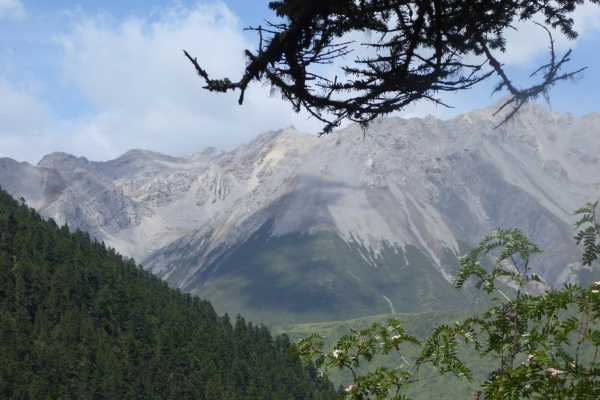
Huanglong is in Songpan County, within the Aba Tibetan and Qiang Autonomous Prefecture in northern Sichuan Province, at the eastern foothills of the Qinghai-Tibet Plateau. The valley, which is 1.5 kilometers (0.9 miles) wide and 7.5 kilometers (4.7 miles) long, runs along the base of Xuebaoding (Snow Mountain), the highest peak in the Minshan mountain range.
Huanglong is about 110 kilometers (68 miles) from Jiuzhaigou. The nearest airport, Jiuzhai Huanglong Airport, is about 53 kilometers (33 miles) away, at an elevation of 3,448 meters (11,312 feet).
How to Get to Huanglong
There are several ways to reach Huanglong, and which one makes sense for you largely depends on whether you’re coming straight from Chengdu or basing yourself in Jiuzhaigou first.
Go to Huanglong by High Speed Train (the newest and easiest route)
Since 2024, a high-speed rail line has connected Chengdu directly to Huanglongjiuzhai Railway Station, cutting the journey down to around two hours. From the station, it’s a further 26 to 30 kilometers (16 to 19 miles), about an hour by bus or car, to reach Huanglong itself, or roughly two hours onward to Jiuzhaigou. This is now the fastest and most comfortable way to reach the area, and has largely replaced the older flight and long-distance bus routes as the recommended option.
You can easily book train tickets to Huanglong with Trip.com here.
Go to Huanglong from Jiuzhaigou
If you’re basing yourself in Jiuzhaigou first, as many visitors (including us) do, Huanglong is about a two and a half hour drive away, over a mountain pass that reaches around 4,000 meters (13,123 feet). A scheduled coach runs between the two, departing Jiuzhaigou at several points in the morning and is relatively cheap. You can check the prices and book a ticket here, or you can arrange a private driver for more flexibility. We did the latter, and you can read about that drive further down in our own experience of the route.
Go to Huanglong from Chengdu
Aside from the new train, you can also fly from Chengdu to Jiuzhai Huanglong Airport, a route with a couple of flights a day, or take a long-distance bus from Chengdu’s Cha Dianzi (茶店子客运站) or Xin Nanmen (新南门客运站) bus stations. The buses go to either Songpan or ChuanZhusi, and then you’ll need to transfer to Huanglong. Honestly, it’s a pain if you’re not visiting Jiuzhaigou first, so just get the train!
Visiting Huanglong and Jiuzhaigou Together
Almost everyone who comes here visits both Huanglong and Jiuzhaigou, as they sit so close together and both require the same long journey out from Chengdu. The typical pattern is to spend one to two days exploring Jiuzhaigou’s lakes and waterfalls, then add a half day for Huanglong on the way in or out. If you’d rather not arrange the logistics yourself, then this 3-day private tour covering both Huanglong and Jiuzhaigou handles transport, entrance tickets, and a private driver for the mountain pass crossing.
Before You Visit Huanglong
A few practical things are worth sorting out before you go, since Huanglong’s booking system, pricing, and altitude all need a little planning ahead.
Huanglong Entrance Fees and Cable Car Tickets
Tickets to Huanglong depend on how you want to travel around the park, so there are different elements to the cost:
- Entrance Fee: ¥170 in peak season (June 1 to December 15), ¥60 in the off-season (December 16 to May 31)
- Cable car: ¥80 up, ¥40 down
- Golf Cart: ¥20 (a short ride replacing about 40 minutes of walking between the top cable car station and the Five Color Pool)
It’s cheapest if you just want to hike, i.e. walk in, up and down and out again.
Huanglong now operates a mandatory online, real-name booking system, and there are no ticket windows on site at all. You’ll need to book in advance, either through the official “Huanglong” WeChat account or the Aba Tourism Network website, or through a third-party platform that accepts card payments if you don’t have a Chinese WeChat wallet set up. We book through Trip.com, which handles the booking in English, accepts standard international cards, and also covers the golf cart if you want it.
It’s important to book your tickets as soon as you know your dates, as Huanglong operates a daily visitor limit and hits it especially during the months from June to December, and they sell out.
You don’t get a physical ticket as such, but simply use your passport to enter.
If you choose not to use Trip.com, Viator and GetYourGuide also sell Huanglong tickets. If you’d rather book directly through the WeChat channel, here’s how:
If you’re entering on a passport, Taiwan Compatriot Certificate, or Hong Kong/Macau Travel Permit, you can select the correct document type when booking, and use it to swipe directly into the park without a paper ticket.
Here are a few things to keep in mind when booking and entering this way:
- Booking tickets works the same way as for ordinary domestic visitors, through the “Huanglong” WeChat official account, the Aba Tourism Network mini-program, or the official website www.abatour.com.
- When filling in your details, select “Passport”, “Taiwan Compatriot Certificate”, or “Hong Kong and Macau Travel Permit” from the “Document Type” dropdown, not “ID Card”.
- You’ll need to carry the original document for entry. Screenshots or copies aren’t accepted at the gate.
- Every visitor, including those on free tickets, must enter with their own original document. One document works for one person only, so proxy swiping isn’t allowed.
Huanglong Opening Hours
The park is open year-round, with slightly different hours in the summer and winter.
From April 25 to December 15: 8:00 to 18:00, last entry 16:00. From December 16 to May 31: 8:00 to 17:30, last entry 15:30.
The cableway has strict stop times. Ticket sales stop at 16:40, and the last upward cable car is 17:00; the last downward cable car is 17:30.
The cable car stops running entirely for maintenance for around a month in the winter. The exact dates differ each year, so it’s best to check locally when it’s happening.
Huanglong Altitude and Oxygen
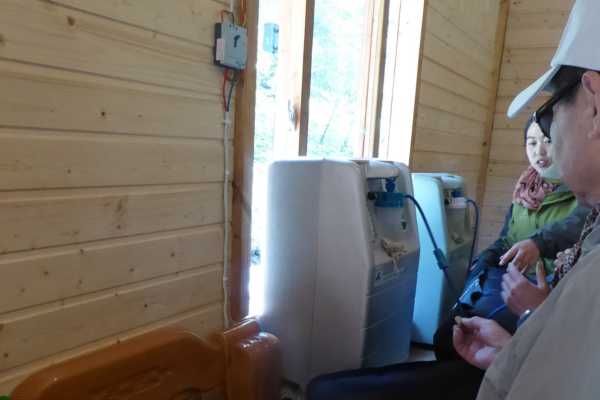
Huanglong’s valley floor is at around 3,200 meters (10,500 feet), climbing to roughly 3,576 meters (11,732 feet) at the highest pools. Altitude is a real consideration here, and more so than at Jiuzhaigou. Oxygen stations are dotted through the park (you pay only for the bag to carry it; the oxygen itself is free), and there are frequent rest points and toilets throughout the route. Dealing with altitude just takes a few adjustments: walk slowly, avoid alcohol on the day, and don’t push through breathlessness.
You might want to read what I wrote about altitude when we were in Central Asia. That’s here.
Don’t forget that your travel insurance should cover you for being at this altitude.
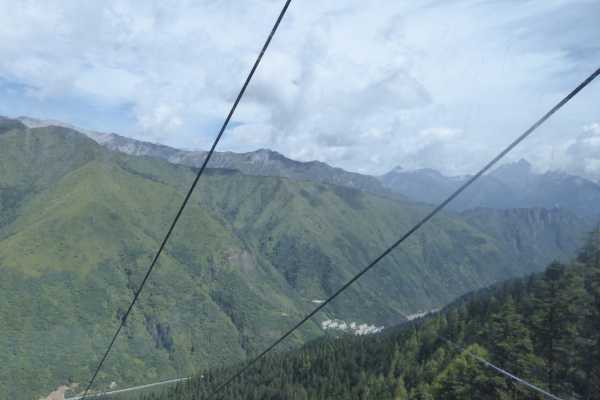
Our suggestion, and what we did ourselves, is to take the cable car up and walk down. This is by far the easiest way to manage the altitude: the climb up is the hardest part of the whole route at this elevation, so skipping it with the cable car saves your energy for enjoying the pools, and the walk down afterwards is gentle and largely flat or downhill.
The Best Time to Visit Huanglong
Without a doubt, it’s summer and autumn, roughly June through October, that are the best times to visit Huanglong.
This is when the pools are at their fullest and most colorful. October is especially lovely when the combination of turquoise water and turning autumn leaves makes a glorious contrast. In spring you might find many of the lower pools dry, although the highest pools tend to hold their color regardless of season. Winter can surprise you with the beauty of partially frozen pools and snow-covered temples, but the cable car closes for the season (the specific time differs each year) and a full walk up and down is required.

Exploring Huanglong
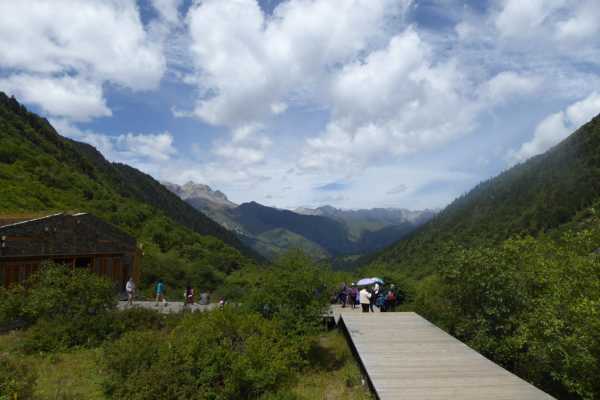
Almost everyone takes the cable car up and walks down, since the altitude makes the climb up considerably harder than the descent. From the top cable car station, it’s a fairly flat walk to the highest point in the valley, before the boardwalks zigzag gently downhill through the rest of the park back to the entrance.

The Named Pools at Huanglong
The valley’s highlight is the Five Color Pool, at around 3,576 meters (11,732 feet) and made up of nearly 700 individual pools, the largest and highest group in the park. Walking down the valley, you’ll pass the Bonsai Pond (around 3,320 meters / 10,892 feet, roughly 330 pools, named for the tree roots growing through the water), Zhengyan Pond (one of the largest groups after the Five Color Pool), and finally the Guests Welcome Pond near the entrance, made up of some 350 smaller pools.

Huanglong’s Temples
There are two temples along the walking route. The Middle Temple, originally built in the Ming Dynasty, is a Bon tradition site with little remaining beyond a single hall. The Back Temple, around 600 years old and Taoist in tradition, sits directly behind the Five Color Pool and makes for a striking backdrop in photos of the highest pools.
Our Huanglong Experience
Our driver to take us from Jiuzhaigou to Huanglong was late. We arrived in the lobby, bags packed, grabbed some bread from a local restaurant, and checked with the staff that our car was on its way. Google translated their response that our 09:00 driver would arrive for us at 18:00. There was a moment of shocked silence.
No, no, now, and after a stressful 20 minutes, he arrived.
Not quite screeching to a halt outside the hostel, but not far off, his small red car emblazoned with “Devil May Cry,” perhaps a sign of what was to come. Devil May Cry might have been plastered on one side of the car, but he’s obviously got a deal on a second sign, as yrC yaM liveD on the other side of the car took me a moment to figure out.

For 400 Yuan, he was going to take us on the spectacular drive over the 4,000-meter (13,123 feet) mountain pass to Huanglong. He’d wait for us and at the end of the day get us to the Jiuzhai-Huanglong airport, where we’d take a flight to Chongqing for the next part of the Chinese adventure. It is a glorious drive out of the Jiuzhaigou valley, and then over the mountains to Huanglong. Just magnificent.
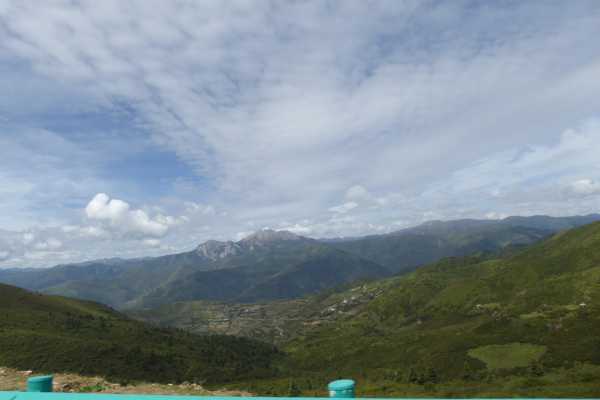
Once you get out of the 9 bends of the Jiuzhaigou valley and you’ve overtaken a bus, a Range Rover, and everything in between, then the roads are quiet, the scenery awe-inspiring and just vast.
About 2 hours and 20 minutes later we arrived in Huanglong; our driver helped us purchase cable car tickets and National Park Tickets and made sure that we knew where to meet him at 16:00. These days you’ll need to book in advance online.
You can do that here.
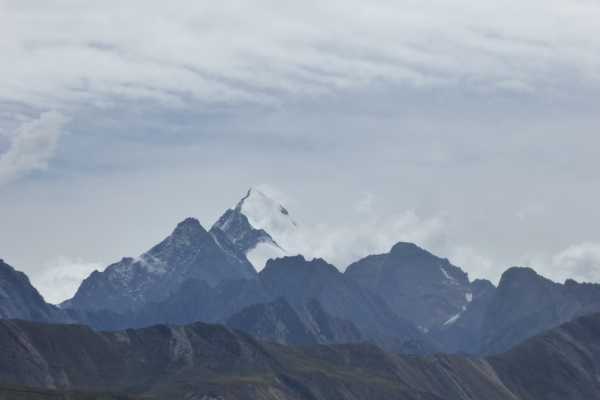
It’s not necessary to get the cable car; you can walk into the area, but this is all at altitude. We’d been at altitude for a while, steadily climbing, from our entry into China at Hekou at 100 meters (328 feet), to Kunming, at 1,900 meters (6,234 feet), then onto Dali (2,200 meters / 7,218 feet), Lijiang (3,000 meters / 9,843 feet), then Shangri La (3,300 meters / 10,827 feet), our flight to Chengdu meant we were down at 500 meters (1,640 feet) for two days, but the bus journey to Jiuzhaigou took us back to 2,000 meters (6,562 feet).
Huanglong base is at 3,200 meters (10,500 feet), and the top of the park is at 3,600 meters (11,811 feet). We took the cable car up and walked down, which we’d recommend as the easiest way to manage the altitude.
Step out of the cable car, walk a few meters, and you’ll find the first oxygen station. Oxygen is free; you just need to pay for the bag to carry it in. This was the first of three that we spotted.
There are also toilets everywhere. I’ve never seen so many toilets. Perhaps the oxygen and the toilets are because of the age of the visitors. This was definitely an older person’s park, and after weeks of bringing up the average age, we were taking it well down.
A few more metres saunter and you reach the first viewing platform. Wow. Just wow. And silence. There weren’t too many people here, and those that were here were helpful; there was always someone offering to take a photo, they were polite, and folks waited for others to take photos before they took their own. It was quiet. There were no yelled conversations. No barging around. Quite the opposite to yesterday in Jiuzhaigou.
Huanglong is likened to Yellowstone because of the colorful pools of water cascading down the hillside. And it truly is lovely. The water here is cold, not sulphur-heated like the US National Park; it’s clear. It’s plentiful. There are the usual food vendors throughout the park, but a distinct lack of tacky things to buy. Horrors, no Chinese swords.
After the first viewpoint, it’s a couple of kilometers walk along flattish boardwalks. There’s a climb of a few hundred meters to reach the colorful pool, but taking it slow meant it was pretty easy, and then it’s downhill all the way to the exit. We took a very, very leisurely 4 hours to wander down. Photographing everything, stopping and just looking and enjoying the peace and quiet.

Huanglong is well laid out. It was quiet when we went. You don’t need more than 4 hours to see it (unless you plan on walking in and up to the top and back down again). The scenery was magnificent, and the fellow parkgoers were quiet, polite, and generally very helpful. We’ll let the pictures of the park tell you the rest.
Huanglong Recommended Itinerary
If you’re wondering how to actually fit Huanglong into a wider Sichuan trip, here’s the pattern that works well.
Huanglong & Jiuzhaigou in 3 Days
A comfortable pace is two days in Jiuzhaigou, giving you time to properly cover its lakes and waterfalls, followed by a half day in Huanglong on your way out toward Chengdu or onward to your next stop. This 3 day private tour follows exactly this, with a private car for the mountain pass crossing between the two parks.
Extending Your Trip: Munigou Valley
If you have an extra half day, Munigou Valley is about 30 kilometers (19 miles) from Songpan County and is officially part of the wider Huanglong scenic area, though far fewer visitors make it out here. Its main draw is the Zhaga Waterfall, one of the tallest travertine waterfalls in the world, along with Erdao Lake and a scattering of hot springs and karst caves. It’s a good option if you’ve already seen Huanglong and Jiuzhaigou and want to see something quieter.
Where to Stay to Visit Huanglong
The closest place to stay to visit Huanglong is the Seercuo International Hotel. You can check rates and availability here.
A little further away in Songpan, you have more options. Check them out here.

Practical Tips for Visiting Huanglong
Take the cable car up if you’re unsure about the altitude, and walk down. It’s far easier on the body than a full climb.
Book your entrance ticket and cable car online in advance. There are no ticket windows on site.
Bring a downloaded copy of your booking confirmation and your passport for entry verification.
Pack layers. Even in summer, temperatures at altitude can be considerably cooler than in Chengdu.
Bring your own snacks and water. Vendors inside the park exist but are more limited and pricier than outside.

Huanglong FAQ
A few quick answers to the questions we get asked most about visiting Huanglong.
Is Huanglong Worth Visiting?
Yes, particularly if you’re already making the journey out to Jiuzhaigou. The travertine pools are unique to Asia, and unlike anything else most visitors will have seen, and a half day is enough to see the highlights.
How High is Huanglong?
The valley floor sits at around 3,200 meters (10,500 feet), rising to roughly 3,576 meters (11,732 feet) at the highest pools. Altitude sickness is a real possibility, so take the walk slowly and use the oxygen stations if you need them.
How Much are Huanglong Tickets?
Entrance is ¥170 in peak season (June 1 to December 15) and ¥60 in the off-season, booked online in advance. The cable car costs an additional ¥80 up and ¥40 down, and the golf cart is ¥20.
You can check the most up-to-date pricing here.
Is it necessary to take the Cable Car at Huanglong?
No, walking the whole route is possible, but the altitude makes the uphill section considerably harder than the walk down. We’d suggest taking the cable car up and walking down as the easiest way to manage the altitude, which is exactly what we did ourselves.
UNESCO World Heritage Sites in China
If you like visiting UNESCO World Heritage Sites, then our guides to these Chinese World Heritage sites will be useful
- Binggou Danxia – the Zhangye UNESCO Global GeoPark
- China’s Rainbow Mountains – the Colorful Danxia
- How to Visit Huanglong National Park [the Yellowstone of China]
- Discover Xian’s Terracotta Army
- How to Visit The Great Wall of China – [Independent Public Transit Route]
- The Forbidden City of Beijing
- The Historic Center of Macau
- Jiuzhaigou National Park
- Huangshan National Park and Sacred Mountain
- Wulingyuan and the Zhangjiajie National Park
- The Sichuan Giant Panda Sanctuaries
- Tiger Leaping Gorge
CHINA TRAVEL RESOURCES
STAY CONNECTED
WhatsApp with tour guides, get online easily and quickly.
Buy an eSim
HOTELS
Reserve a room here
Best city hotel? Need a laundry service? The best choice of hotels & places to stay.
TOURS & TRIPS
Most excursion choices, small groups, beach resort days passes, free cancellation, local guides.
Check options here.
TRAINS IN CHINA
Book now
Book trains in China easily, quickly and get the seats and berths you need.
Final Thoughts on Visiting Huanglong
Huanglong is one of those places that’s hard to describe without sounding like you’re exaggerating. The colors are real, the scale is real, and even with a limited half day, it’s one of the most memorable natural sights we saw anywhere in China. Pair it with a trip to Jiuzhaigou, book your tickets ahead of time, and we hope you’ll have as fabulous a time as we did.
ASocialNomad is a participant in the Amazon Services LLC Associates Program, an affiliate advertising program designed to provide a means for sites to earn advertising fees by advertising and linking to amazon.com, amazon.co.uk, and amazon.ca. Amazon and the Amazon logo are trademarks of Amazon.com, Inc. or its affiliates. As an Amazon Associate, I earn from qualifying purchases.


One thought on “Visit Huanglong National Park: Travel Guide, Tickets & Cable Car”
I went on the last day of off peak season, there was no cable car or oxygen, but this meant there were also hardly any people. The altitude made my packet of Cucumber flavoured Lays crisps explode on the bus ride there. It was a tough walk up, on a limited time frame to get back to the bus, wondering if I was even going to see anything spectacular as it was quite dry winter, but holy moly, once I made it to the top it was absolutely worth it. I was sad that none of my friends answered my FaceTime call to share in the experience, but I found a new friend in another solo traveller at the top, who then became my personal tour guide when I went to Chongqing. I hope one day I will be able to go again when Huanglong is in its full glory.