
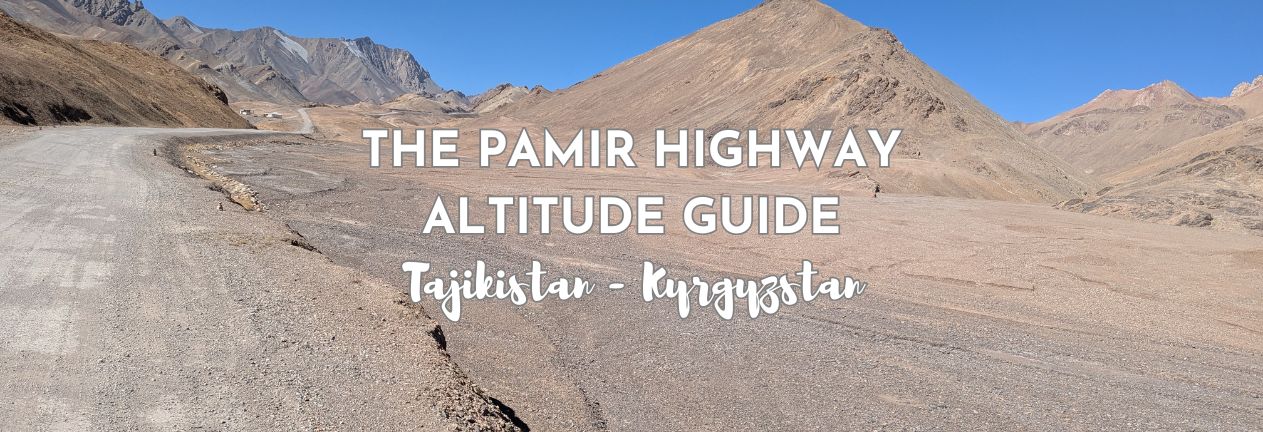
The Pamir Highway is high. Very high. You’ll see numbers like 3,700 meters (12,139 feet). 4,655 meters (15,272 feet). You’ll read phrases like “one of the highest international highways in the world.” And if you’ve ever experienced altitude before, like in Nepal, Peru, Colombia, or even the Alps, then you’ll know that height changes how your body behaves. When you’re traveling across the Pamir Highway, the altitude is entirely manageable; it doesn’t just have to be survivable. The altitude is why we opted to travel the direction we did, and the stops we made were to accommodate the altitude. Here’s my guide to managing altitude on the Pamir Highway.
THIS POST MAY CONTAIN COMPENSATED AND AFFILIATE LINKS MORE INFORMATION IN OUR DISCLAIMER
To my mind, it’s the way that you travel this route that matters far more than the highest number on the map. If you rush the journey, ignore acclimatization, and try to power through in five days, you increase your risk. If you travel gradually and approach the altitude gain sensibly, then your body is given time to adjust naturally.
Most people who travel the Pamir Highway over seven days acclimatize without serious issues.
PRACTICAL TRAVEL TIPS
- 🛡️ Get Travel Insurance: Civitatis includes medical expenses, repatriation, theft, luggage delays. No deductibles or upfront payments. Get a quote here.
- 💰 Read about cash, ATMS and paying for things in Tajikistan
- 🔌 Check out the Tajik plug, socket & power situation. Buy this adapter.
- 📶 Get online EASILY & cheaply – One eSim for the world. Data never expires
Don’t get me wrong, I definitely felt it. I had to work to overcome the challenges that come with altitude. But it felt entirely manageable the whole trip, for me. For someone else on our trip, it wasn’t, and that’s why I’ve put this guide together.
I’m covering:
- The exact altitudes along the Pamir Highway
- How altitude progresses day by day
- What symptoms are normal
- What symptoms are not
- Why I think your Pamir Highway route direction matters
- And what actually helps (and what doesn’t)
If you’re following my 7-day Dushanbe to Osh itinerary, this guide works alongside that route. If you’re planning the journey in reverse, you’ll want to read this even more carefully.
Here are the numbers to start with.
Pamir Highway Altitude at a Glance
Here are the key elevations you’ll encounter traveling the Pamir Highway from Dushanbe to Osh.
| Location | Altitude |
| Dushanbe | 700 meters (2,296 feet) |
| Kalai Khumb | 1,200 meters (3,937 feet) |
| Bartang River Crossing (Jizeu trailhead) | 2,083 meters (6,833 feet) |
| Jizeu Village | 2,500 meters (8,201 feet) |
| Khorog | 2,200 meters (7,217 feet) |
| Bibi Fatima (Wakhan Valley) | 2,900 meters (9,514 feet) |
| Bulunkul Lake | 3,700 meters (12,139 feet) |
| Murghab | 3,650 meters (11,975 feet) |
| Karakul Lake (if overnighting) | 3,960 meters (12,992 feet) |
| Ak-Baital Pass (the highest point on the M41) | 4,655 meters (15,272 feet) |
| Kyzyl-Art Pass (Tajik–Kyrgyz border) | 4,280 meters (14,042 feet) |
| Osh | 963 meters (3,159 feet) |
How Altitude Progresses on a 7-Day Dushanbe to Osh Route
When we decided we would travel the Pamir Highway, the direction of our route was incredibly important to us, for the primary reason of altitude acclimatization. And one of the biggest advantages of traveling from Dushanbe to Osh is how gradually the altitude builds. You’re not thrown into extreme elevation on Day 1. Instead, the climb unfolds much more gradually. Here’s how the altitude progresses on my recommended route and schedule. You can read my Pamir Highway Guide here.
Day 1: Dushanbe to Kalai Khumb
- Start: 700 meters (2,296 feet)
- Overnight: 1,200 meters (3,937 feet)
This is a gentle introduction. You gain around 500 meters in altitude, which most people and I would barely notice. It’s a great way to get started. My “here’s what to expect on Day 1 on the Pamir” is here.
Day 2: Kalai Khumb to Jizeu Village
- Start: 1,200 meters (3,937 feet)
- Road high point: 2,083 meters (6,833 feet)
- Overnight: 2,500 meters (8,201 feet)
This looks on paper like a pretty big jump, but it should be manageable for most people, so long as you keep your hydration up. You’ll drive from 1,200 meters (3,937 feet) to 2,083 meters (6,833 feet) and then walk the rest of the way up to your overnight stop at 2,500 meters (8,201 feet). This hike is the glorious Jizeu Village hike, and I wrote about it here.
You might have a slightly disturbed sleep (but the physical exertion of the hike should help with that), a mild headache, and a reduced appetite. It’s not usually dramatic, but continuing to stay hydrated tends to help.
You can read our experiences of Day 2 on the Pamir Highway, going from Kalai Khumb to Jizeu, here.
Day 3: Jizeu to Khorog
- Overnight: 2,200 meters (7,217 feet)
Walk high, sleep low is the general rule, and we’re not quite hitting that on day three, as you actually slept at 2,500 meters (8,201 feet) last night, and tonight is a little lower, but it’s actually good for you. You can read our experiences of going from Jizeu to Khorog on Day 3 on the Pamir here.
Day 4: Khorog to Bibi Fatima (Wakhan Valley)
- Overnight: Approximately 2,900 meters (9,514 feet)
The climb today is gradual and a nice little jump up in altitude, but not too much. A dip in the hot springs of Bibi Fatima should help you relax and get a good night’s sleep. Our experiences of Day 4 on the Pamir are here.
The walk up to the hot springs from the guesthouse we stayed in gave me a little shortness of breath, but nothing dramatic.
Day 5: Bibi Fatima to Bulunkul
- Overnight: 3,700 meters (12,139 feet)
Today’s the first day of climbing onto the high plateau of the Pamirs. Sleep is a bit more difficult here, and my appetite definitely wasn’t there as much as it was yesterday. Drinking copious amounts of tea and water helps, though. Here’s what happened on Day 5 of our Pamir Highway experience.
Day 6: Bulunkul to Murghab
- Overnight: 3,650 meters (11,975 feet)
Now, if you’ve traveled gradually, your body has had multiple nights above 2,500 meters (8,201 feet) and one night above 3,500 meters (11,482 feet). Our plan on this night was not to stay in Murghab; it was to stay at Karakul Lake, but life intervened (read about it in our Day 6 on the Pamir post). And we could NOT continue to our planned stop at Karakul Lake at 3,960 meters (12,990 feet).
Day 7: Murghab to Osh
- Karakul Lake: 3,960 meters (12,990 feet).
- Ak-Baital Pass: 4,655 meters (15,272 feet)
- Kyzyl-Art Pass: 4,280 meters (14,042 feet)
- Finish in Osh: 963 meters (3,159 feet)
This is the highest day of the trip, but there’s no sleeping, or in our case, even stopping for long, at 4,655 meters (15,272 feet). It’s simply the high pass. It was hard to breathe. Even Habib’s trusty Land Cruiser didn’t like going up and over this pass!
The descent into Osh at 963 meters (3,159 feet) is fabulous; it’s much easier to walk around, it’s easier to breathe, and, oh boy, your appetite comes back too! Here’s what happened on Day 7 of our Pamir Highway experience.
Why This Progression in Altitude on the Pamir Highway Works
It’s a gradual ascent, with a built-in minor descent (Jizeu → Khorog). You get to sleep at mid-altitude for two nights before you sleep high. And that high pass, the Ak-Baital Pass at 4,655 meters (15,272 feet), you don’t hit it until right near the end of your trip.
This is why I strongly recommend traveling west to east. If you reverse this route and travel from Osh to Dushanbe, then you hit 3,600+ meters within your first 24 hours. If altitude isn’t a problem for you, then there are some excellent hikes on these options going east to west here.
What Altitude Symptoms Are Normal (And What Aren’t)
Altitude affects everyone differently. Fitness doesn’t protect you. Age doesn’t predict it. Previous experience helps — but it doesn’t guarantee anything. Read about how the fittest person on our Everest Base Camp hike had to be airlifted back to Kathmandu here.
The good news is that most altitude symptoms on the Pamir Highway are mild and manageable if you ascend gradually.
Normal, Common, and Usually Manageable Symptoms of Altitude Sickness
These are typical above about 2,500 meters (8,201 feet) and especially noticeable once you’re sleeping above 3,500 meters (11,482 feet).
- Mild headache
- Slight nausea
- Reduced appetite
- Feeling more tired than usual
- Shortness of breath on inclines
- Light-headedness when standing up quickly
- Disturbed sleep (waking frequently, vivid dreams)
Sleep disruption is one of the most common altitude effects. Even if you don’t feel ill, you may wake up repeatedly during the night at 3,700 meters (12,139 feet) in Bulunkul or 3,650 meters (11,975 feet) in Murghab. I mean, what can I say? I’m a menopausal woman, waking up several times in the night is normal for me. But it did also happen when we were in Nepal, and I can’t blame menopause on that; I blame the amount of water I was drinking, but the night sky in Nepal is worth the broken sleep.
Most of these mild symptoms improve within a day or two if you maintain altitude and stay hydrated.
Symptoms of Altitude Sickness That Should Make You Pay Attention
- Persistent, worsening headache that doesn’t respond to rest or painkillers
- Vomiting
- Severe dizziness
- Difficulty walking in a straight line
- Confusion or unusual behaviour
- Breathlessness at rest
- Tightness in the chest
Serious altitude complications, HACE (High Altitude Cerebral Edema) and HAPE (High Altitude Pulmonary Edema), are rare on a gradual 7-day Pamir itinerary, but they are possible if altitude gain is rushed.
The only thing you can do if these symptoms escalate is descend. On the Pamir Highway, descent often means driving several hours to lower altitudes.
The Reality of Altitude on the Pamir Highway
You are not trekking to 5,300 meters (17,388 feet) like Everest Base Camp. You’re not undertaking major exertion (unless you’ve built in hikes), you are most likely traveling by vehicle, with staged overnight stops, and crossing the highest pass at 4,655 meters (15,272 feet) without sleeping there.
Most people feel mild symptoms; they’re slower, less hungry, more tired, but have broken sleep.
If you try to stay hydrated, avoid drinking alcohol heavily at altitude, most people will be ok.
Our medical emergency on the Pamir wasn’t because of altitude sickness; it was the result of trying to deal with altitude sickness. You can read about it here.
Some people take Diamox to counter the effects of altitude. I’ve taken a small dosage of it myself when we were trekking to Everst Base Camp – read about how it works here.
Why Direction of Travel Matters for Altitude
You can travel the Pamir Highway in either direction; logistically, both routes work. The physiological effects on your body are not equal because of the altitude.
Traveling from Dushanbe to Osh (West to East)
When you start in Dushanbe at 700 meters (2,296 feet), you start low and then move through a gradual, staged ascent:
- Night 1 at 1,200 meters (3,937 feet)
- Night 2 at 2,500 meters (8,201 feet)
- Night 3 at 2,200 meters (7,217 feet) (a small but helpful descent)
- Night 4 around 2,900 meters (9,514 feet)
- Night 5 at 3,700 meters (12,139 feet)
- Night 6 at 3,650 meters (11,975 feet) / 3,960 meters (12,992 feet)
Then, the highest point of the trip is crossed at 4,655 meters (15,272 feet) before you descend into Osh at 963 meters (3,159 feet).
Traveling from Osh to Dushanbe (East to West)
Now compare that to starting in Osh at 963 meters (3,159 feet), and straight away, within hours, you’re climbing toward:
- Karakul Lake at 3,960 meters (12,992 feet)
That’s a gain of more than 2,700 meters (8,858 feet) in a single day, and for some people, that’s fine, but most of the itineraries that I found doing this route headed straight into a hike on day one or day two. At more than 3,500 meters (11483 feet). That wasn’t for us.
And then you’re sleeping seriously high on your first day, too, without acclimatizing. But for me, even worse, you’ll be staying above 3,500 meters (11,482 feet) for several consecutive nights before descending.
If altitude is something you’re even slightly concerned about, start in Dushanbe.
What Actually Helps with Altitude on the Pamir Highway (And What Doesn’t)
The single biggest factor is gradual ascent.
Then it’s hydration. Drink more water than usual, because at altitude, you breathe faster and lose more moisture. Dehydration worsens headaches and fatigue. It doesn’t just have to be water; drink tea, have soup with your meal.
Slowing down helps too. I am the ultimate poster child for “slowly, slowly, catchy monkey” when it comes to hiking at altitude.
Try to eat, even if you’re not hungry. Your body still needs fuel even if you have a reduced appetite, which is common above 3,000 meters (9,842 feet). Rice is good, soup is good, bread is good. Keep the soup going and the tea too. Plain biscuits if you can’t stomach anything else.
Sleep is important, but it’s harder to come by at 3,500 meters (11,482 feet) and above. You’ll probably wake up lots, dream lots, and feel groggy when you wake up. Try not to snooze during the day (truly, it helps) and keep your sleep to nighttime.
And now, the elephant in the room. Medication. Ibuprofen or paracetamol can help with mild altitude headaches. Some travelers carry Acetazolamide (Diamox) to assist acclimatization. It can help. It’s available over the counter in Dushanbe. But you should use it with caution – read about what happened to one of our travelers and his experience with Diamox on the Pamir highway. If you have previous altitude issues, consult your doctor before the trip.
Everyone is different. And everyone’s experience of altitude is different. You might have been fine in Nepal or Colombia, but you could be affected here in Tajikistan. Just because your travel mate is ok, doesn’t mean you have to compare yourself to them. It’s not a race.
Where You Can Get Medical Assistance in the Pamirs
The Pamir Highway is remote, which means that you need to be realistic about medical support. This is not a region with well-equipped mountain clinics every few hours. Once you leave Dushanbe, facilities become increasingly basic — and increasingly far apart.
Here’s what medical support looks like in the Pamirs
Dushanbe
This is your last access to fully equipped hospitals before heading into the Pamirs. If you have any lingering illness before departure, deal with it here. Don’t assume you’ll “be fine once you’re on the road.”
Khorog
Khorog, at 2,200 meters (7,217 feet), is the administrative center of the GBAO region and has the most reliable medical facilities in the Pamirs. There is a regional hospital here. It is not Western-standard private healthcare, but it is functional, staffed, and capable of handling common medical issues, including altitude-related concerns.
Murghab
Murghab sits at 3,650 meters (11,975 feet). There is a hospital here; it’s basic, but it saves lives. In our case, the facility in Murghab proved critical for one of our fellow travelers. It may not look like much, but in this part of the world, access to trained staff and oxygen is significant. You can read about the medical services here. They are outstanding.
Outside Dushanbe, Khorog, and Murghab, there are no major hospitals, and there’s a limited mobile signal.
Once you descend into Osh at 963 meters (3,159 feet), access to hospitals improves significantly again. Osh has multiple medical facilities and is well-connected compared to the Tajik high plateau.
TAJIKISTAN TRAVEL RESOURCES
AIRPORT TRANSFERS
24/7 pickup & drop off. Trusted, local English speaking drivers. Prebook & prepay online with cards.
Book a Transfer
HOTELS AND APARTMENTS
See choices here
Double rooms?Budget rooms? Need a washing machine? The best choice of hotels & apartments.
TOURS & ATTRACTIONS
Most excursion choices, small group tours, skip-line tickets, free cancellation and top local guides.
Top options here.
PAMIR HIGHWAY
Choose routes here
Best choice of vehicles, dates, drives and routes. Book early for more options.
Final Thoughts on Altitude on the Pamir Highway
Altitude was the primary concern that we had when planning our experience on the Pamir Highway. We’ve both had mild symptoms in the past, headaches, poor sleep, but nothing serious, and nothing that couldn’t be managed easily. But we’ve had fellow travelers airlifted to safety because of altitude, and so we take it very seriously. For me, traveling from Dushanbe to Osh was a logical way for us to manage the altitude on the Pamir Highway.
ASocialNomad is a participant in the Amazon Services LLC Associates Program, an affiliate advertising program designed to provide a means for sites to earn advertising fees by advertising and linking to amazon.com, amazon.co.uk, and amazon.ca. Amazon and the Amazon logo are trademarks of Amazon.com, Inc. or its affiliates. As an Amazon Associate, I earn from qualifying purchases.

