
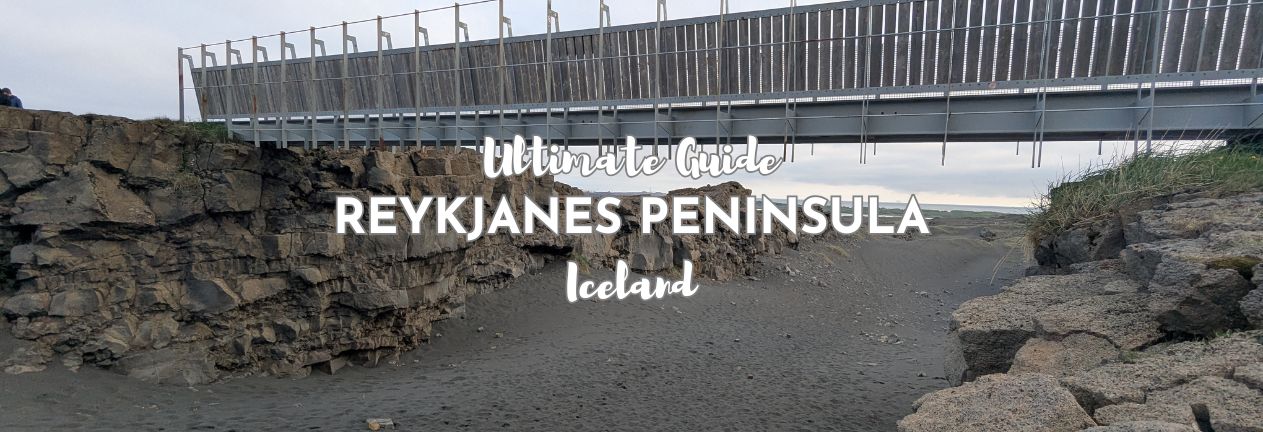
Reykjanes is probably the most overlooked region in Iceland, and only because of geography, it’s the first thing you see leaving the airport and the last thing you see heading back to it, which somehow makes it the easiest place in the country to drive straight past without stopping. That’s a mistake. Here’s our guide to the things to see on the Reykjanes Peninsula…
THIS POST MAY CONTAIN COMPENSATED AND AFFILIATE LINKS MORE INFORMATION IN OUR DISCLAIMER
If you’re trying to work out what’s actually worth seeing on the Reykjanes Peninsula, here’s the rundown: I’ve got eleven stops covering lava fields, geothermal areas, and recent history, how to actually get here (it’s easy, you’re basically already there), whether this works better as a day trip or as your first or last day of the whole trip, where to stay, and where to eat on the Peninsula.
PRACTICAL TRAVEL TIPS
- 🛡️ Get Travel Insurance: Civitatis includes medical expenses, repatriation, theft, luggage delays. No deductibles or upfront payments. Get a quote here.
- 🛏️ Sea view? Laundry? Private bath? Book a Room.
- 🔌 Be ready for the plug, socket & power situation.
- 📶 Get online EASILY & cheaply – One eSim for the world. Data never expires
What to See on the Reykjanes Peninsula
Out of the eleven stops below, everything is within a short drive of everything else; there are fun places to visit, relaxing places to visit, and those that will make you think.
TOP THING TO DO
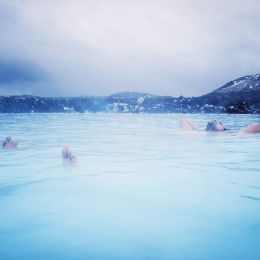
It’s not just the top thing to do on the Reykjanes Peninsular, its the top thing to do in Iceland, so don’t miss out as you do need to prebook this activity.
The Bridge Between Continents
This small footbridge over a fissure marks the boundary between the North American and Eurasian tectonic plates. It’s more symbolic than dramatic, but it’s an actually easy way to literally walk between continents in under a minute. And it makes for a fun photo too.
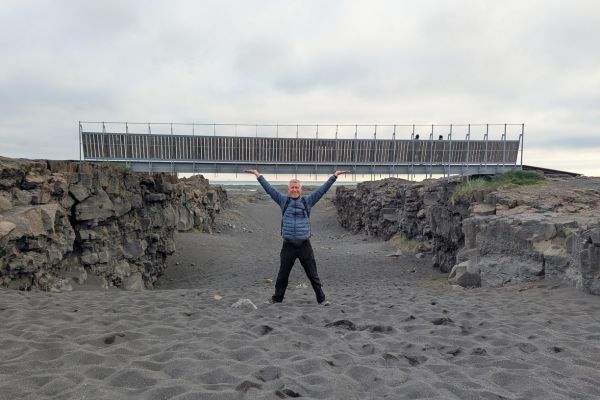
The real plate boundary runs the length of the whole peninsula rather than sitting neatly under this one bridge; Reykjanes is the only place in the world where the Mid-Atlantic Ridge comes ashore and is visible above sea level at all, which is really the more interesting fact here. If you want to see the fissure underwater, then head to the Silfra fissure in Thingvellir National Park where you can snorkel or dive it. A small plaque and a couple of national flags mark either end, and the fissure itself, Álfagjá, is easy to see running off in both directions once you’re standing on it.
I’ve included visiting the Bridge between Continents in my 7 day Iceland itinerary. You can see it here.
- How to get to the Bridge Between Continents: signposted off Route 425, near Sandvík.
- How long to spend at the Bridge Between Continents: 15-20 minutes.
- Entry: free.
- Parking: free.
Gunnuhver Geothermal Area
This steaming, bubbling geothermal field with Iceland’s largest mud pool is named after a vengeful ghost in local folklore said to have been trapped and boiled here by a priest after terrorizing the local district. Boardwalks keep you at a safe distance from ground that’s too hot to walk on. It’s a real safety measure rather than just a suggestion; the current boardwalk was rebuilt after a fire damaged the original viewing platform in 2016. Steam rises constantly off the main mud pool, and on a still day the sulphur smell carries a fair distance before you even reach the site. For more on how Iceland’s geothermal activity actually works, see our geothermal Iceland guide.
- How to get to Gunnuhver Geothermal Area: near Reykjanesviti, off Route 425.
- How long to spend at Gunnuhver Geothermal Area: 30-45 minutes.
- Entry: free.
- Parking: free.
Reykjanesviti
Iceland’s oldest lighthouse, first built in 1878 and rebuilt in its current form in 1908 after the original was damaged by earthquakes. It stands on a windswept clifftop with truly dramatic coastal views in every direction. It’s still an active, functioning lighthouse rather than a museum piece, which means the interior isn’t generally open to the public, though it occasionally opens for a handful of days a year around Iceland’s national lighthouse day. Most people come for the setting rather than the building itself; regardless, the clifftop position looking out over the Atlantic is stunning.
- How to get to Reykjanesviti: at the peninsula’s southwestern tip, off Route 425.
- How long to spend at Reykjanesviti: 20-30 minutes.
- Entry: free to view from outside.
- Parking: 1,000 ISK, pay via kiosk, shared with Valahnúkur Cliffs.
Valahnúkur Cliffs
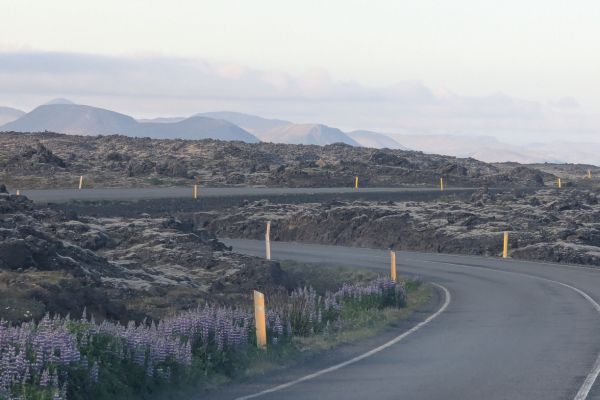
These dramatic sea cliffs close to Reykjanesviti really do fill you with a sense of standing at the edge of the country, the waves crashing well below you and almost nothing between you and the open Atlantic. On a clear day you can pick out Eldey island offshore. It’s home to one of the largest gannet colonies in the world, and this stretch of coastline is a good spot for storm watching if you catch it on a rough day, from a safe distance back from the edge. The cliffs sit within the wider Reykjanes UNESCO Global Geopark, recognition of just how geologically active and unusual this whole corner of the country is.
- How to get to Valahnúkur Cliffs: a short walk from Reykjanesviti.
- How long to spend at Valahnúkur Cliffs: 20-30 minutes.
- Entry: free.
- Parking: 1,000 ISK, pay via kiosk, shared with Reykjanesviti.
Kleifarvatn Lake
Iceland’s third-largest lake by surface area is dark and truly eerie on an overcast day, ringed by volcanic terrain rather than the usual green farmland. It has no visible inlet or outlet river, fed and drained instead through underground geothermal activity, and its water level has fluctuated noticeably over the years, dropping sharply after earthquakes in 2000 before partially recovering since. Fans of Icelandic crime fiction might recognize the name; Arnaldur Indriðason’s novel Kleifarvatn (published in English as The Draining Lake) is set here and uses that same shrinking water level as a plot point. If you’re a fan of Icelandic fiction, then I cover it extensively in my guide to Icelandic books here.
- How to get to Kleifarvatn Lake: off Route 42, between Krýsuvík and Hafnarfjörður.
- How long to spend at Kleifarvatn Lake: 20-30 minutes.
- Entry: free.
- Parking: free.
Seltún / Krýsuvík Geothermal Area
This is another of Iceland’s geothermal fields with boiling mud pots, steaming vents, and mineral-streaked ground in shades of orange, yellow, and red. Boardwalks keep the whole area easy to explore safely.
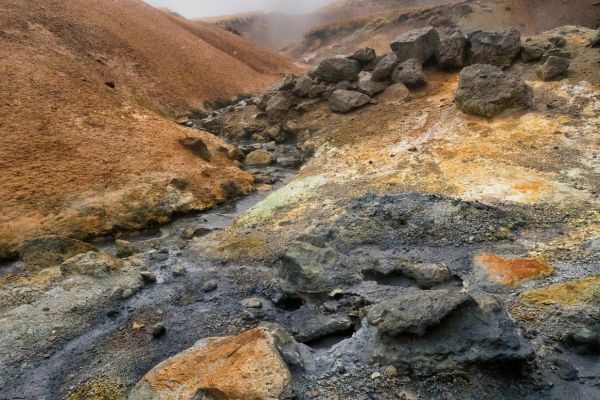
You should stick to them, the ground here has been known to shift with surprisingly little warning, and a small phreatic explosion briefly reshaped part of the site back in 1999.
- How to get to Seltún / Krýsuvík Geothermal Area: off Route 42, near Kleifarvatn.
- How long to spend at Seltún / Krýsuvík Geothermal Area: 30-45 minutes.
- Entry: free.
- Parking: 750 ISK, pay via Checkit.is.
Brimketill
This natural lava rock pool carved by the sea is set right at the coastline and is said in folklore to be the bathtub of a giantess named Oddný, who was said to have been caught bathing here at dawn and turned to stone by the rising sun. Waves occasionally crash straight into it without warning, so admire from a safe distance rather than climbing down for a closer look. This stretch of coastline has claimed lives before from rogue waves, so warnings should be taken seriously.
- How to get to Brimketill: off Route 425, near Grindavík.
- How long to spend at Brimketill: 15-20 minutes.
- Entry: free.
- Parking: free.
Sandvík Black Sand Beach
Sandvík’s black volcanic sand closely resembles the beaches of Iwo Jima, close enough that it stood in for them in the films Flags of Our Fathers and Letters from Iwo Jima, twin films meant to be watched together. They’re worth watching before your trip if you haven’t seen them. The beach itself is open to the public and an easy, atmospheric stop on its own merits, separate from the film connection. It has a wilder feel than the more sheltered black sand beaches further along the South Coast. Read my guide to black sand beaches in Iceland here.
- How to get to Sandvík Black Sand Beach: on Iceland’s southwestern coast, close to the Bridge Between Continents.
- How long to spend at Sandvík Black Sand Beach: 20-30 minutes.
- Entry: free.
- Parking: free.
Grindavík
Grindavík’s recent history is worth understanding before you visit; this is a real, ongoing situation, not background scenery. The town’s roughly 3,790 residents were evacuated on November 10-11, 2023, as a volcanic eruption sequence began nearby, now referred to as the 2023-2025 Sundhnúkur eruptions. A later eruption in that sequence, starting November 20, 2024, sent lava into the Blue Lagoon’s own parking lot within days, forcing an evacuation there too and destroying at least one service building. Many residents remained displaced well over two years on.
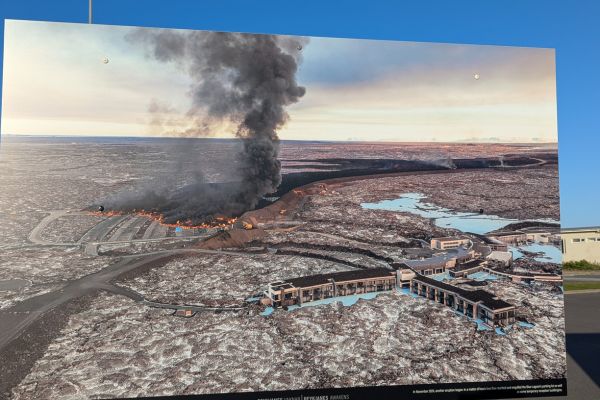
There’s a public photo display in the town, showing what happened here during the eruptions, worth stopping for as an informational visit rather than a novelty photo-op; this is the town’s own way of showing people what it went through, not something staged for tourists. Café Bryggjan, by the harbor, reopened on May 1, 2026, a truly hopeful sign of the town coming back.
If you’d rather see the volcanic activity up close with a guide explaining what you’re looking at, a few tours cover it well: this erupting volcano hike and Reykjanes tour takes you hiking in the safe zone near the eruption site, this active volcano hike and Blue Lagoon combo pairs the hike with a soak afterward, and this volcanic peninsula and Grindavík minibus tour takes in both the eruption sites and the town itself in a small group.
- How to get to Grindavík: on Route 43, on the peninsula’s south coast.
- How long to spend at Grindavík: 30-60 minutes.
- Entry: free to drive through and view the display.
- Parking: free.
The Blue Lagoon
I’ve saved the most popular and famous until last. Iceland’s most famous geothermal lagoon sits right here on Reykjanes, near Grindavík. We’ve covered it, along with Sky Lagoon and the rest of Iceland’s hot springs and lagoons, in our hot springs and lagoons guide. This is the one attraction on this list that reliably sells out.
There are two main ticket tiers worth knowing the difference between. Comfort admission (from US$144) gets you full entry, a towel, one drink at the swim-up bar, and a single Silica Mud Mask at the mask bar, everything most people actually need for a proper visit. Premium admission (from US$167) adds a bathrobe on top of the towel, a trio of face masks instead of one (Silica Mud, Algae, Mineral, and Lava Scrub, pick your favorites), and a 10 ml Silica Mud Mask to take home with you. The practical difference comes down to the bathrobe, useful if you don’t want to walk around in just a towel between the changing rooms and the water, and how many masks you want to work through while you’re in there. Neither tier includes food beyond the one drink, so budget separately if you’re planning to eat at the on-site café or restaurant.
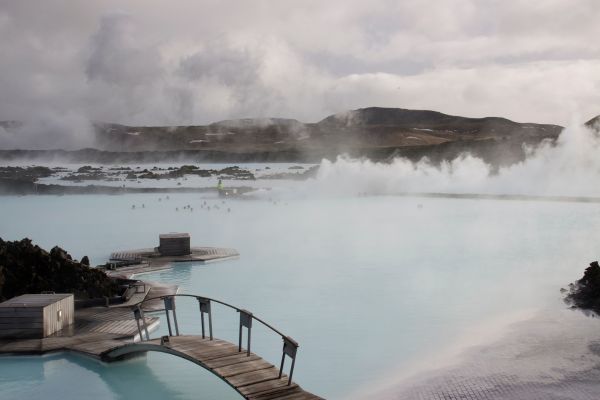
Book Comfort admission here or book Premium admission here. If you’d rather combine it with a look at the volcanic activity that’s shaped this whole area recently, this volcanic peninsula and Grindavík minibus tour covers both in one trip from Reykjavik.
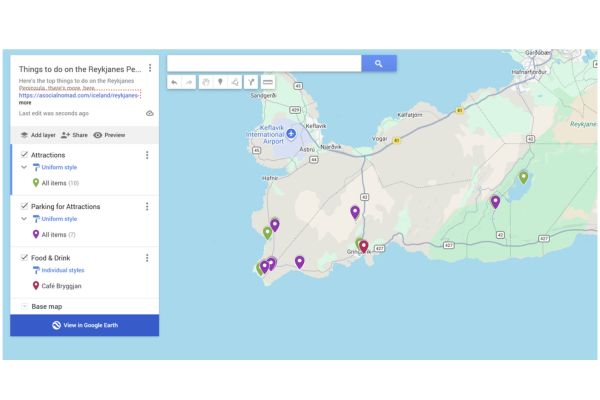
Map of Attractions on the Reykjanes Peninsula
Here’s our map of all eleven stops in this guide; you can also see the map here.
Visiting Reykjanes
You’ll either come here on your first day or your last day in Iceland, although to be fair it also makes a good day trip from Iceland’s capital, Reykjavik.
As a Day Trip from Reykjavik
A perfectly reasonable half-day or full-day trip out of the capital, close enough that it doesn’t eat into the rest of your itinerary. See our day trips from Reykjavik guide for how this compares to the other options.
As Your First or Last Stop (Arrival/Departure Day)
This is where Reykjanes truly earns its keep. Since it sits right by Keflavík, it’s the obvious way to fill dead time either side of a flight; a few hours here on arrival day beats sitting in a hotel lobby waiting to check in, and the same goes for a last stop before a departure flight. The honest caveat: jet lag and exhaustion cut both ways. Arriving after a red-eye flight, it’s your choice – sit in the Blue Lagoon rejuvenating or just get to your hotel, while a last-day stop works well if you’ve got energy left and a late flight home.
How to Get to the Reykjanes Peninsula
You’re essentially already here the moment you land; Keflavík Airport sits on the peninsula itself. Most of what’s in this guide is within a 20-40 minute drive of the airport. See our guide to arriving at Keflavík Airport and getting from Keflavík to Reykjavik for the logistics either side of this.
Where to Stay to Explore Reykjanes
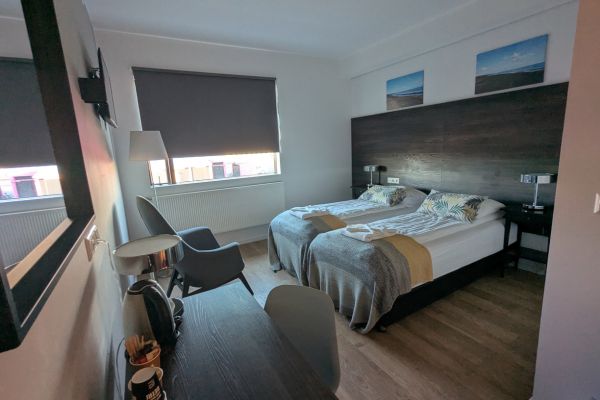
I recommend the Black Beach Guesthouse; it’s a comfortable and well-placed option for exploring the peninsula properly rather than just passing through. Otherwise, stay in Reykjavik and day trip out here.
How Long to Visit Reykjanes
Half a day covers the highlights if you’re tight on time; a full day lets you actually stop properly at each of these rather than rushing between them. Of course, if you’re spending time at the Blue Lagoon, then you’ll need to extend this time considerably.
Grocery Shopping on Reykjanes
Kjörbúðin, near the airport, is open 24 hours, useful if you’re landing at an odd hour and need supplies before you can check into anywhere. Nettó, close by, keeps long hours too and is worth knowing about as a backup.
Food & Drink Options on Reykjanes
Café Bryggjan, by the harbor in Grindavík, is worth planning a stop around. I’ve marked it on the map.
FAQs on the Reykjanes Peninsula
Got questions about visiting the Reykjanes Peninsula? Here are quick answers to what we’re asked most.
Is Reykjanes worth visiting before my flight home?
Yes, particularly if you’ve got a late flight and energy left to spare. It’s close enough to the airport that it doesn’t add real risk to your schedule.
Is the Blue Lagoon on the Reykjanes Peninsula?
Yes, it’s near Grindavík, on the peninsula itself.
Can you visit Reykjanes without a car?
It’s considerably harder to visit this area without one, unless you take a specific tour. Public transport options are limited, and a lot of what makes this region worth visiting- the geothermal fields, the cliffs, Selatangar- sit well off any bus route.
How far is Reykjanes from Keflavík Airport?
Most of the stops in this guide are within 20-40 minutes of the airport, some considerably closer.
Is Reykjanes good for a first day or last day of the trip?
Both work, honestly; it depends on you. Fresh off a long flight, you might just want your hotel, in which case save Reykjanes for the way out instead. Either way, it beats sitting around waiting for a check-in or flight time.
ICELAND TRAVEL RESOURCES
AIRPORT TRANSFERS
24/7 pickup & drop off. Trusted, local English speaking drivers. Prebook & prepay online with cards.
Book a Transfer
HOTELS AND APARTMENTS
See choices here
Rooms with a view? Budget rooms? Need a washing machine? The best choice of hotels & apartments.
TOURS & ATTRACTIONS
Most excursion choices, small group tours, skip-line tickets, free cancellation and top local guides.
Top options here.
CAR RENTAL OPTIONS
Choose cars here
Best choice of vehicles, automatics, large or small cars, child seats. Book early for more options.
Final Words on the Reykjanes Peninsula
Reykjanes doesn’t need a full extra day carved out of your itinerary, and that’s exactly what makes it work. A few hours either side of your flight, lava fields, a lighthouse, a geothermal field or two, and a real, honest look at a town still finding its way back after real hardship. It’s the easiest bookend to an Iceland trip you’ll ever add.
ASocialNomad is a participant in the Amazon Services LLC Associates Program, an affiliate advertising program designed to provide a means for sites to earn advertising fees by advertising and linking to amazon.com, amazon.co.uk, and amazon.ca. Amazon and the Amazon logo are trademarks of Amazon.com, Inc. or its affiliates. As an Amazon Associate, I earn from qualifying purchases.

