
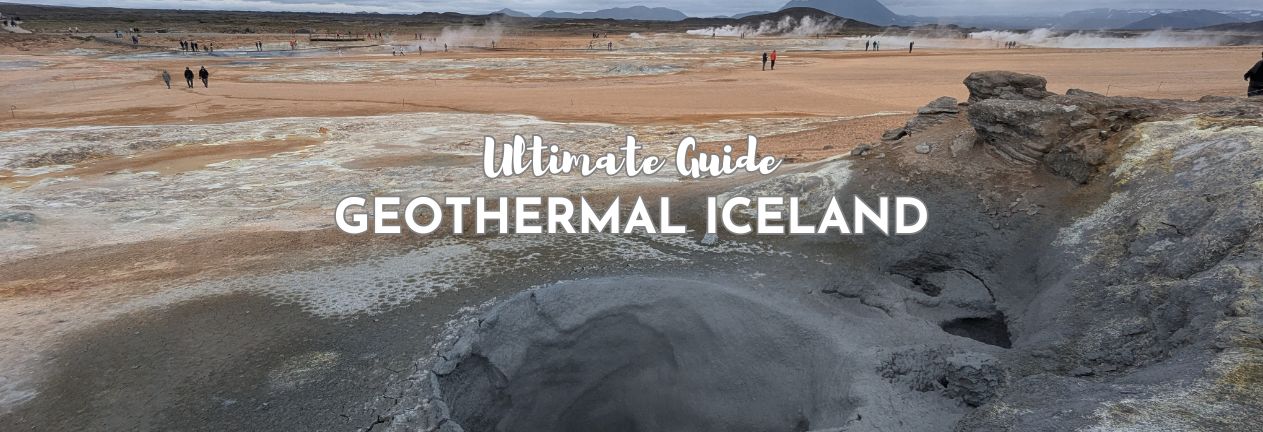
Iceland doesn’t just sit near volcanic activity; it lives on top of it and runs on it. The heat under this country’s feet warms homes, grows vegetables through the depths of winter, and bakes bread underground. This is geothermal Iceland, not just the place to swim, but the phenomenon behind almost everything else you’ll experience here. Here’s our guide to geothermal Iceland…
THIS POST MAY CONTAIN COMPENSATED AND AFFILIATE LINKS MORE INFORMATION IN OUR DISCLAIMER
If you’re curious about geysers in Iceland, what geothermal activity there is in Iceland, or how any of this actually works, here’s the overview: how geothermal energy powers Iceland on a day to day basis, what a geyser actually is, and where you can go see, taste, and soak in all of it yourself, exhibitions, lagoons, geysers, steam vents, and geothermally baked bread among them.
PRACTICAL TRAVEL TIPS
- 🛡️ Get Travel Insurance: Civitatis includes medical expenses, repatriation, theft, luggage delays. No deductibles or upfront payments. Get a quote here.
- 🛏️ Sea view? Laundry? Private bath? Book a Room.
- 🔌 Be ready for the plug, socket & power situation.
- 📶 Get online EASILY & cheaply – One eSim for the world. Data never expires
How Geothermal Energy Powers Iceland
Geothermal energy isn’t a novelty here; it’s load-bearing infrastructure, running underneath daily life in ways most visitors never think to ask about.
Iceland uses Geothermal Power to Heat Homes
66% of Icelandic homes are heated through district heating systems, hot water piped directly from underground geothermal reservoirs into radiators. There’s no boiler or furnace burning anything to produce that heat. If you add in other renewable energy sources (hydro), then you’ll get to nearly 90% of homes covered. It’s one of the reasons Iceland’s domestic energy use looks so different from almost anywhere else in the world.
Iceland uses Geothermal Power for Hot Water.
Turn on the hot tap in those 66% of Icelandic homes, and you’ll find that the water came straight from the ground, not from an electric or gas water heater. It explains the sulfur smell you might notice. It’s simply the mineral content of geothermal water, not a plumbing fault, and it fades quickly once you’re used to it.
Iceland uses Geothermal Power for Heating Roads
In parts of Reykjavik and other towns, run off geothermal water is piped directly under pavements, driveways, and even some roads specifically to stop ice from forming in winter. It’s a practical use of excess heat that would otherwise go to waste, and it’s part of why some Icelandic streets stay clear even during a proper snowstorm.
Iceland uses Geothermal Power to Heat Greenhouses
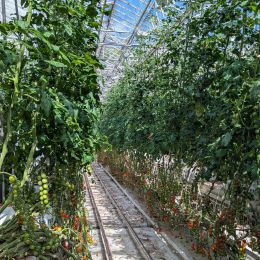
Geothermal heat and geothermal electricity together make it possible to grow vegetables in Iceland year-round, despite a climate that would otherwise make that impossible. Entire greenhouse operations run on this combination, heated glasshouses lit and warmed cheaply enough to grow tomatoes, cucumbers, and peppers through the darkest months of winter.
The best-known example is Friðheimar, a working tomato greenhouse on the Golden Circle route that doubles as a restaurant, you eat lunch, tomato soup with fresh bread, right inside the greenhouse itself, surrounded by the plants growing everything on your plate. Bumblebees imported specifically for pollination work the greenhouse alongside the growing operation, an unusual and truly memorable stop.
- Location of Friðheimar: in Reykholt, on the Golden Circle route.
- Booking: reservations recommended for lunch, walk-ins aren’t guaranteed a table, especially in peak season.
What Is a Geyser, Anyway?
A geyser is a truly rare phenomenon, a natural hot spring that periodically erupts, throwing boiling water and steam into the air, and it happens because of a very specific underground plumbing setup. Water seeps down and gets superheated by magma close to the surface, but a narrow, constricted channel above it traps that water under pressure, stopping it from simply boiling off calmly the way an open hot spring does. Pressure builds until part of the water flashes into steam all at once, and that expansion violently pushes everything above it up and out. Then the whole cycle starts building again.
Fewer than 1,000 of these exist anywhere on Earth, and Iceland is home to a meaningful share of them. The word “geyser” itself isn’t borrowed from some ancient root, it comes directly from Geysir, the specific hot spring in the Haukadalur Valley that gave the entire phenomenon its name, after erupting reliably enough for long enough that the word simply stuck in English and beyond.
Iceland’s most famous geyser is Strokkur, located in Geysir, it erupts every 10 minutes or so and its worth visiting as part of any Golden Circle trip.
Where to Experience Geothermal Iceland Yourself
Reading about geothermal Iceland only goes so far, here’s where to actually see, taste, and soak in it.
TOP THING TO DO
See Geysers, Eat Geothermally Grown Tomatoes
See Iceland’s most iconic natural features as you tour the Golden Circle, the stunning Thingvellir National Park, Iceland’s most beautiful waterfall, Gullfoss Falls and the geyser that gave the world’s geysers their name, then visit the Friðheimar Farm to taste local produce and meet Icelandic horses
The Geothermal Exhibition
At Hellisheiði Power Station, the ON Geothermal Exhibition walks you through a real, working geothermal power plant, how the water and steam are captured, how that translates into electricity and hot water for hundreds of thousands of homes.
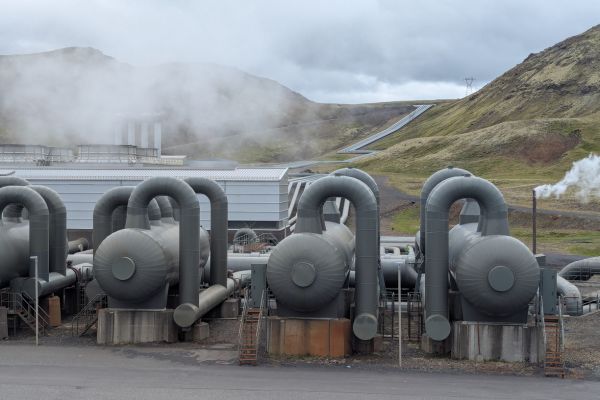
It’s one of the more underrated stops in this whole category, properly worth the detour rather than a footnote. There’s a dedicated audio guide app for the site, downloadable on-site, though booking your visit through their website even a few minutes ahead of arriving gets you 10% off.
This is a fabulously interesting place to visit and worth putting on your Iceland itinerary if you’re curious about how things work.
- Location of the Geothermal Exhibition: Hellisheiði Power Station, on the way to Hveragerði from Reykjavik.
- Booking: book ahead via their website for the discount, then download the audio guide app on-site.
Hot Springs and Lagoons
From the bucket-list Blue Lagoon and Sky Lagoon to quieter options like the Secret Lagoon and Mývatn Nature Baths, Iceland’s paid geothermal lagoons are the easiest, most comfortable way to actually get into this water rather than just look at it. We’ve covered every major one properly in our hot springs and lagoons guide. If you’d rather soak for free, our free soaking guide covers the natural, no-charge alternatives instead.
Geysers in Iceland
Iceland’s most famous geyser field sits in the Haukadalur Valley, part of the Golden Circle. Geysir itself, the original namesake, is largely dormant these days, but its neighbor Strokkur does the actual work, erupting every 5 to 10 minutes, usually to around 20 meters (66 feet), occasionally reaching as high as 40 meters (132 feet). A couple of smaller, less predictable geysers, Smiður and Litli-Strokkur, sit in the same geothermal field, alongside steaming vents, bubbling mud pots, and fumaroles scattered across the area.

- How to get to Geysir in the Haukadalur Valley: on Route 35, about 100 kilometers (62 miles) from Reykjavik, roughly 1 hour 40 minutes.
- Entry: free, open year-round.
- Parking: 1,000 ISK via kiosk or the Parka app. There’s more on parking & charges in Iceland in my guide here.
Hveragerði Geothermal Park
If you want to see a geyser, but in a quieter environment, I recommend the Hveragerði Geothermal Park. Walking trails wind past steaming vents, hot springs, and small geysers, with signage in several languages explaining the geothermal history, including how a 2008 earthquake changed the landscape and dried up some of the springs you’ll pass along the way.
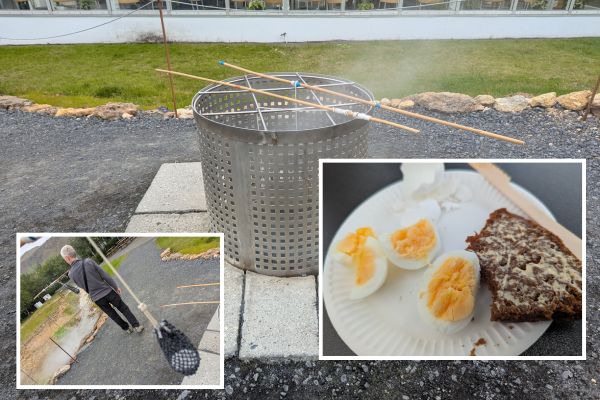
The real fun is hands-on. There’s a small mud bath and a geothermal spring you can dip your hands and feet into, and a café selling hverabrauð, a dense, slightly sweet rye bread that’s actually baked underground using geothermal heat. We boiled our own egg in the hot spring water, ate it alongside a slice of the geothermally baked bread, and sat next to a banana tree in one of the nearby greenhouses. It’s a real delight, and one of those small, strange Icelandic experiences that sticks with you.
- How to get to the Hveragerði Geothermal Park: Just off the Ring Road in Hveragerði, about 850 meters from the junction, with parking right outside.
- How long to spend at the Hveragerði Geothermal Park: 45 minutes, including boiling your egg, eating it with the geothermally baked bread, and exploring the park.
- Hveragerði Geothermal Park Entry: Small entrance fee, no advance tickets needed. Extra charges apply for refreshments and boiling your own egg.
- Hveragerði Geothermal Park Parking: Free outside on the road.
Steam Vents & Fumaroles
Beyond Geysir’s geyser field, several geothermal areas around the country let you get close to bubbling mud, steaming vents, and mineral-streaked ground without any geyser eruptions involved, just raw geothermal activity at the surface.
Gunnuhver
On the Reykjanes Peninsula, Gunnuhver is Iceland’s largest mud pool, named after a vengeful ghost local folklore says was trapped and boiled here by a priest. Boardwalks keep visitors a safe distance from ground that’s properly too hot to walk on.
- Location of Gunnuhver: near Reykjanesviti, off Route 425 on the Reykjanes Peninsula.
- Entry: free.
- Parking: free, no charge.
Seltún / Krýsuvík
Also on Reykjanes, Seltún is a full geothermal field of boiling mud pots and mineral-streaked ground in shades of orange, yellow, and red, with boardwalks running safely through the middle of it.
- Location of Seltún: off Route 42, near Kleifarvatn on the Reykjanes Peninsula.
- Entry: free.
- Parking: 750 ISK
Námafjall Hverir
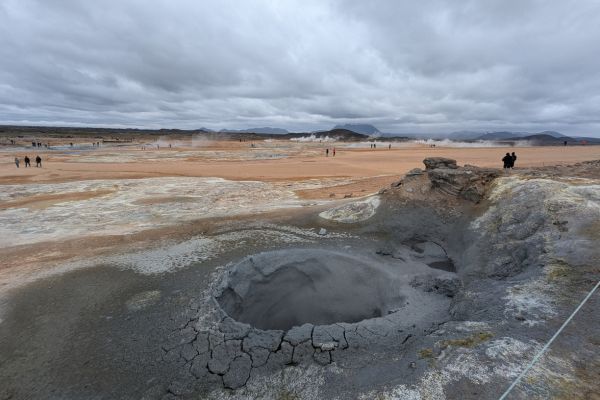
In the Mývatn area of North Iceland, Námafjall Hverir is truly one of the more alien-looking landscapes in the country, bubbling mud pots, steaming vents, and bare, colorful earth with almost no vegetation at all.
- Location of Námafjall Hverir: just east of Mývatn, on Route 1, North Iceland.
- Entry: free.
- Parking: 1,200 ISK
Geothermal Food
Rúgbrauð, Iceland’s traditional geothermal-baked rye bread, is buried in a pot underground near a natural hot spot and left to bake slowly overnight, using nothing but the heat already in the ground. The result is dense, dark, faintly sweet, and unlike any bread baked in a conventional oven. It’s one of the more hands-on ways to actually taste geothermal Iceland rather than just look at it.
Fontana, Laugarvatn
Fontana runs a proper Geothermal Bakery Tour, showing the whole process and letting you taste the bread fresh out of the ground.
- Note: Fontana’s baths are temporarily closed for maintenance until August 1, but the Geothermal Bakery Tour continues to run daily throughout the closure.
- Location of Fontana: Hverabraut 1, 840 Laugarvatn, in the Golden Circle area.
Hveragerði Geothermal Park
In the town of Hveragerði, the Geothermal Park lets you try geothermally baked bread and cook your own egg directly in a hot spring, a proper hands-on way to experience this rather than just watching someone else do it.
- Location of the Geothermal Park: in Hveragerði, about 45 minutes from Reykjavik.
- Parking: Free, on street parking
Reykjadalur (Steam Valley)
Reykjadalur means “Steam Valley,” and it’s exactly that, a geothermal valley further up the valley from Hveragerði where a hot river runs down through the hillside and you can bathe in it, for free. It’s become one of the most-loved free soaking spots in the country precisely because it delivers a real hot-river experience for the cost of a hike rather than an entrance fee. I wrote more about it here.
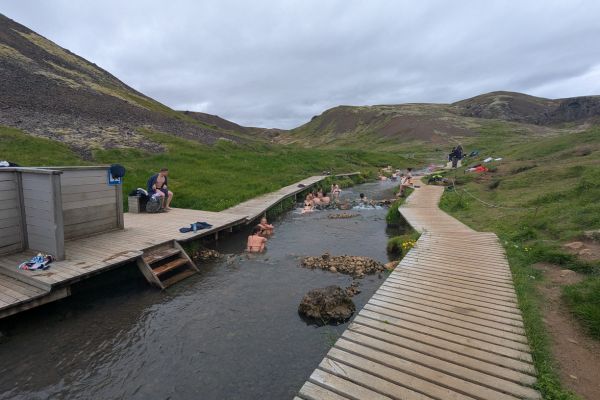
- Hike to Reykjadalur: about 3 kilometers (1.9 miles) uphill from the parking area to reach the first bathing spots, roughly an hour up, slightly less coming back down.
- Location of Reykjadalur: near Hveragerði, about 40 minutes southeast of Reykjavik.
- Entry: free, no facilities beyond a boardwalk.
- Parking: 300 ISK + depending on how long you spend here.
FAQs on Geothermal Iceland
Got questions about geothermal Iceland? Here are quick answers to what we’re asked most.
What’s the difference between a geyser and a hot spring?
A hot spring simply lets water rise and flow or pool calmly at the surface. A geyser has a constricted underground channel that traps pressure until it releases all at once, causing a real eruption of water and steam, rather than a steady flow.
How often does Strokkur erupt?
Every 10 minutes or so, usually reaching around 20 meters (66 feet), occasionally as high as 40 meters (132 feet).
Where can I try geothermal-baked bread?
Fontana in Laugarvatn runs a dedicated Geothermal Bakery Tour, and the Geothermal Park in Hveragerði lets you try it alongside cooking your own egg in the hot spring.
Where can I boil an egg in geothermal water?
The Geothermal Park in Hveragerði is set up specifically for this, a properly simple, hands-on way to see geothermal heat do real cooking work. It’s good fun and for kids of all ages. You can also buy some geothermally cooked bread to eat with your egg in their greenhouse (which also has a banana tree or two!)
Is all of Iceland’s electricity geothermal?
No, actually mostly not. Iceland’s electricity comes predominantly from hydropower, with geothermal making up a substantial but smaller share. Geothermal energy’s bigger role is in heating, hot water and home heating specifically, rather than electricity generation.
Is it safe to walk near geothermal areas?
Yes, provided you stay on marked paths and boardwalks. The ground in these areas can be truly dangerously hot just beneath a thin, ordinary-looking crust, straying off the path isn’t a minor rule-breaking, it’s a real safety risk.
Why does Icelandic tap water sometimes smell like sulfur?
Because in many areas, hot tap water comes directly from geothermal sources rather than an electric heater, and that water naturally carries mineral content that smells faintly of sulfur. It’s completely normal and not a sign anything’s wrong.
ICELAND TRAVEL RESOURCES
AIRPORT TRANSFERS
24/7 pickup & drop off. Trusted, local English speaking drivers. Prebook & prepay online with cards.
Book a Transfer
HOTELS AND APARTMENTS
See choices here
Rooms with a view? Budget rooms? Need a washing machine? The best choice of hotels & apartments.
TOURS & ATTRACTIONS
Most excursion choices, small group tours, skip-line tickets, free cancellation and top local guides.
Top options here.
CAR RENTAL OPTIONS
Choose cars here
Best choice of vehicles, automatics, large or small cars, child seats. Book early for more options.
Final Words on Geothermal Iceland
Geothermal energy isn’t a sideshow here, it’s part of the country’s actual identity, heating homes, growing food, baking bread, and occasionally putting on an impressive show at Strokkur. See it, taste it, and soak in it while you’re here, it’s as much a part of visiting Iceland as any waterfall or glacier.
ASocialNomad is a participant in the Amazon Services LLC Associates Program, an affiliate advertising program designed to provide a means for sites to earn advertising fees by advertising and linking to amazon.com, amazon.co.uk, and amazon.ca. Amazon and the Amazon logo are trademarks of Amazon.com, Inc. or its affiliates. As an Amazon Associate, I earn from qualifying purchases.

