
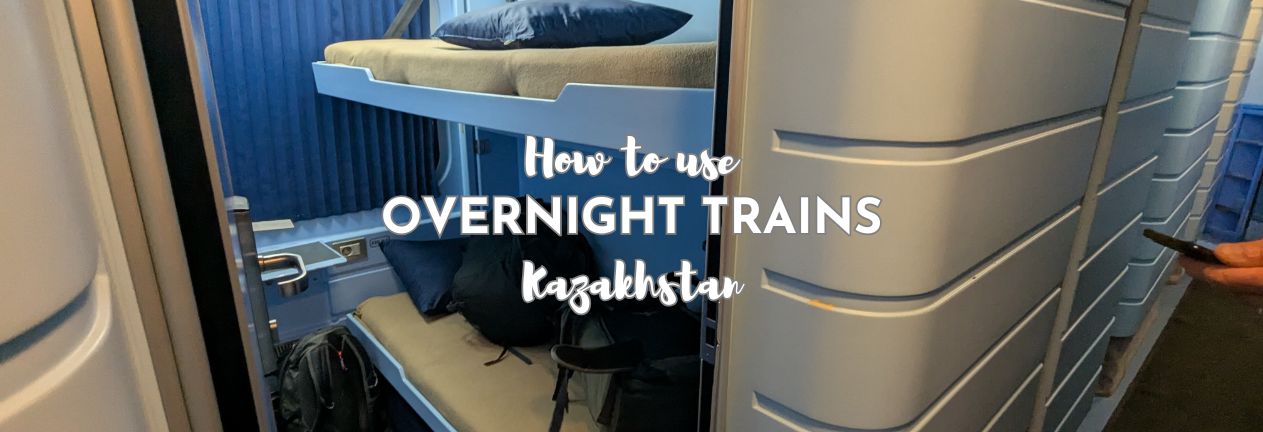
Most long-distance journeys in Kazakhstan happen overnight, simply because of the size of the place. The distance from Almaty to Astana alone is around 1,200 kilometers (745 miles), and that’s far from the longest route on the network. Your choice generally comes down to a Soviet-era train, slower, often more social and cheaper, or a modern Talgo, faster, more private, pricier. Although the old Soviet-era trains are being phased out, you might not have that choice for much longer. This is about what a night on Kazakhstan’s overnight trains actually feels like. Here’s what to expect on an overnight train in Kazakhstan.
THIS POST MAY CONTAIN COMPENSATED AND AFFILIATE LINKS MORE INFORMATION IN OUR DISCLAIMER
This guide isn’t about how to book or which class exists; see my guide to trains in Kazakhstan for that, although I will cover some basics here.
Overnight Trains at a Glance
Here’s a quick reference before much detail below.
- Soviet-era overnight trains are cheaper, slower (Astana to Shymkent around 24 hours, Astana to Almaty around 18 hours), have a more social atmosphere, and Platzkart, Kupe, Lyux/SV or Obshy classes.
- Talgo overnight trains are faster (Astana to Shymkent around 16 hours, Astana to Almaty around 13-16 hours), Tourist, Business or Grand classes, and the top Grand tier includes a private ensuite with a shower. (and yes they’re lovely, you can see what it was like on our Astana to Shymkent trip here).
- Every carriage has an attendant, similar to the provodnitsa you’ll find on former Soviet railways, who checks tickets and passports and reminds you when you need to get off, and when the buffet or restaurant car is open. They won’t speak English, but usually have a translator app (and if you’ve got a local SIM card, then you’ll be able to communicate too)
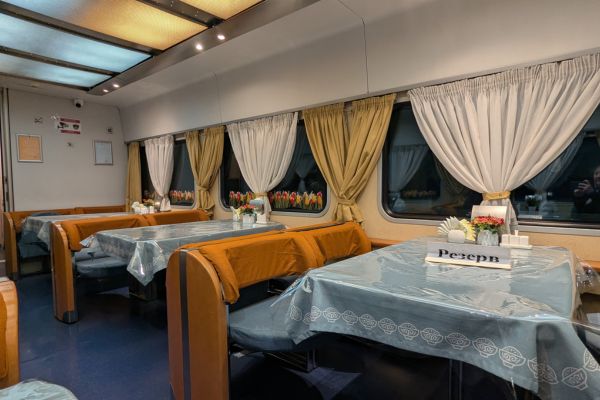
- Both train types have a dining car serving Central Asian staples, like plov and lagman, plus drinks, and every carriage has a free hot and cold water dispenser. There’s more on what to eat and expect in Kazakhstan in my food and drink guide here
Soviet-Era vs Talgo – Which Overnight Train to Choose
Soviet trains are the nostalgic, social, budget option: a slower pace, more stops along the way. Talgo trains are faster and more private, with the top Grand tier offering an ensuite shower (and yes, it works!). Newer Talgo trains cut journey times roughly in half compared to the old Soviet-era carriages on the same routes.
My take: choose the best class you can afford. Having a shower on a train is a fantastic experience, and it’s worth paying for at least once. Book the Talgo train here.
What Class Should You Book for an Overnight Journey
The class names differ between the two train types, but they map onto each other roughly like this.
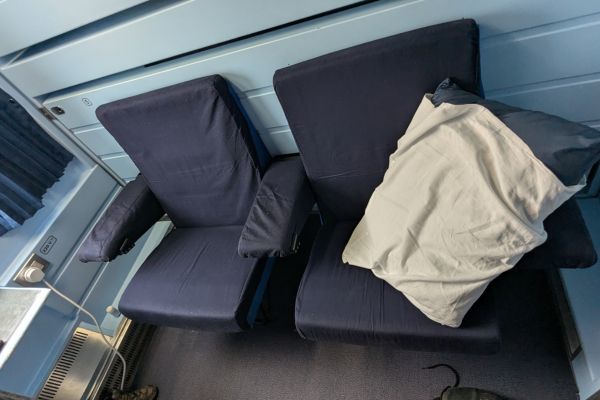
- Platzkart (Soviet): an open-plan carriage of around 40 bunks with no doors or compartments, the most social option, and safety in numbers means some solo travelers actually prefer it over a closed compartment. This isn’t available on Talgo trains.
- Kupe (Soviet) / Tourist (Talgo): a 4-berth closed compartment, more privacy, though you can’t choose your cabin-mates.
- Lyux/SV (Soviet) / Business (Talgo): a 2-berth compartment, the best option if you’re traveling as a couple and want privacy.
- Grand (Talgo only): the most expensive tier, a private compartment with its own ensuite toilet and shower.
- Obshy (Soviet): seats only, no bed. Avoid this one for an overnight journey. This isn’t available on the Talgo trains.
A Typical Night on an Overnight Kazakh Train
You need to arrive at the station at least 30 to 45 minutes early. There is usually a security check to get into the station, and it may involve your bags being scanned.
When your train is announced, then you’ll go to the particular platform (there are big screens and announcements, although they are rarely in English.
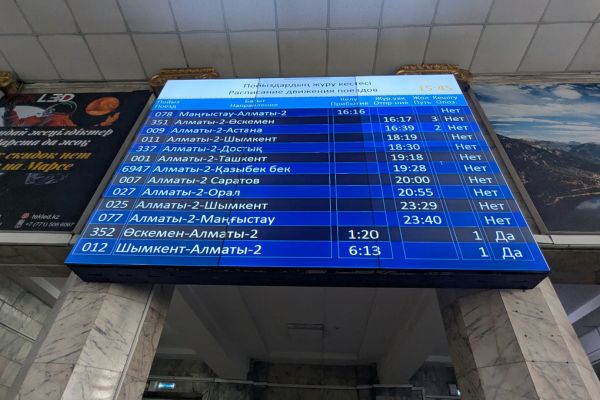
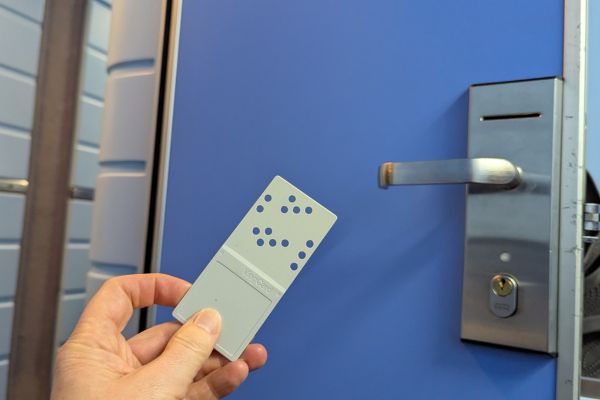
Your ticket and passport get checked at the carriage door by the attendant, and on Talgo trains the doors close 5 minutes before departure, so don’t try jumping in at the last minute.
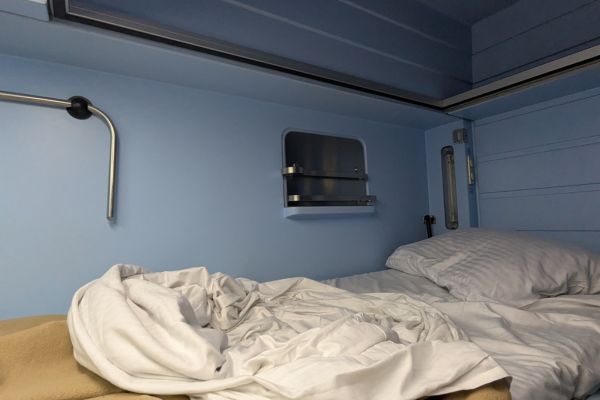
Depending on the departure time, your beds may be down; if it’s during the day, they won’t be. The bedding will be in a package for you to make up yourself.
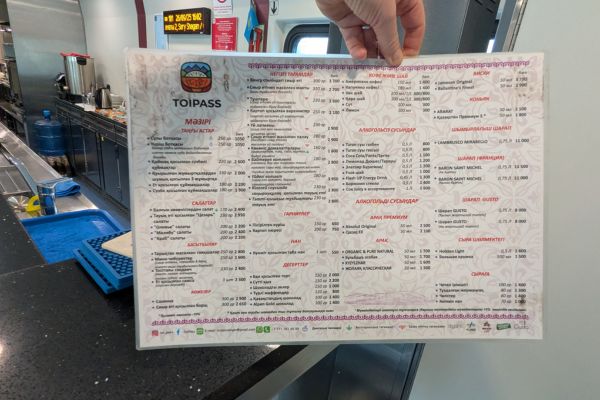
Head to the dining car for dinner. You can expect lagman noodles, plov, beef dishes, and beer or coffee if you want it. The menu below shows what it’s usually on offer. However, on one trip all that was left was manti. And bottled Russian beer. Needs must, I suppose!
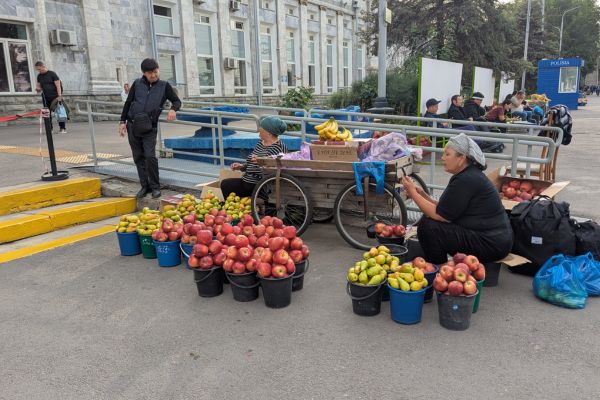
At some stations there are vendors on the platform selling food and local specialties, but don’t rely on it. If you leave Almaty on the train (like we did with this trip to Astana), then you can expect the famous Almaty apples to be on sale. There’s more about the apples and Almaty in my guide to Almaty here.
You’ll wake to changing scenery, steppe, hills or mountains, depending on the route, and the attendant gives you a 1-hour or 30-minute warning before your stop so you’re not caught still half asleep.
Solo Travel on Overnight Trains
Overnight trains in Kazakhstan are reported as safe for solo travelers, including solo women. Standard precautions still apply: don’t share exact accommodation details with strangers, keep your belongings secure, and if you want a sense of safety in numbers, some solo travelers prefer the open Platzkart over a closed Kupe compartment.
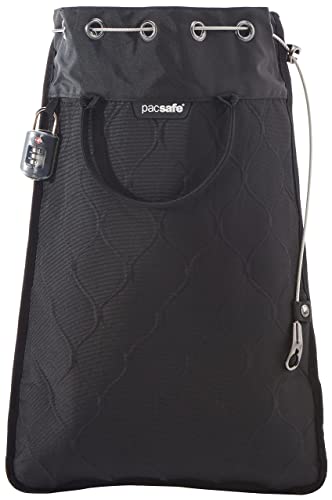
Hold onto your valuables at all times – lock them if you’re leaving them. We use a travel safe for this in all our travels.
Personally, we prefer privacy. We did the bigger, more people cabins consistently back in 2014 and 2015, on the Trans-Mongolian all the way to China, on plenty of overnight trains within China itself, and on the Hanoi to Sapa overnight train in Vietnam. If you’re planning train travel further afield after Kazakhstan, see my guides to taking the train in China too.
Overnight Route Times – Old vs New Trains
These times are approximate, based on current timetables and worth double-checking closer to your travel date, since timetables change, and the trains tend to get faster.
- Astana to Almaty: around 18 hours (Soviet) or 13-16 hours (Talgo). The Talgo Tulpar service on this route is confirmed to still be running as of 2026, so the faster option is available.
- Almaty to Shymkent: around 14-16 hours (Soviet) or 11-12 hours (Talgo). See my full How to Go from Almaty to Shymkent guide for the specific fares and timetable on this route.
- Astana to Shymkent: around 24 hours (Soviet) or 16 hours (Talgo). Read my guide on going from Astana to Shymkent here.

What to Pack for an Overnight Train
If you’re traveling around Central Asia, the chances are that you’ll have need for all of these items anyway, but it’s a good idea to have a “train pack”. It definitely makes it more comfortable.
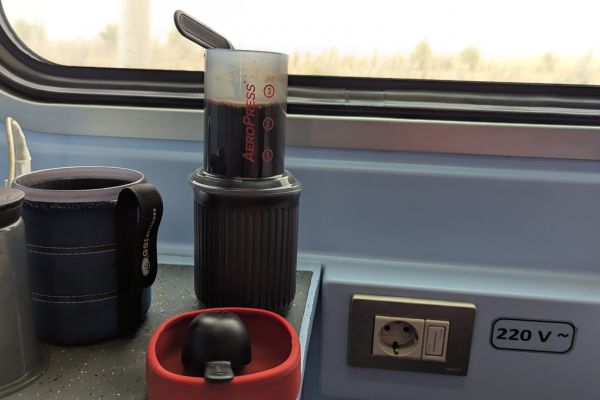
- Your own tea cup or mug and a set of cutlery; the hot water dispenser is great for tea, instant noodles or soup.
- Snacks and food to share; fellow passengers tend to share theirs, and it’s nice to reciprocate. There’s more on food and drink in Kazakhstan in my guide here.
- Toilet paper and wet wipes. While the trains start with rolls of toilet paper, there’s no guarantee it will still be there when you want to go.
- A power bank, or a power converter. We’ve never had problems with the sockets not working. My guide to plug converters for Kazakhstan is here.
- A sleep mask and earplugs if you’re a light sleeper, given shared compartment, station stops and noisy neighbors.
Is an Overnight Train in Kazakhstan Worth It
Yes, absolutely. The scenery, the social side of it if you go Platzkart or Kupe, and the sheer time and cost efficiency of sleeping through a journey that would otherwise take a whole day, all add up in its favor. We used overnight trains as part of our 10 day Kazakhstan itinerary, you can see how it worked out here.
I do think there is something magical about arriving in a city on a train. We’ve done it in Moscow (Red Square at dawn is stunning). We arrived in Amritsar at 05:00 and walked through the city before it woke; recently we took an overnight train from Lhasa to Chengdu. It is a glorious way to travel.
Toilets do get messier as the journey goes on, though not outright dirty, and you’re sharing space for a long stretch of time, even on the fastest Talgo services. And the seats do get a tad uncomfortable. If you’ve got the time, I’d take the overnight train over flying at least as you travel around the country; it’s as much a part of visiting Kazakhstan as anywhere you’re actually heading to.
FAQs on Overnight Trains in Kazakhstan
Here are the answers to the questions we had before taking overnight trains in Kazakhstan.
Are overnight trains in Kazakhstan safe?
Yes, they are widely reported as safe, including for solo travelers.
What’s provided in an overnight cabin?
Sheets, a pillow, and a blanket at minimum. Top-tier Talgo cabins have towels and an ensuite shower and toilet.
Which is better for an overnight journey, Soviet trains or Talgo?
It depends on your budget and priorities. Talgo is faster and more private. Soviet trains are cheaper and more social.
Do overnight trains have WiFi or charging?
Talgo trains advertise WiFi, but it’s inconsistent in practice. Sockets exist in Kupe and Lyux compartments.
PRACTICAL TRAVEL TIPS
- 🛡️ Get Travel Insurance: Civitatis includes medical expenses, repatriation, theft, luggage delays. No deductibles or upfront payments. Get a quote here.
- 🛏️ Sea view? Laundry? Private bath? Book a Room.
- 🔌 Be ready for the plug, socket & power situation.
- 📶 Get online EASILY & cheaply – One eSim for the world. Data never expires
Final Words on Overnight Trains in Kazakhstan
An overnight train is one of those experiences that I always recommend. They were very high, if not at the top of, our bucket list of experiences to have in Kazakhstan. And it was worth the trip. Pick your class based on how much privacy you actually need, pack a mug and a power bank, and go in expecting a slightly grubby toilet by morning rather than a five-star finish. That’s Kazakhstan by rail, and it’s worth doing at least once.
ASocialNomad is a participant in the Amazon Services LLC Associates Program, an affiliate advertising program designed to provide a means for sites to earn advertising fees by advertising and linking to amazon.com, amazon.co.uk, and amazon.ca. Amazon and the Amazon logo are trademarks of Amazon.com, Inc. or its affiliates. As an Amazon Associate, I earn from qualifying purchases.

