

Alcohol in Iceland has a reputation for being absurdly expensive, and that reputation is, for the most part, accurate. Between high taxes, a state monopoly on sales, and a truly strange history involving a decades-long beer ban, drinking here works differently than almost anywhere else you’ve traveled, and you’ll wonder whether you even want to bother or not. Icelanders have strong feelings about all of this too, shaped by decades of restriction and a drinking culture that only fully caught up with the rest of Europe in living memory. Here’s our guide to alcohol in Iceland…
THIS POST MAY CONTAIN COMPENSATED AND AFFILIATE LINKS MORE INFORMATION IN OUR DISCLAIMER
We’ll cover why prices are so high, the strange history and decades-long beer ban that shaped the country’s whole drinking culture today, where you can actually buy alcohol, beer in Iceland from the mass-market brands to the small but growing craft scene, Icelandic spirits and wine, how happy hour works in Reykjavik, and our verdict on whether it’s worth building into your budget at all. By the end, you’ll know exactly where to spend, where to skip, and how to plan around it rather than guessing your way through it.
PRACTICAL TRAVEL TIPS
- 🛡️ Get Travel Insurance: Civitatis includes medical expenses, repatriation, theft, luggage delays. No deductibles or upfront payments. Get a quote here.
- 🛏️ Sea view? Laundry? Private bath? Book a Room.
- 🔌 Be ready for the plug, socket & power situation.
- 📶 Get online EASILY & cheaply – One eSim for the world. Data never expires
Why Alcohol Is So Expensive in Iceland
Iceland taxes alcohol heavily and by strength, so the higher the ABV (alcohol by volume), the more tax gets added on top of the base price. That structure, combined with import costs and the overhead of running a state-controlled retail system, is why a bottle of wine or spirits here costs noticeably more than the same bottle would at home.
The History of Alcohol in Iceland
Iceland’s relationship with alcohol goes back to the Norse settlers, who brought their brewing and distilling know-how to the island in the 9th century. Ale, mead, and beer turn up throughout the Icelandic sagas and old poems, describing a lively drinking culture even then. The island’s harsh climate made brewing and distilling difficult locally, though, so for centuries Icelanders relied mostly on imports, and in the 17th and 18th centuries, the Danish Crown held a monopoly on bringing alcohol into the country at all. That imported, tightly controlled setup set the stage for what came next.
The Icelandic Beer Ban
Iceland has one of the stranger alcohol histories of any Western country, and it explains a lot about how people here still drink today. A national referendum banned all alcohol starting in 1908, with the ban formally taking effect in 1915. Trade pressure, largely from Spain threatening to stop importing Icelandic fish unless Spanish wine was allowed back in, forced a partial lift in 1922, permitting alcohol under 21% ABV. A second referendum in 1933 lifted the ban further, and spirits became legal again in 1935.
Beer, though, was left out of that 1935 legislation entirely. Concerns over affordability and its effect on young people kept it banned for decades longer. Beer was unfashionable for political as well as health reasons. Iceland was struggling for independence from Denmark for many years, and the beer-drinking lifestyle of the Danes at the time meant that beer was strongly associated with Denmark and thus it wasn’t thought to be patriotic to drink beer.
It wasn’t until March 1, 1989, that beer finally became legal again, making Iceland the only Western democracy to ban beer for that long. Icelanders now celebrate March 1 as Beer Day, and bars around the country run special promotions if you happen to be here for it.
Where to Buy Alcohol
Where you buy alcohol in Iceland matters almost as much as what you buy, as there is a big difference in prices between duty-free, Vínbúðin, and bars and restaurants.
Buying alcohol at Keflavik Airport Duty Free
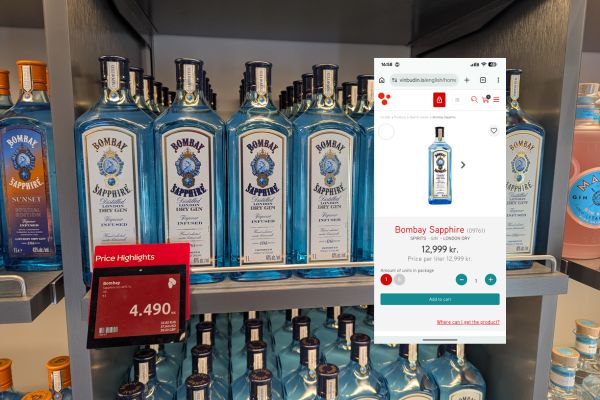
The cheapest place to buy alcohol in Iceland is on the way in. Duty-free at Keflavík Airport arrivals is worth using if you know you’ll be drinking during your trip; prices there are well below both Vínbúðin and bars. We’ve covered this in more detail in our Keflavík Airport arrival guide.
Buying alcohol for home consumption inside Iceland
Once you get into the country, anything above 2.25% ABV for home consumption is sold exclusively through Vínbúðin, the state-run liquor store chain, not supermarkets or convenience stores, apart from ordering through an online delivery service like Heimkaup, which can bring alcohol to your accommodation in the capital area on days when Vínbúðin is closed. Vínbúðin has a website (and an English version) that has details of stock (as they sell craft beers from the various breweries around the country) in each particular store, opening hours and also prices. So if you’re thinking about buying anything in duty-free, you can check before you get to Keflavik and see how much you’ll save.
What you’ll find in regular supermarkets is light beer under the 2.25% ABV threshold.
Vínbúðin hours are limited compared to a normal shop: typically 11:00-18:00 on weekdays and Saturdays, and closed entirely on Sundays and public holidays, with very few exceptions, but all opening hours are detailed on the website here. The central Reykjavik location is located at Austurstræti 10a, a short walk from Laugavegur. More rural branches have shorter opening hours.
Buying alcohol in Iceland for home delivery
If you’re caught out on a Sunday, an online delivery service like Heimkaup can bring alcohol to your accommodation in the capital area, one of the only workarounds that actually exists.
Buying alcohol in bars and restaurants
Drinking at a bar or restaurant costs considerably more than buying from Vínbúðin, and a standard draft beer runs 1,500-2,000 ISK at most venues in Reykjavik. Happy hour is worth building your evening around rather than treating as a bonus, since it can bring that same beer down to roughly 1,000-1,200 ISK.
If you’re from North America and used to tipping bar staff, then you should read my guide to tipping in Iceland here.

The Barhopp app tracks happy hour deals across the city (I’ve covered it in my guide to essential apps in Iceland), though we’ve found it isn’t always reliable; some listed bars weren’t actually open, so treat it as a starting point rather than your only plan. A handful of bars are worth knowing by name regardless, and we cover those below.
The legal drinking age in Iceland
One more thing worth knowing up front is that the drinking age in Iceland is 20 and it’s strictly enforced, with no family exception. An 18- or 19-year-old traveling with you won’t be served or able to buy alcohol here, even sitting at the same table.
Icelandic Beer
Beer only became fully legal here in 1989, so the industry has had less than four decades to build itself from nothing, and it shows in the split between a handful of dominant mass-market brands and a craft scene that’s grown very fast in a short amount of time.
Mass Market Beer in Iceland
Two companies dominate the everyday beer aisle at Vínbúðin. Ölgerðin makes Egils Gull, the country’s best-selling standard lager, alongside an alcohol-free version of the same beer. Vífilfell makes the Viking range, Gylltur, Lager, and Lite, plus Thule, another long-running brand. Between Gull and Viking, these two names cover the overwhelming majority of what Icelanders actually drink day to day, well ahead of any craft option in volume.
The Craft Beer Scene in Iceland
Iceland’s craft beer scene barely existed twenty years ago and now runs to roughly 26 independent breweries nationwide, massive growth for a country of under 400,000 people. Most are really small and local rather than aiming for national distribution, which means the beer you find in one region often isn’t available anywhere else, part of the appeal for anyone touring rather than just passing through.
- Bruggsmiðjan (Kaldi) — Árskógssandur, North Iceland, near Akureyri. Founded in 2006 by Agnes and Ólafur, this was Iceland’s first craft brewery, and it’s still known for unfiltered beer made with local water. Tours run most weekdays.
- Microbar — Laugavegur 86, Reykjavik. One of the originals for craft beer in the city itself, a proper walk-in pub with a rotating tap list rather than anything fancy.
- KHB Brugghús Brewery & Distillery — Borgarfjörður Eystri, East Iceland. Their beer Stúlka took gold at the 2025 World Beer Awards, named Best Sour and Wild Beer in the World in the Berliner Weisse category, a serious result for a brewery this remote. It’s fab. And we enjoyed it while exploring East Iceland.
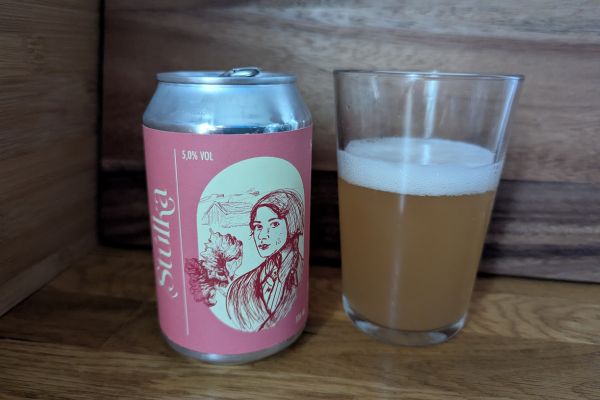
Hunting down a specific regional brewery is a real detour for most of these, not a stop you’ll stumble onto by accident, so it’s worth deciding in advance if that’s a priority for your trip, although many of the craft beers are also stocked by Vínbúðin, and you can, as I mentioned, check online to see whether the store near you has stock.

Icelandic Spirits
Brennivín is Iceland’s national spirit. It’s an unsweetened schnapps with a caraway flavor. It was first produced by the state in 1935, the same year spirits were legalized again. Brennivín is nicknamed “Black Death” because its black label originally featured a skull in a (failed) attempt to make it look unappealing, and that same label remains iconic today. You will commonly drink Brennivín as a straight shot or sipping spirit, often alongside fermented shark, hákarl, where its strong flavor is said to complement the dish’s pungent taste. You can read about hákarl in my guide to Icelandic food here.

You can but small bottles of Brennivín at Vínbúðin, but only in boxes of 6. If you just want a single small bottle you’ll need to buy that at duty free on the way in, in June 2026, they cost 590 ISK to buy as a small single. There’s more in my guide to arriving at Keflavik here.
Craft Spirits in Iceland
As part of the same small-producer wave as the craft breweries, there’s also a set of standalone distilleries, some of which are attached to the craft breweries.
- Eimverk Distillery — Lyngás 13, Garðabær, about 10-15 minutes from downtown Reykjavik. Iceland’s first and only whisky distillery, makers of Flóki Whiskey, using barley they grow themselves at Bjálmholt Farm in South Iceland. You can join a tour of the distillery here.
- 64° Reykjavik Distillery — right in Reykjavik itself, founded in 2009 as Iceland’s first independent micro-distillery, family-run. They make Katla Vodka, named after the volcano, distilled multiple times for purity.
- Reyka Vodka — distilled in Borgarnes, West Iceland, using glacial water filtered through a 4,000-year-old lava field. One of the better-known Icelandic spirits internationally, and a good one to look for at Vínbúðin if you want a local vodka rather than an imported brand.
Unlike the craft beer scene, most of Iceland’s craft spirits are concentrated in or near the capital region, so this is less a “detour to a specific town” situation and more something you can fold into a Reykjavik-based day if it interests you. (check out my guide to Reykjavik here)
Wine in Iceland
Iceland’s climate is too cold and too far north for grapevines, so there’s no traditional wine industry here, and what you’ll find at Vínbúðin is imported, with prices reflecting the same tax structure as everything else, often starting around 1,500-2,500 ISK for a bottle. A handful of local producers do make something worth trying, though: fruit and berry wines from crowberries, blueberries, and rhubarb, an Icelandic alternative if grape wine isn’t the point for you. The selection at Vínbúðin is decent in larger stores, especially in Reykjavik, but less so in smaller towns, so stock up when you pass through a bigger location rather than assuming the next stop will have what you want. Or check the online stock levels. You’ll find it cheaper to buy 2, 2.5, or 3-liter boxes of wine, and cheaper still to buy it at duty-free on the way in.
Happy Hour in Reykjavik
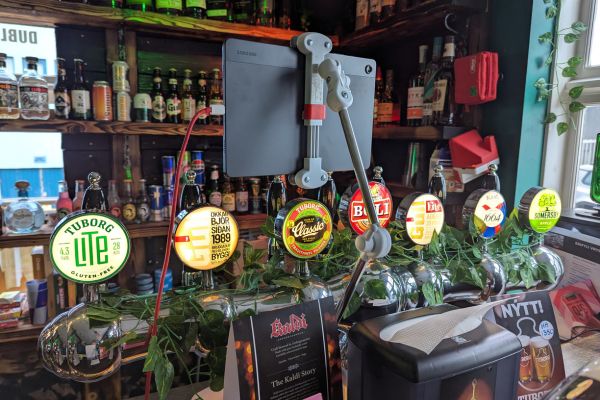
Reykjavik’s bar scene runs on a different schedule than most people expect. Locals typically drink at home first, since bar prices are steep, and venues stay quiet until close to midnight before filling up and running until 04:00-05:00 on weekends. Happy hour can bring a draft beer down from a typical 1,500-2,000 ISK to roughly 1,000-1,200 ISK.
The Barhopp app tracks live happy hour deals across the city’s bars and is worth downloading before your first night out. Two spots are worth knowing by name: Microbar, which I mentioned previously for its craft beer selection, and Little Dubliner, the smaller of Reykjavik’s two Dubliner pubs, which runs happy hour from 11:00 to 21:00 daily.
Is Alcohol in Iceland Worth the Cost?
For most people, yes, but with a plan rather than an open wallet. You should buy your duty-free allowance at Keflavík on arrival, treat bars as an occasional night out rather than every night, and check out happy hour when you do go out. Skipping alcohol entirely is also a completely reasonable choice; plenty of people do exactly that without missing anything essential about the trip. There’s more on planning a trip to Iceland in my guide here.
FAQs on Alcohol in Iceland
Here are quick answers to the questions we hear most about alcohol in Iceland.
Can you buy alcohol in grocery stores in Iceland?
You can only buy light beer under 2.25% ABV from grocery stores. Anything stronger, including regular beer, wine, and spirits, is sold exclusively at Vínbúðin.
What is Brennivín?
Brennivín is Iceland’s national spirit, an unsweetened caraway-flavored schnapps nicknamed “Black Death,” traditionally drunk as a shot alongside fermented shark.
What time does Vínbúðin close?
Vínbúðin typically closes at 18:00 on weekdays and Saturdays, and it’s closed entirely on Sundays and public holidays.
Is beer cheaper at bars or at the store?
Beer in Iceland is cheaper at the store, by a big margin. A beer at Vínbúðin costs a fraction of the 1,500-2,000 ISK you’ll typically pay at a bar. You can check the costs online here.
Can I bring my own alcohol into Iceland duty-free?
Yes, you can bring alcohol into Iceland that is within Iceland’s customs allowance; that’s roughly 1 liter of spirits, or 3 liters of wine, or 6 liters of beer, or a combination within that total.
Is non-alcoholic beer common in Iceland?
Yes, and it’s reasonable here; several of the main mass-market brands, including Egils Gull, offer a 0% version.
Was beer really illegal in Iceland?
Yes, until March 1, 1989. Spirits were legalized in 1935, but beer specifically stayed banned for over 50 more years, making Iceland the only Western democracy to ban beer for that long.
What’s the drinking age in Iceland?
The legal drinking age in Iceland is 20, for buying and for being served. ID checks are routine, so carry a passport if you’re anywhere close to 20, or look it.
Can you drink alcohol in public in Iceland?
Yes, walking down the street with an open beer or glass of wine is legal. Use common sense around glass on uneven pavement and avoid being visibly drunk in public.
Is duty-free worth it at Keflavík?
For most people, yes, it’s the single biggest money saver on this whole topic if you know you’ll be drinking during your trip. Walk through slowly and buy your allowance on arrival rather than topping up at Vínbúðin or bars throughout the week. There’s more on saving money in Iceland in my guide here.
ICELAND TRAVEL RESOURCES
AIRPORT TRANSFERS
24/7 pickup & drop off. Trusted, local English speaking drivers. Prebook & prepay online with cards.
Book a Transfer
HOTELS AND APARTMENTS
See choices here
Rooms with a view? Budget rooms? Need a washing machine? The best choice of hotels & apartments.
TOURS & ATTRACTIONS
Most excursion choices, small group tours, skip-line tickets, free cancellation and top local guides.
Top options here.
CAR RENTAL OPTIONS
Choose cars here
Best choice of vehicles, automatics, large or small cars, child seats. Book early for more options.
Final Words on Alcohol in Iceland
Alcohol in Iceland is expensive, and no amount of planning changes that entirely, but it doesn’t have to blow your budget either. You should buy your duty-free allowance on arrival, know Vínbúðin’s hours before you need them, use happy hour when you’re out, and decide upfront how much of your trip you actually want built around drinking.
ASocialNomad is a participant in the Amazon Services LLC Associates Program, an affiliate advertising program designed to provide a means for sites to earn advertising fees by advertising and linking to amazon.com, amazon.co.uk, and amazon.ca. Amazon and the Amazon logo are trademarks of Amazon.com, Inc. or its affiliates. As an Amazon Associate, I earn from qualifying purchases.

