

Iceland has a reputation for being expensive, and in plenty of ways it is. But a lot of that reputation comes from people making the same avoidable mistakes: paying for a taxi when a bus would do, buying bottled water in a country where the tap water is some of the cleanest on earth, or missing an early booking window on a rental car. None of what follows is vague budgeting advice; every tip here is something you can actually act on, with real numbers behind it. Here’s our guide to guaranteed ways to save money traveling in Iceland…
THIS POST MAY CONTAIN COMPENSATED AND AFFILIATE LINKS MORE INFORMATION IN OUR DISCLAIMER
Iceland on a budget doesn’t have to mean roughing it. I mean we’re all on a budget; it’s just our budgets are at different levels. And I’ll be upfront. In a year when we’ve traveled to both Tibet and Bhutan, Iceland is the most expensive country we’ve ever traveled to. Budgeting in Iceland mostly means knowing where the genuinely avoidable costs are hiding. We’ll work through transport, accommodation, food and drink, activities, and the free things worth doing regardless of budget, then close with a quick-reference list of the five changes that make the single biggest difference. These are cheaper ways to see Iceland, not a smaller version of the trip.
PRACTICAL TRAVEL TIPS
- 🛡️ Get Travel Insurance: Civitatis includes medical expenses, repatriation, theft, luggage delays. No deductibles or upfront payments. Get a quote here.
- 🛏️ Sea view? Laundry? Private bath? Book a Room.
- 🔌 Be ready for the plug, socket & power situation.
- 📶 Get online EASILY & cheaply – One eSim for the world. Data never expires
12 Ways to Save Money Traveling to Iceland
None of these suggestions are difficult to implement, but you do need to plan ahead. Everywhere we’ve ever traveled to at the last minute has been more expensive than when we’ve planned it. There’s more about planning a trip to Iceland in my guide here. So here we go. Saving money when traveling in Iceland. We’ll start with the obvious ways to save money in Iceland.
And by start, I’ll go with the elephant in the room. Tipping. There is no need to tip in Iceland. Want more detail? Here’s my guide to tipping and the reasons its not necessary.
1. Save Money on Flights & Timing in Iceland
When you fly to Iceland is more important than almost anything else on this list. Peak summer, late June through August, is when prices climb the highest across flights, car rental, and accommodation all at once. Flying in shoulder season, May or September, gets you noticeably lower prices across the board while still giving you reasonable daylight and weather. Winter, not necessarily so, as it’s peak Northern Lights season. Midweek flights are typically cheaper than weekend departures, and booking as soon as your dates are firm matters more in Iceland than in many other destinations, since availability on the smaller flight schedule tightens up fast once a date gets close.
2. Be Savvy in Your Transport Choices
When you’ve arrived in Iceland, you can make some decisions that will help you to save money. It starts before you leave the airport, but I’ll cover that shortly. First, though wow you get from the airport, and how you get around once you’re here, makes a bigger difference to your budget than most people expect.
If you’re renting a car for the trip anyway, skip the transfer question entirely. Pick your car up right at Keflavík and drive yourself in; every major rental company has a desk or shuttle at the terminal, so there’s no reason to pay for a Flybus or taxi and then separately collect a car later. This is the cheapest option of all when it applies, since you’re not paying for a transfer on top of the rental.
If you’re not renting a car, take the Flybus rather than a taxi. The Flybus costs around 3,999 ISK one-way; a taxi covers the same route for 16,000 to 20,000 ISK. For a solo traveler or a couple, that’s four to five times the cost for an identical journey. Booking online ahead of arrival is cheaper than paying at the kiosk, and there’s no downside to locking it in before you land. Read my full Keflavík Airport to Reykjavik guide for all four transfer options. Book the Flybus shuttle here.
The same logic applies once you’re actually traveling around. Klappið, Strætó’s own app, covers local buses in Reykjavik and other towns, versus Hopp for taxis, both covered in my guide to apps for Iceland. Buses cost a fraction of a taxi fare for the same trip; default to using the bus unless timing or luggage makes it impractical.
3. Save Money Renting a Car in Iceland
Book your rental car as soon as your flights are confirmed, not closer to the trip. Prices change with the season; a small car can cost as little as 3,000 ISK a day in November and go way past 8,000 ISK a day at the height of summer.
A manual transmission rental car in Iceland is generally cheaper than automatic across every rental class; it’s worth choosing if you can drive one comfortably. An automatic small car is cheaper than a manual SUV (non-4WD). And this was a choice we made. We went for the automatic car, not an SUV, that we normally would, choosing the ease of an automatic transmission over the better visibility of the SUV. You can check what the difference is here.
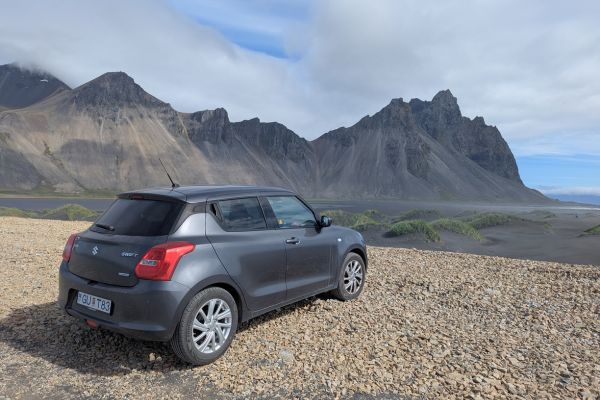
It’s also worth comparing the insurance price between the booking site and annual policies that you can get instead. There’s more on self-driving in my guides:
- Driving in Iceland, what you need to know
- Renting a car in Iceland – insurance, additional options and more
- Parking in Iceland – oh yes, this gets an entire post on its own
- Do you actually need a car in Iceland? I answer the question in this post.
- Iceland without a car
Many of the rental car companies have an area of their offices where you collect the car from where previous renters can leave unused food and other items. Now I’m not advocating using this as your main way to save money, but an unopened tin of tuna? Why not?
4. Save Money on Fuel in Iceland
If you’re going the self-driving route, then fuel loyalty apps really can add up over a multi-day drive. Orkan’s app knocks around 12 ISK off every liter; Olís and ÓB’s apps take off 3 to 5 ISK a liter.
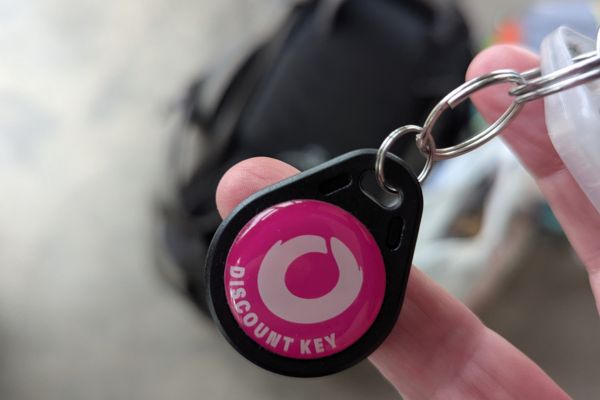
This might seem like small potatoes on a single tank, but it can work out to be real money over a Ring Road-length trip. And remember, it’s YOUR small potatoes then, and you can spend it on other things.
Always remember to pay in ISK rather than your home currency at the pump; choosing the foreign currency option costs you on the exchange rate every time, the same dynamic currency conversion issue covered in my guide to currency and paying in Iceland.
5. Save Money When Parking in Iceland
Parking at tourist attractions (and in Reykjavik) is a big discussion point amongst visitors. Constantly. You don’t pay to visit Iceland’s waterfalls and other natural attractions, but you DO pay to park in lots of places. The parking is usually on private land, and the cost is to maintain the facilities.
You can pay for parking in 99% of places using a kiosk – a touchscreen machine where you input your car license plate and your card. In high season there are lines. In shoulder season there are lines too. You can skip the lines by using parking apps (the main one on the South Coast, Golden Circle and Ring Road is Parka). Parking is such a thing in Iceland that I wrote about it here. Read it. It will save you money.

The parking apps charge you for the privilege of using them, and it’s an entirely avoidable cost. These costs are in ADDITION to the fee for parking.
- Parka charges 89 ISK per transaction if you pay through the app instead of the kiosk, or 490 ISK a month if you’re parking often enough for a subscription to make sense.
- EasyPark, which covers Reykjavik’s street parking, charges 15% of the parking cost per session, with a minimum of 75 ISK and a cap of 140 ISK, and Reykjavik’s own city council confirmed that meters exist as a fee-free alternative to the app at every zone.
Here’s what using the parking app actually costs over a trip.
Five well-known stops, Brúarfoss, Dyrhólaey, Geysir, Reynisfjara, and Skógafoss, offer both a kiosk and the Parka app as payment options.
Default to the app at all five instead of finding the kiosk, and that’s 5 × 89 ISK, 445 ISK spent purely on convenience fees. Add a few days of Reykjavik street parking paid via EasyPark instead of the meter, and that’s another 430 to 560 ISK. Altogether, that’s roughly 875 to 1,000 ISK on a typical trip, spent on nothing but tapping an app screen instead of finding a machine. If you’re using the app, then make sure you get the best deal on mobile data – my guide to SIM cards for Iceland is here.
Again. You might read that and think, yeah, it’s pennies, small potatoes. And again. It’s better if they’re my small potatoes.
BEST eSIM ICELAND

The Best eSIM Card for Iceland
If you want to get online as soon as you land, make sure you can pay parking fees by app, and navigate your way around Iceland, the this eSIM from Airalo is the perfect option. Easy to use, easy to manage.
6.Save Money on Accommodation in Iceland
You’re going to get sticker shock when you first look at Iceland’s accommodation. And that’s why you need to pay it close attention. But there are ways to reduce what you’re paying.
Tent camping is the cheapest option, but that doesn’t get you a proper bed or a toilet that doesn’t involve a hike across a field in the middle of the night. If you’re tent camping and moving between campsites often, a Camping Card is worth doing the math on: campsites average around 1,500 ISK a person a night without one, versus just the 333 ISK overnight tax with the card. As with flights and car rental, booking early matters; prices rise, and availability drops the closer you get to summer.
Next up, hostel dorms come in (although guesthouses with a shared bathroom tend to come in around the same price).
Very few places come with laundry. So use them when they do. The Northern Comfort Inn on the Trollaskagi does. And its free. And there’s a dryer, two actually, as well. And its also got an amazing professional kitchen. Those spices and cereals you see on the shelf? All free to use. Book yourself a room at this amazing place ASAP.
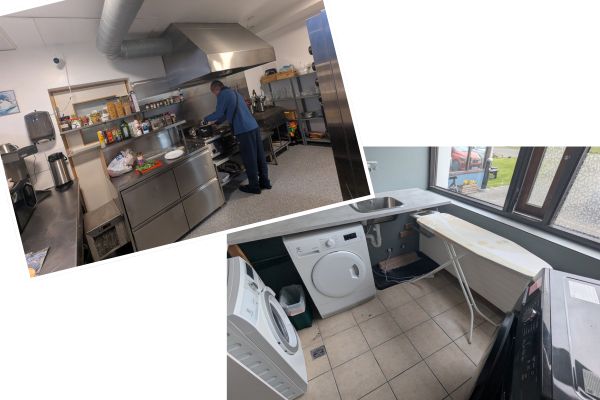
Shared bathrooms are a big thing in Iceland to reduce costs. You’ll want to read the reviews carefully to see how many other rooms you’re sharing the bathroom with. Our top number was 10 double rooms and one single bathroom (toilet, washbasin and sink all in the same bathroom). We declined that one. The one shared bathroom that we did have? This one. And it was a lovely stay.
If you want private bathrooms in your Iceland accommodation, book early. Because they are NOT always the standard once you get outside of Reykjavik or the higher-end hotels. Read my guide to Iceland accommodation for more details here.
Many guesthouses (as well as hostels) have shared kitchens, which I’ll touch on below and the savings that they can give you.
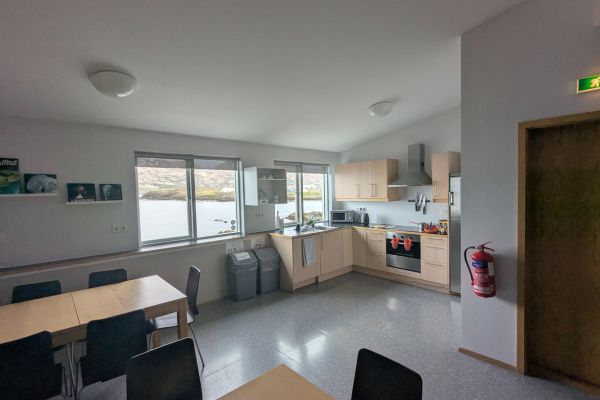
7.Save Money on Water in Iceland
Drink the tap water. It’s some of the cleanest in the world, and there’s no reason to buy bottled water anywhere in the country. Bring a reusable bottle and refill it as you go, one of the simplest, lowest-effort savings on this entire list. A plain bottle is all you need; a filter bottle is only worth it if you’re planning to drink directly from rivers or streams while out hiking. Plenty of people say that’s safe to do, but personally, I wouldn’t risk it; tap water everywhere you’re actually staying or stopping makes a filter unnecessary for the vast majority of a trip. And bottled water. You DO NOT NEED IT.
8. Save Money on Tea and Coffee in Iceland
Iceland is one of the highest caffeine-consuming nations per capita in the world, and it’s easy to find a decent cup almost anywhere. But the cost adds up quickly, especially if you’re buying two or three a day. A regular coffee with milk runs roughly 300 to 600 ISK.
Brewing your own solves that, and you don’t need a campervan to do it, just accommodation with a kettle, which covers most guesthouses, cabins, and hotel rooms across the country.
Bring your own tea bags or instant coffee, or take it a step further with a portable espresso setup.
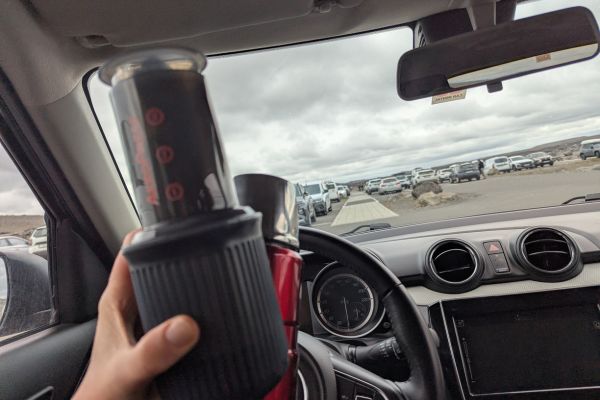
We use and love the AeroPress Go, small enough to pack easily and properly capable of a real cup rather than a compromise. Bring either the metal filter or a stash of paper ones, whichever you prefer, along with a couple of camping mugs and a proper thermos flask, so you’re not relying on whatever’s provided in the room.
- AeroPress Go: buy it here.
- GSI Outdoors Infinity Backpacker Mug: buy it here. – these are the BEST travel mugs ever, light, easy to clean, and perfect for all sorts of things.
- THERMOS Stainless King (40oz): buy it here.
This setup is perfect, no matter what the season or weather in Iceland. In June this year, we lunched in the car several times as it was too windy/wet/cold to eat outside. And making a fresh espresso while staying warm and dry is perfect. The Thermos is big enough for cuppa soups, noodles and all sorts.
Here is is in use on a particularly cold and windy day at Dettifoss.
If you’d rather buy a coffee while you’re out, N1 gas stations across the country sell a simple filter brew with unlimited refills.
There’s more on what you should pack for a trip to Iceland in my guide here.
9. Save Money on Food in Iceland when Self-Catering
Bónus and Krónan are the two budget grocery chains to shop at; 10-11 is a convenience store and prices itself like one, worth avoiding if the goal is saving money. N1 gas stations double as a decent option for prepared food, sandwiches, hot dogs, even fish and chips, cheaper than a sit-down meal and better than you’d expect. Want to know what to eat in Iceland? My guide is here.
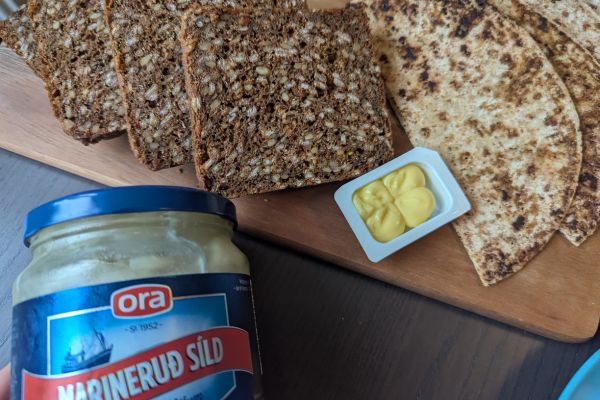
There’s more on self-catering, quick and easy recipes that actually taste good, and more in my guide to self-catering in Iceland here.
Check prices of food before you arrive.
You can even check out the prices of food before you come. Head to Kronan.is and see if it’s cheaper to use your food allowance and bring some items in. Or whether it’s just the same price as at home. The prices at Bonus are very similar to Kronan.

Plan your meals you’ll cook before you arrive in Iceland
Plan your meals before you shop, rather than working it out as you go. Deciding in advance what you’re actually going to cook means you’re not wasting time hunting for ingredients in an unfamiliar supermarket layout, and you won’t end up buying more than you need.
Premade meals from the chiller section, lasagne and the like, are expensive for what they are; skip them and cook something simple instead.
Bring herbs and spices from home.
Bring your own spices and herbs from home in small individual bags, just enough for the specific meals you’ve planned, rather than buying full-size packets you’ll only use once.
Keep the whole approach simple; a handful of easy, repeatable meals beats an ambitious menu you won’t have the energy for after a full day of sightseeing.
What food costs more in Iceland than at home?
It’s worth being upfront that bringing food from home isn’t automatically cheaper; some imports work out, others don’t.
Coffee was the surprise for us; it’s noticeably cheaper in Iceland than the UK or Europe: Lavazza Rossa ground coffee, 500g, runs 1,449 ISK at Krónan. Tofu is another pleasant surprise for self-caterers; the basic firm variety runs about 390 ISK for 500g, roughly half what you’d pay for the same thing in the UK or Europe, a good alternative protein if you’re eating vegetarian or just want to stretch a meal further. If you do want to bring food in, see my guide to arriving at Keflavík for the import limits, 10 kg and a 25,000 ISK value cap, factory-sealed items only.
Fresh fruit and veg are expensive in Iceland.
Fresh fruit and vegetables run genuinely expensive here, and it’s worth knowing before you shop rather than after: Icelandic supermarkets store fresh produce in large chilled rooms rather than open fridges, and the price reflects it. Tomatoes are the clearest example, around 1,099 ISK a kilogram (that’s about US$9 / 7.7 Euros) at Krónan, which is a lot for a tomato. Plan your meals with that in mind rather than assuming vegetables are the cheap part of the shop.
How to save money on Iceland’s fresh fruit and veg
Most Bónus and Krónan stores also run a discounted section for produce nearing its best-before date, worth checking before you go to the full-price shelves. We picked up broccoli marked best-before the exact day we bought it and used it in that night’s meal for half the listed price, an easy saving if your plans don’t need the produce to last more than a day or two.
Want cheaper snacks at Iceland?
For an evening snack, microwave popcorn is a cheap, easy option: Bónus and Krónan both sell 3-packs for around 399 ISK, enough for several nights without the cost of café-bought or convenience-store snacks.
10. Save Money Drinking Alcohol in Iceland
This is where you can save, or spend, big in Iceland. Alcohol is expensive in Iceland (read my guide to understand why) and there are ways to save.
Obviously the first is not to drink it at all. But there are other ways to save on alcohol in Iceland.
First, buy your alcohol duty-free on arrival at Keflavík rather than at a Vínbúðin (the state stores that sell alcohol in Iceland) or a bar once you’re in the country; it’s a lot more cost-effective, and the allowance is generous: 1 liter of spirits, 3 liters of wine, or 6 liters of beer, or a mix within the equivalent limit.
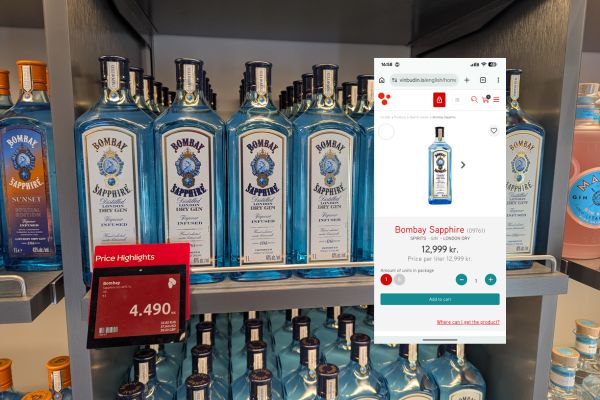
Next – find a happy hour in Reykjavik or Akureyri. They really are quite a bit cheaper. There’s more on happy hours (and how and where to find them here)

11. Save Money on Activities & Tours in Iceland
Yeah, this is a tough one. And almost impossible. The Blue Lagoon, Sky Lagoon, and Iceland’s other bucket-list names don’t have an early-bird discount for booking ahead. Booking early guarantees you get in; leave it too late, and you simply don’t; it’s a capacity issue, not a pricing one.
If soaking is the goal but a premium lagoon isn’t in the budget, skip the paid ones entirely and head for the free natural alternatives instead; see my guide to free hot springs in Iceland for options like Reykjadalur.
For the ONLY early-booking discount that actually exists, the Geothermal Exhibition at Krafla offers 10% off when you book online ahead of arrival rather than paying when you arrive. Read more in my guide to Geothermal Iceland here.
12. Embrace Free Things to Do in Iceland
Not everything worth doing in Iceland costs money. Most waterfalls are free to visit; you’re only ever paying for parking, not entry. Hiking costs nothing beyond your own gear, and the Northern Lights are free to watch from almost anywhere dark enough, no tour required if you’re happy to do your own forecasting and driving. For soaking specifically, see my guide to free hot springs in Iceland for the best natural, no-cost options.
Our Top 5 Guaranteed Money-Savers in Iceland
If you only take five things from this whole guide, make it these:
- Rent a small, manual transmission car rather than an automatic or a bigger class than you need.
- Choose accommodation with a shared bathroom, or camp rather than booking a private ensuite every night.
- Self-cater rather than eating out for the majority of your meals.
- Buy your alcohol duty-free on arrival at Keflavík, rather than at a Vínbúðin or a bar.
- Get a VAT refund at Keflavík before you fly home on any purchase over 6,000 ISK; there’s a dedicated booth, and you’ll need your receipts and passport as proof you’re not a resident.
FAQs on Saving Money in Iceland
Got questions about traveling on a budget in Iceland? Here are quick answers to what I’m asked most.
What’s the single best way to save money in Iceland?
Booking your flights, car rental, and accommodation as early as possible makes the single biggest difference; prices in all three climb steeply the closer you get to summer.
Is Iceland cheaper in winter?
Generally yes, flights, car rental, and accommodation all drop outside peak summer, though a few winter-specific costs, like needing a 4×4, can offset some of that.
Can you visit Iceland on a tight budget?
Yes, camping or hostel dorms, self-catering, and free natural attractions can bring the daily cost down substantially compared with a hotel-and-restaurant version of the same trip. If you’re traveling solo, or even as a couple, then a short guided tour might prove more cost-effective.
Are there really free things to do in Iceland?
Yes, most waterfalls, hiking, the Northern Lights, and a good number of natural hot springs cost nothing beyond parking or your own gear.
Is self-catering worth it in Iceland?
Yes, restaurant prices are high enough that even a modest self-catering setup pays for itself within a few days.
Is it cheaper to travel Iceland independently or on a tour?
Independently, in almost every case, unless you’re a solo traveler, once you’re comfortable renting a car and self-catering, tours carry a built-in convenience premium.
ICELAND TRAVEL RESOURCES
AIRPORT TRANSFERS
24/7 pickup & drop off. Trusted, local English speaking drivers. Prebook & prepay online with cards.
Book a Transfer
HOTELS AND APARTMENTS
See choices here
Rooms with a view? Budget rooms? Need a washing machine? The best choice of hotels & apartments.
TOURS & ATTRACTIONS
Most excursion choices, small group tours, skip-line tickets, free cancellation and top local guides.
Top options here.
CAR RENTAL OPTIONS
Choose cars here
Best choice of vehicles, automatics, large or small cars, child seats. Book early for more options.
Final Words on Saving Money in Iceland
None of this requires giving up the trip you actually wanted; it just means spending on the parts that matter and cutting the parts that don’t. Book early, self-cater more than you planned to, drink the tap water, and use the meter instead of the app. Do even half of what’s above and you’ll notice the difference by the end of the trip. That’s the real story behind saving money traveling in Iceland: it’s rarely about doing less; it’s about not paying for the same thing twice.
ASocialNomad is a participant in the Amazon Services LLC Associates Program, an affiliate advertising program designed to provide a means for sites to earn advertising fees by advertising and linking to amazon.com, amazon.co.uk, and amazon.ca. Amazon and the Amazon logo are trademarks of Amazon.com, Inc. or its affiliates. As an Amazon Associate, I earn from qualifying purchases.

