
Renting a car in Iceland isn’t complicated, but there are a handful of things worth sorting out before you drive away. Like insurance, the vehicle type, transmission type, and a few Iceland-specific quirks that don’t come up anywhere else. Car rental in Iceland works a little differently than you might be used to, mostly because of gravel roads, sudden wind, and volcanic ash, yes, really. We worked through all of this before our first trip, and it saved us from a few expensive surprises at the pickup counter. Here’s our guide to renting a car in Iceland…
THIS POST MAY CONTAIN COMPENSATED AND AFFILIATE LINKS MORE INFORMATION IN OUR DISCLAIMER
If you’re renting a car in Iceland for the first time, or you’re just trying to figure out what a hire car in Iceland actually costs once you add everything up, I’ll walk you through it in the order you’ll actually book: what type of car makes sense for your route, the insurance you genuinely need (not just what’s upsold at the counter), age and license requirements, where to pick up your car, and what the total cost really looks like once the extras are factored in.
PRACTICAL TRAVEL TIPS
- 🛡️ Get Travel Insurance: Civitatis includes medical expenses, repatriation, theft, luggage delays. No deductibles or upfront payments. Get a quote here.
- 🛏️ Sea view? Laundry? Private bath? Book a Room.
- 🔌 Be ready for the plug, socket & power situation.
- 📶 Get online EASILY & cheaply – One eSim for the world. Data never expires
What Type of Car Should You Rent in Iceland
For the Ring Road and Golden Circle in summer, a standard 2WD car is completely fine, and that covers most people’s routes. Head onto F-roads, the highlands, or travel in winter, and a 4×4 stops being a nice-to-have and becomes a requirement. The F-roads are legally closed to 2WD vehicles entirely. And driving off-road is completely forbidden and punishable by hefty fines.
The route matters more than most people think when picking a type of car in Iceland. I’ve broken down which routes in my view need which vehicle type in my guide to Iceland’s Routes & Circles, so check that before you commit.
One thing worth checking before you default to the cheapest 2WD: in shoulder season, a 4×4 is sometimes just a few dollars more than a mid-size 2WD, and occasionally even cheaper than a smaller car in a different class. It’s worth comparing actual quotes rather than assuming 4×4 automatically costs more.
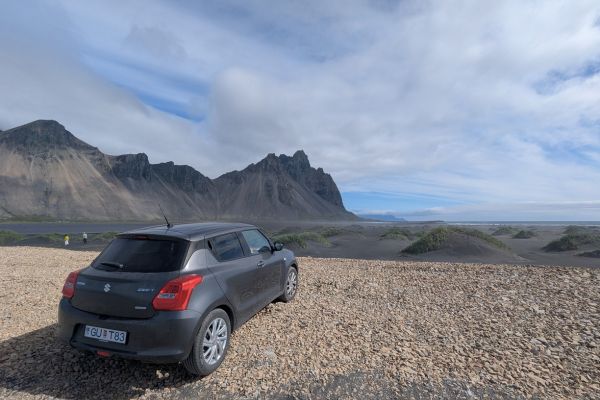
There’s also a flexibility angle worth thinking about: a 4×4 gives you more room to adjust your plans if road conditions turn bad partway through the trip, while a 2WD is fine as long as you’re comfortable rerouting, or cancelling a day, if the weather doesn’t cooperate. There’s more on planning a trip to Iceland in my guide here.
Rental Cars for F-Roads in Iceland
F-roads in Iceland require a 4×4 by LAW. Your rental agreement forbids you from driving on them if you’re not in a 4×4. So if you’re planning to visit places like Landmannalaugar, Askja, or Þórsmörk, you’ll need a 4×4.
Camper Vans in Iceland
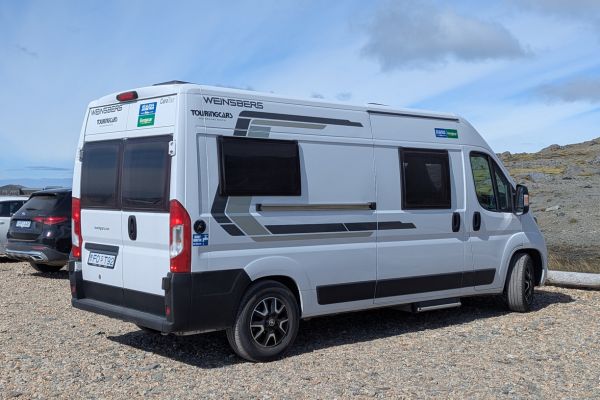
Camper vans are a whole different ball game, one I’m not covering in this post, but they’re subject to even more stringent rules from your rental company. As they’re often viewed as high-sided vehicles, you’re forbidden from driving them in high wind conditions (and they’ll specify exactly what that means).
Choosing the Right Car Size for Iceland
It’s tempting to book the cheapest, smallest car available, but do work out what you’re actually bringing first. Winter coats, hiking boots, and a week’s worth of luggage for everyone take up more room than the booking site’s photos suggest. A car that looks perfectly reasonable online will feel cramped once you’re a few days into the trip and bags are jammed in around your feet.
If you’re traveling as a group or bringing serious winter gear, then go up a size. The extra cost per day is small compared to a week of squeezing past suitcases every time you get in and out.
Studded Tires for Winter Driving in Iceland
Many rental companies fit studded tires automatically once winter arrives, they make a real difference on icy roads. Not every company does this as standard though, so if you’re renting outside summer, confirm it before you book rather than assuming it’s included.
Before you get too excited about the grip, it’s worth noting that studded tires are noticeably louder on tarmac and use slightly more fuel than a standard tire. Neither is a reason to skip them, just don’t be surprised by the road noise.
Car Rental Insurance in Iceland — What You Actually Need
Basic Collision Damage Waiver (CDW) is usually included or cheap to add, and it’s the minimum you should have. Beyond that, three Iceland-specific add-ons are worth taking seriously: Gravel Protection (GP), Sand and Ash Protection (SAAP), and Wind Damage Insurance from some providers.
If you add GP, SAAP, and Wind Damage together and include full insurance then it typically comes out somewhere around 5,000 to 6,000 ISK a day. That can DOUBLE what you’re paying for the car itself, which is exactly why so many people are tempted to skip it. I’m not saying you should, just that you should be aware.
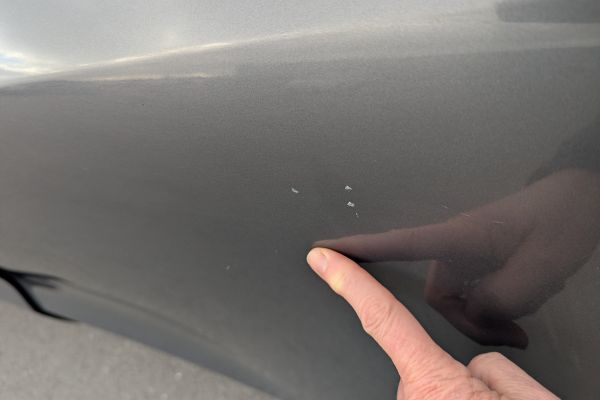
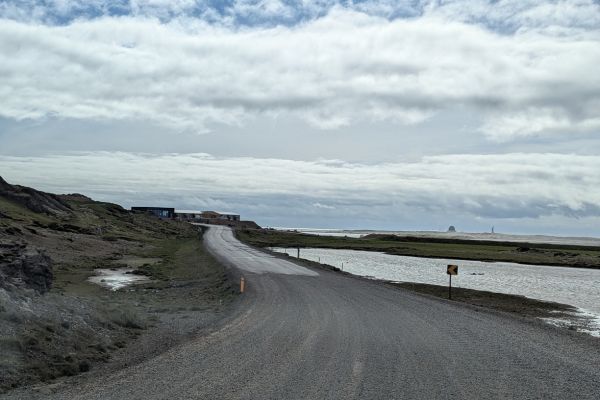
Gravel roads chip windshields and paintwork constantly, it’s one of the most common damage claims in the country, GP covers it. And don’t forget it might not even be your own driving that causes it, you’ll be overtaken by other vehicles, and others will approach from the opposite direction.
SAAP covers damage from volcanic sand and ash, which sounds dramatic until you’re driving through a sandstorm on the South Coast and understand exactly why it exists. We were lucky enough not to experience any.
Wind Damage Protection covers you for when you forget to check which way the wind is gusting as you get out (or in) of the car, and you just can’t hold onto the door.
Skipping any one of these to save a few dollars a day is a false economy, we’ve seen plenty of buckled doors and read enough stories to know these are all real issues.
There are a few more things worth knowing before you assume “full cover” means everything. .Ha. No. River or ford crossing damage isn’t covered by any insurance policy we’ve come across, full stop, so that’s one more reason to stay off unbridged F-road crossings unless you genuinely know what you’re doing. Chassis, wheel, and rim damage, along with towing costs back to a garage, are also commonly excluded by individual companies, so check the specific policy rather than assuming everything’s included.
One thing worth checking before you assume you’re covered: many credit cards advertise rental car insurance, but plenty of those policies specifically exclude gravel damage, sand and ash damage, tire damage, and undercarriage damage, exactly the kinds of claims that come up most in Iceland. Read the policy details rather than assuming your card has you covered here.
It’s also worth knowing that CDW isn’t one-size-fits-all. Basic CDW usually still leaves you with an excess, a chunk you’re liable for if something happens, while a Super CDW or full-cover option reduces or removes that excess entirely for a higher daily price. If peace of mind matters more to you than shaving a few dollars off the daily rate, the upgraded tier is usually worth it.
One practical tip: book your car through a comparison site to find the best base price, but consider buying the insurance upgrade directly from the rental company when you pick up the car instead of through the comparison site. They’ll offer it to you anyway at the counter, so there’s little downside to comparing both prices side by side before you decide.
Age & License Requirements for Renting a Car in Iceland
Most car rental companies in Iceland require drivers to be at least 20 for a standard car, rising to 23 for 4x4s and larger vehicles, and you’ll usually need to have held your license for at least a year. There may be some that allow 18-year-olds to rent, but you’ll need to pay an extra fee. You can check here what the age requirements are.
The same goes at the other end of the age range too, some companies require drivers over 65 to take out full insurance as a condition of renting, so check the specific company’s policy either way.
Your home license is valid in Iceland for up to a year, an International Driving Permit isn’t required for most nationalities but doesn’t hurt to have if your license isn’t in the Latin alphabet. As a reminder, International Driving Permits can ONLY be issued by the appropriate authority in your home country. Those issued by “online providers” aren’t legitimate. You might end up with a rental car, but if you have an accident, you’ll be in real trouble.
Check the specific rental company’s age and experience requirements before you book, they vary more than you’d expect between operators.
Renting a Car in Iceland Without a Credit Card
You don’t strictly need a credit card to rent a car in Iceland, some companies accept a debit card or offer a no-deposit option. In practice, this usually means you’ll be required to take the full insurance package rather than basic cover, since the deposit is partly what protects the company against an excess claim. If a credit card isn’t an option for you, just factor the extra insurance cost into your budget from the start.
Where to Rent a Car in Iceland — Airport vs City
Renting at Keflavík Airport is the obvious default, as every major company has a desk or shuttle pickup right at the terminal, so you avoid needing a second transfer into Reykjavik entirely (read our full guide to getting from Keflavík Airport to Reykjavik for how that compares to other options).
A small number of companies also let you pick up at Reykjavik’s own domestic airport (REK), right in the city rather than out at Keflavík, Europcar is one that does. It’s worth knowing about if it happens to suit your plans better.
Don’t worry about what time you land — the shuttle buses to the rental offices run around the clock to match flight arrivals, so a late landing doesn’t mean waiting until morning to get your car. However, camper van pickup is a different story though, that’s usually restricted to office hours even if drop-off isn’t.
Renting in Reykjavik itself can occasionally be cheaper, especially outside peak season, but then you’ve got to get yourself and your luggage to the rental office first, which usually means paying for a transfer anyway. Our stay in Reykjavik was at the end of our trip rather than the beginning, and we found an apartment to rent with free on-street parking, which is a big consideration (read my guide to parking in Iceland here).
Car Rental Costs in Iceland — What’s Included
Prices vary wildly by season, a small car that’s 3,000 ISK a day in November can be 8,000 ISK or more at the height of summer. Book early for summer travel, prices only climb as availability shrinks.
If you’re traveling in summer, book as soon as your flights are confirmed, cars for July and August start selling out months ahead. Outside peak season, you’ve usually got more flexibility to book closer to your trip.
What’s Not Included in Car Rental Costs
Watch out for what’s NOT included: many base rates exclude GP, Wind Damage, and SAAP insurance (see above), a second driver fee (and you will really benefit from a second driver here), and sometimes even a standard CDW excess reduction. Read the fine print on kilometers too, most Iceland rentals are unlimited mileage, but it’s worth confirming before you sign. Compare rental car prices here
We have an annual policy for car rental insurance, and so only bought the base cover when we rented (as we always do).
If you’re renting a car and collecting it from the airport, there will be an airport fee that’s included in your rental. As of January 1, 2026, the Icelandic Government began a mandatory government road tax, levied on the number of kilometers you drive. Some rental agencies charge this and an admin fee, others combine it into a daily rate, so you’re just charged up front for it. This isn’t really an additional tax, as the government did reduce the cost of fuel, so it kind of levels out at about the same overall cost.
The rate, for normal cars and SUVs (under 3.5 tons), is 6.95 ISK per kilometer driven. And the rental companies can charge for it in different ways, as I’ve mentioned above.
Electric cars aren’t exempt either, one of the specific goals of the whole system was to make sure EVs contribute to road funding too, so you’ll pay the same rate regardless of what your car runs on.
The road tax isn’t the same thing as Iceland’s one tunnel toll, or as parking fees at sites like Þingvellir or Skaftafell. Those are separate charges you pay at the point of use, not something the road tax replaces or offsets, more on the toll itself in my guide to driving in Iceland.
If you extend your rental, extra days each add the road tax rate on top. If you cut the trip short, whether you get anything back for the unused days depends on the individual company’s modification policy, so check the terms rather than assuming a refund.
What to Check Before You Drive Off
Walk around the car before you leave the rental car office and photograph any existing scratches, chips, or dents, gravel damage is common enough that cars often (ha, who am I kidding, unless the car is brand new there will be some gravel dings) arrive with some already. This protects you from being charged for damage you didn’t cause.
While you’re doing that walk-around, take a minute to figure out the controls too, headlights, wipers, indicators, before you’re doing it for the first time in the rain. We ALWAYS check that the front and rear lights and indicators are working before we leave, as it’s the driver who will get the fine, not the company. Rental cars in Iceland are often European models with slightly different layouts than you might be used to, and the rental car office is a much better place to learn than a single-lane bridge.
It’s also worth a quick check of the tire tread while you’re at it, a coin pressed into the grooves works fine if you don’t have a proper gauge. Between rain, snow, and gravel, good tires matter more here than on an average rental.
Confirm the fuel policy (full-to-full is standard), although we actually bought the “bring it back empty” option, to save the stress of getting back by 06:30 and finding fuel on the way. It turned out that wasn’t a worry anyway, there are fuel stations all over. Oh, and don’t forget to save the breakdown assistance number somewhere you’ll actually find it. There is EXCELLENT cell phone coverage across the entire island, I don’t think we ever lost signal. It’s also worth reading up on driving in Iceland and parking in Iceland before you set off, so nothing on the road catches you off guard.
At the time of writing, gasoline runs around 183-215 ISK a liter and diesel around 204-230 ISK a liter, worth building into your budget alongside the rental cost itself. You can check current fuel prices before you go, since they do move around.
For a live look at prices station by station, the Iceland Fuel Map tracks all five major providers, N1, Orkan, Olís, ÓB, and Atlantsolía, in real time.
It’s also worth signing up for the loyalty app of whichever provider you’re near, most give a real discount per liter: Orkan’s app knocks around 12 ISK off, Olís (and its sister brand ÓB) offer 3-5 ISK off plus extras like free coffee, and N1 has its own prepaid loyalty card too. Some rental companies hand you a discount key fob for one of these providers when you pick up the car, if yours doesn’t, just download the relevant app yourself before you go, it takes a couple of minutes and the savings add up over a week of driving. You can find these and other apps that will help you plan your trip around Iceland in my guide to Iceland’s essential apps here.
Be sure you also know the speed limits. There are heaps of stories of tourists receiving parking and speeding fines months after their visit. Just because a local overtakes you at 30 KMPH over the limit doesn’t mean you should. They know where the cameras are. You don’t.
If you’ve rented a WiFi hotspot along with your car (we did, and it was EXCELLENT), don’t forget to pick it up!
Returning Your Car in Iceland
It’s usual to bring the tank back to the same level you received it, full-to-full unless you specifically paid for a different fuel option, or you’ll be charged for the difference plus a service fee. And make sure you pick a drop-off location that actually works for your flight or onward plans, not just whatever the booking site defaults to. Mostly people will pick up and drop off at the airport.
FAQs on Renting a Car in Iceland
I don’t think I’ve ever seen so many questions about renting cars, and that’s likely because of the unique geographic obstacles you come across in Iceland. So here are the top answers to them.
Do I need a 4×4 to rent a car in Iceland?
Not for the Ring Road or Golden Circle in summer, a standard 2WD handles those fine. If you’re heading onto F-roads or travel in winter, then yes, a 4×4 becomes necessary.
What insurance is mandatory in Iceland?
Basic CDW is typically required by rental companies as standard. Gravel Protection, Wind Damage and Sand and Ash Protection aren’t always mandatory, but given how common that damage is, treat them as essential rather than optional. If you don’t take them out, make sure you have an annual policy that will cover you.
How old do I need to be to rent a car in Iceland?
Usually you’ll need to be 20 or 21 for a standard car, higher for 4x4s and larger vehicles, and you’ll typically need at least a year of driving experience. Check the specific company’s requirements, they vary.
Is it cheaper to rent at the airport or in Reykjavik?
It depends on the season, city rentals are occasionally cheaper outside peak summer, but you’ll usually pay for a transfer to collect the car, which can cancel out the savings.
Can I drive a rental car on F-roads?
Only in a 4×4, and only if your rental agreement specifically allows F-roads, some companies exclude them entirely regardless of vehicle. Check before you go.
What happens if my rental car gets damaged by gravel?
If you’ve got Gravel Protection, it’s covered. If you skipped it, you’ll likely be paying out of pocket, gravel chips and cracks are one of the most common claims in Iceland, which is exactly why the coverage exists.
ICELAND TRAVEL RESOURCES
AIRPORT TRANSFERS
24/7 pickup & drop off. Trusted, local English speaking drivers. Prebook & prepay online with cards.
Book a Transfer
HOTELS AND APARTMENTS
See choices here
Rooms with a view? Budget rooms? Need a washing machine? The best choice of hotels & apartments.
TOURS & ATTRACTIONS
Most excursion choices, small group tours, skip-line tickets, free cancellation and top local guides.
Top options here.
CAR RENTAL OPTIONS
Choose cars here
Best choice of vehicles, automatics, large or small cars, child seats. Book early for more options.
Final Words on Renting a Car in Iceland
Renting a car in Iceland comes down to a handful of decisions made in the right order: pick the right vehicle for your route, take the insurance that actually matters (gravel and ash protection, not just the basics), check the age and license requirements early, and read the fine print on what’s included before you book. Be sure you’ve bought the second driver option if more than one of you plans to drive. None of it is complicated once you know what to look for.
ASocialNomad is a participant in the Amazon Services LLC Associates Program, an affiliate advertising program designed to provide a means for sites to earn advertising fees by advertising and linking to amazon.com, amazon.co.uk, and amazon.ca. Amazon and the Amazon logo are trademarks of Amazon.com, Inc. or its affiliates. As an Amazon Associate, I earn from qualifying purchases.

