
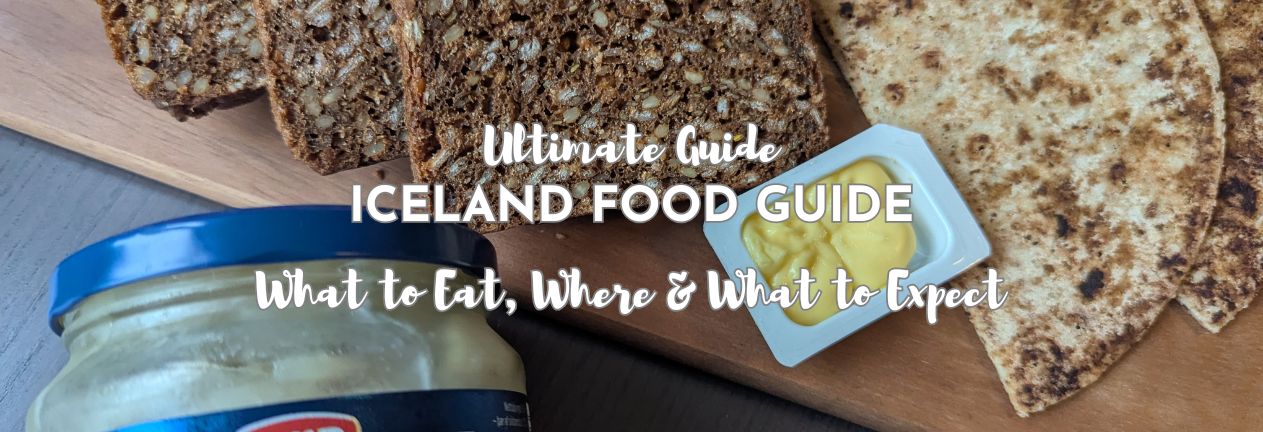
Icelandic food ranges from truly excellent to famously adventurous, sometimes on the same plate. Fresh langoustine and melt-in-your-mouth lamb sit on menus alongside fermented shark and dried fish. A short growing season means kitchens rely on the sea, the land, and centuries-old preservation tricks to fill the gaps. You’ll find geothermally baked bread, tomatoes grown in glasshouses lit through the polar night, and a hot dog stand locals argue about more than they argue about the weather. Here’s our Iceland food guide to what you’re actually going to eat, and why it’s worth the detour from your comfort zone.
THIS POST MAY CONTAIN COMPENSATED AND AFFILIATE LINKS MORE INFORMATION IN OUR DISCLAIMER
So what to eat in Iceland, practically speaking? This guide starts with the traditional (but more normal) dishes worth trying at least once: lamb, seafood, Skyr, and rúgbrauð, then moves into the modern, everyday food you’ll actually eat most days, hot dogs, pizza, and petrol station snacks included. From there it covers the adventurous foods Iceland is famous for, fermented shark and salt liquorice among them, plus the candy, snacks and chocolates worth bringing home. Then it’s on to where to eat, what it costs, and how to manage if you’re vegetarian or vegan. Nothing here is invented; we’ve tried it all.
TOP FOOD EXPERIENCE
Food Walking Tour in Reykjavik
This is the most amazing food walking tour in Reykjavik – and deserves the amazingly high ratings it gets. You’ll get introduced to food culture here in Iceland and get to taste a host of different Icelandic foods
Further down this post I’ve got an “Homebuilt Icelandic Menu Items to try from the Supermarket”. It’s easy to buy, cost-effective, and it means you can try all the unusual items in one sitting if you’re up for it. If you prefer to try Iceland’s unusual foods with a guide, who will explain the full history behind them, then I highly recommend that you book this foodie tour in Reykjavik.
There’s a localized version of it in Akureyri – which you can book here.
Traditional Icelandic Foods to Try
These are the dishes that show up on menus across the country and in home kitchens alike, and they’re worth trying at least once even if you don’t finish the plate.
Icelandic Lamb
Icelandic lamb grazes freely across the highlands all summer on wild herbs and grasses, and that free-range diet is a big part of why the meat tastes the way it does. You’ll find it roasted, in stews, and smoked. Smoked lamb, taðreykt hangikjöt, is cured and smoked over dried sheep dung, a tradition that sounds stranger on paper than it tastes on the plate, and it’s a longstanding Christmas staple in Icelandic homes.
Fish & Seafood
Iceland’s waters do most of the heavy lifting on the menu, and freshness here isn’t just a marketing line; boats land the catch close enough to shore that “fresh fish” actually means something. Langoustine is the star for many people, and if you want it done right, Kaffi Hornið in Höfn, right in the heart of langoustine country, is worth including on your South Coast Iceland itinerary.
Skyr
Skyr is one of Iceland’s most famous exports (I’m not counting the aluminium, fish products and unique wool sweaters (Lopapeysa); we’re talking food here that you can eat in Iceland.
Skyr is one of Iceland’s most famous foods and has been a staple of the Icelandic diet for more than 1,000 years. Although it’s often compared to Greek yogurt, skyr is technically a cultured fresh cheese made by adding live cultures to skim milk and straining away the whey. The result is a thick, creamy dairy product that’s naturally high in protein and low in fat. It has a mild, slightly tangy flavor that pairs well with fresh berries, honey, or granola. You’ll find skyr everywhere in Iceland, from supermarket shelves to hotel breakfast buffets, making it an easy and nutritious snack to try during your visit.

Skyr looks like yogurt, sits somewhere between yogurt and soft cheese in texture, and is one of the easiest ways to eat well in Iceland on a budget. It’s in every supermarket, comes in dozens of flavors, and works as breakfast, a snack, or a post-hike recovery food. Dehydrated skyr is also available if you’re heading out on a multi-day camping trip; you just need fresh water to add to it. And Iceland has plenty of that. We had Skyr for breakfast every day during our Iceland travels.
Rúgbrauð, Marinated Herring & Kindakæfa
Rúgbrauð, Iceland’s dense, dark rye bread, is traditionally baked using geothermal heat (more on that below) and shows up as the base for open sandwiches piled with marinated herring (síld) or kindakæfa, a lamb pâté spread that’s an actual breakfast-table staple.
Geothermal Cooking
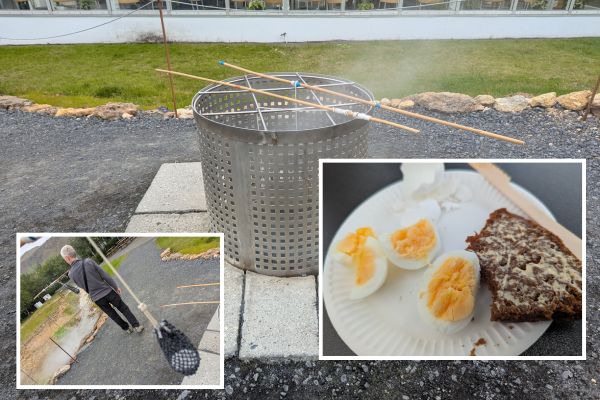
Iceland puts its geothermal heat to work in the kitchen as well as under the streets. (There’s more on how Iceland uses geothermal energy in my guide here) Bread gets baked slowly underground using the natural heat of hot springs, eggs get boiled directly in geothermal water, and flatkökur, soft flatbread cooked on a hot pan or griddle, completes the traditional bread basket. It’s a truly unique way to cook, one that reflects how much of Iceland’s daily life runs on geothermal energy. You can watch, and taste, the whole process yourself at Fontana’s Geothermal Bread Baking Experience in Laugarvatn, or at the Geothermal Park in Hveragerði, where you can also boil your own egg directly in a hot spring and enjoy the pairing (it really is good fun and very tasty). I wrote about it here.
Modern & Everyday Icelandic Food in Iceland
This is what you’ll actually get to eat on most days on a trip here, although with less ceremony, it’s still distinctly Icelandic.
Icelandic Hot Dogs
The Icelandic hot dog, pylsa, is a lamb-based sausage served with a specific set of toppings: raw and fried onions, ketchup, sweet brown mustard, and remoulade; “one with everything” (eina með öllu) is the order to know. It’s cheap, it’s everywhere, and it’s an actual national institution rather than a tourist gimmick. The most famous place to get one is Bæjarins Beztu Pylsur, a stand by Reykjavík’s harbor that’s been serving the same recipe since 1937. Bill Clinton famously ordered one here.
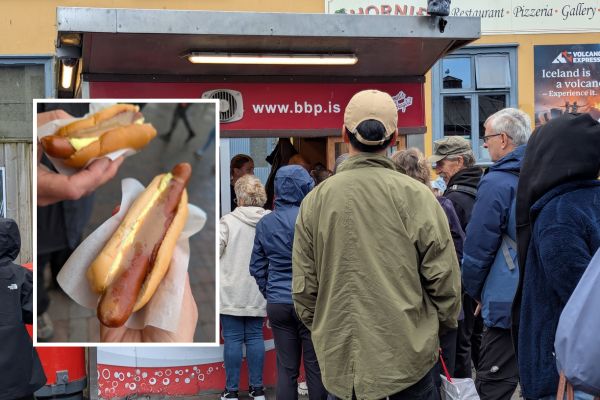
The same brand of hot dog is also sold at N1 fuel stations across the country, so you don’t need to be downtown to get one. At the N1 fuel stations, a hot dog with everything will cost you 590 ISK; at Bæjarins Beztu Pylsur? It’s 880 ISK.
Fish and Chips
Fish and chips shows up on menus across Iceland, unsurprisingly given the seafood on hand, and it’s a reliable, easy order if you want something familiar after a few days of adventurous eating. Time Out reported that Fish & Chips Lake Mývatn, a small family-owned spot beside Lake Mývatn in North Iceland, won the National Fish and Chip Awards 2026’s “International Fish and Chip Operator” title, the award for the best fish and chips business outside the UK. Their fish comes from one of Iceland’s own award-winning fishing vessels, and the tartare sauce is made fresh daily.
Black Crust Pizza in Vík
Vík is home to Iceland’s only black crust pizza, made with activated charcoal, a striking, photogenic twist on a familiar food that fits the black-sand-beach setting of the town it’s served in. It’s a charcoal infusion that makes the dough black and the signature pizza? It’s got langoustine, truffle-infused cream cheese, red onions, rucola, and herbs.
Friðheimar’s Tomato Soup & Artisan Bread
Friðheimar, a working tomato greenhouse in Reykholt on the Golden Circle route, doubles as a restaurant; you eat tomato soup and freshly baked artisan bread right inside the greenhouse, surrounded by the plants growing everything on your plate, with a tomato sorbet on the menu too.
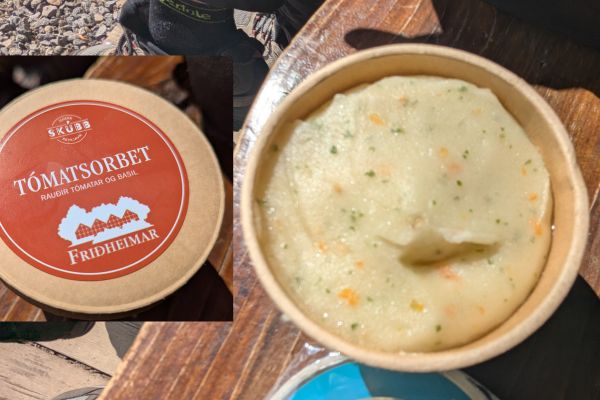
Reservations are recommended for lunch, as walk-ins aren’t guaranteed a table, especially in peak season.
There are two areas to eat, and the “bar” area allows walk-ins, although you might be in for a short wait. This is a popular stop for tour groups.
Petrol Station Food
Now don’t discount the petrol station on a long driving day. N1 stations serve up decent hot dogs and hot food across the country, and Víkurskáli in Vík goes further, with a more substantial menu and a proper dining area rather than just a grab-and-go counter. And the hot dogs there? Yeah, I reckon they tasted just as good as the ones from Bæjarins Beztu Pylsur.

Adventurous & Unusual Foods in Iceland
Several Icelandic foods are famous mostly for being unusual, and they’re worth trying too. You can decide for yourself if they’re “just for tourists now” or on regular menus. Personally, I think if they’re available to buy in supermarkets (which they are), then it’s not just for tourists. So here’s what to actually expect if you’re curious.
Fermented Shark (Hákarl)
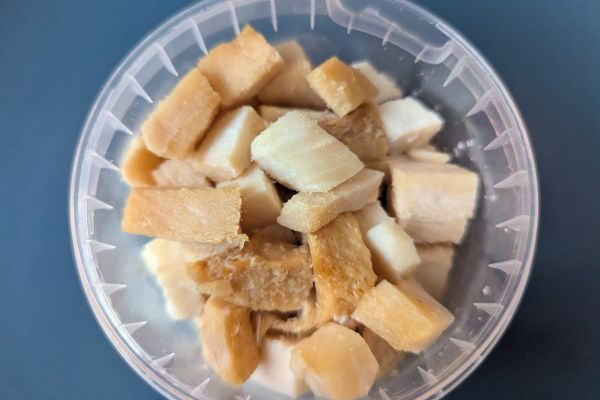
Fermented shark, hákarl, is Iceland’s most talked-about food, cured and dried over months to break down toxins that make the fresh Greenland shark unsafe to eat. The smell arrives before the taste does, and most people describe it as strong and ammonia-heavy.
You don’t have to try hákarl to have a good Iceland trip, but if you’re curious, the most famous place to try it is the Bjarnarhöfn Shark Museum on the Snæfellsnes Peninsula, a family-run museum dedicated entirely to hákarl, how it’s made, why it’s made that way, and a guided tasting alongside a shot of Brennivín. On the other side of the country, the Hauganes Baccalá Factory tour with shark tasting takes you through the curing process before you taste it.
You can also taste it in various cafes in Reykjavik (I’ve listed them below), on this walking tour in the capital, or if you’d rather try it without a tour, hákarl is sold frozen at Bónus and Krónan supermarkets, in the frozen section.
Salt Liquorice (Saltlakkrís)
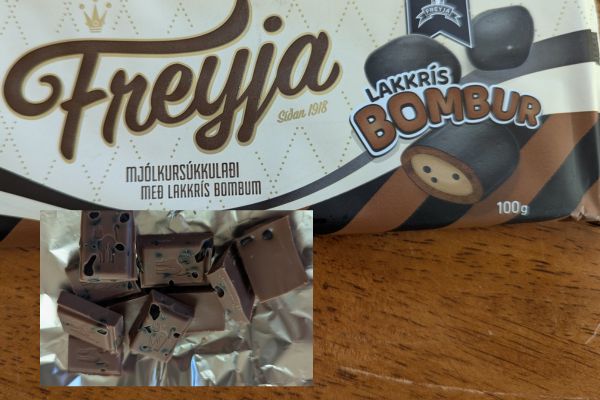
Salt liquorice divides opinion even within Iceland, a sharp, salty-sweet liquorice flavor that shows up in candy, ice cream, and chocolate alike. I love it. It’s not just an Icelandic thing either; salt liquorice is popular right across the Nordic countries; we first tried it ourselves in Helsinki.
It’s an acquired taste for most people, but it’s really everywhere in Iceland, so you’re going to encounter it whether you seek it out or not. After you spot it for the first time in the supermarket, you’ll see it everywhere. And then you’ll see the chocolaet version and its amazing.
Icelandic Snacks & Treats
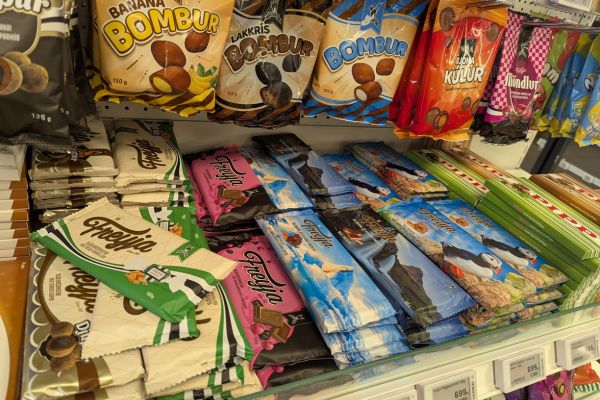
Beyond the meals, Iceland has a proper candy and snack culture worth raiding a supermarket for before you fly home. Popular candies to try include:
- Nóa Kropp — crispy corn balls that are covered in chocolate from Nói Síríus, one of Iceland’s oldest confectionery brands. They’re crunchy and dare I say it, an Icelandic Malteser?
- Prince Polo — a wafer and chocolate bar, hugely popular in Iceland despite its Polish origins. It was introduced in 1955 and has four crispy layers of wafer separated by a smooth chocolate cream. It’s covered in a layer of dark chocolate.
- Draumur —this popular solid chocolate bar has got chewy licorice inside. It’s kind of weird to start with, but definitely grows on you. It’s made by Freyja, one of Iceland’s oldest chocolate makers.
- Þristur aka Thirstur – This is another popular snack and combines soft chocolate duget with bits of licorice inside. The name of the bar “Thristur” means three – the licorice, the chocolate duget filling, and the milk chocolate covering.
- Hraun bar this chocolate bar is named after the Icelandic word for lava. Think of a Kit Kat with crunchy bits on top. It’s wafer layers, chocolate cream in between them, and toasted puff corn adding a little more crispiness.
Where to Eat in Iceland: Restaurants vs. Self-Catering
Where you eat comes down to budget and how much you want cooking to be part of your trip. Self-catering saves money over a full Iceland trip. Our self-catering guide covers tips, tricks, and easy recipes if you want to go that route. If you’d rather let someone else do the cooking and the talking, a guided food tour is an actual shortcut to trying more dishes than you’d manage alone. This covers a great cross-section of Reykjavík’s food scene in one afternoon, including the weird and the wonderful.
A Few Favorite Places to Eat in Reykjavík
These aren’t the only good options in the city, but they’re the ones to take a look at if you only have time for a few.
Icelandic Street Food
This small, unpretentious spot focuses on home-style Icelandic dishes- lamb soup, fish stew, that sort of thing- with a free-refill policy on the soups that makes it good value on a cold day.
- Address of Icelandic Street Food: Lækjargata 8, 101 Reykjavík
- Website of Icelandic Street Food: icelandicstreetfood.com
- Hours at Icelandic Street Food: open daily, 11:00–22:00
Café Loki
Iconic and right across from Hallgrímskirkja, Café Loki specializes in traditional Icelandic dishes done properly, and it’s one of the few places where you can try fermented shark (hákarl) without needing to have a full meal.
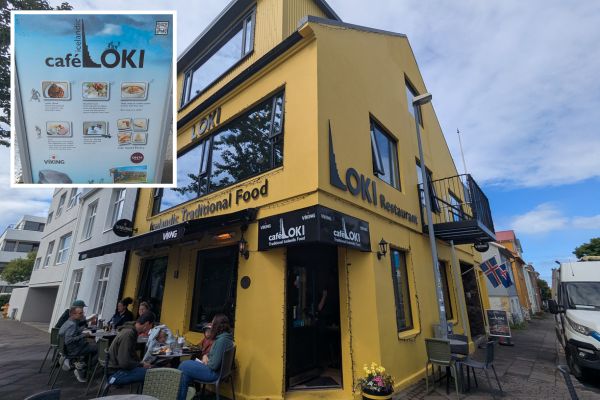
- Address of Café Loki: Lokastígur 28, 101 Reykjavík
- Website of Café Loki: loki.is
- Hours at Café Loki: open daily, 08:00–22:00, kitchen closes at 21:30
Íslenski Barinn (The Icelandic Bar)
Íslenski Barinn focuses on traditional Icelandic home cooking with a modern twist, and it’s as much a bar as a restaurant, a good option if you want a proper meal alongside a drink rather than picking one or the other. It’s best to book ahead, as they do tend to get busy here.
- Address of Íslenski Barinn: Ingólfsstræti 1a, 101 Reykjavík
- Website of Íslenski Barinn: islenskibarinn.is
- Hours at Íslenski Barinn: Sun–Thu 09:30–01:00, Fri–Sat 09:30–03:00, kitchen open daily until 22:00
- Price range at Íslenski Barinn: mid-to-upper, around 4,000–6,000 ISK per person for a proper meal
Friðheimar
Easily reachable from Reykjavik (and included on this tour), the famous working tomato greenhouse on the Golden Circle route doubles as a restaurant.

You eat lunch, tomato soup with fresh bread, right inside the greenhouse itself, surrounded by the plants growing everything on your plate. Bumblebees imported specifically for pollination work the greenhouse alongside the growing operation.
- Location of Friðheimar: Reykholt, on the Golden Circle route
- Booking for Friðheimar: reservations recommended for lunch; walk-ins aren’t guaranteed a table, especially in peak season
For the full Reykjavík restaurant and bar scene, our Reykjavík travel guide covers more spots beyond these four favorites.
Food Prices in Iceland — What to Expect
Iceland isn’t a cheap place to eat, and it’s worth budgeting for that honestly rather than getting caught out. Depending on where you’re traveling from (Canadians, Americans, for instance), you might find the prices similar to home; either way, it’s worth trying to get a head start on what it will cost you, so you don’t arrive with sticker shock.
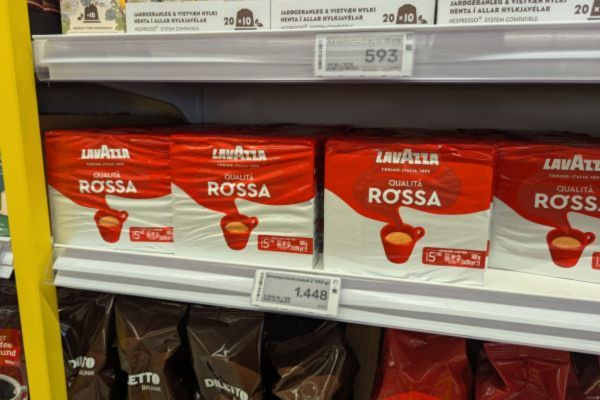
For a full breakdown, see our guide to how much a trip to Iceland costs, or check out our tips to save money while traveling in Iceland. As a general rule, self-catering with supermarket groceries costs far less than eating out for every meal, and mixing the two, cooking most nights and eating out occasionally, is how most people manage a trip here without either starving their budget or their stomach.
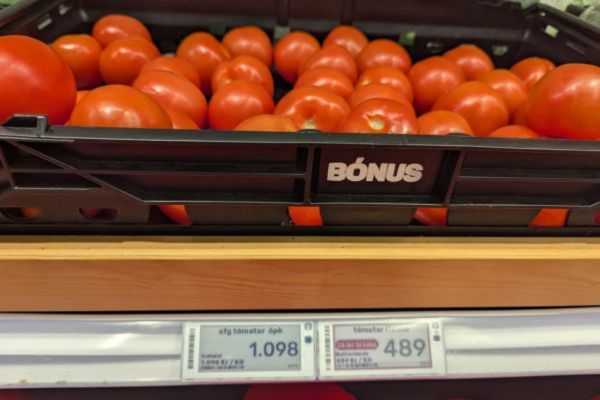
If you want to check out how much food costs compared to home before you set off, and perhaps take advantage of bringing food with you (there are details on what you can bring in my guide here), then check out Kronan.is.. Pricing is similar to Bonus, the other budget supermarket along with Netto, but Bonus doesn’t display online pricing. There’s an English version of the website, as well as Icelandic.
Vegetarian & Vegan Options in Iceland
Vegetarian and vegan travelers do fine in Iceland these days; Reykjavík in particular has a truly solid plant-based restaurant scene, and supermarkets stock the usual plant-based staples, oat milk, tofu, and meat substitutes included. If you want a guided introduction to it, this private vegetarian food walking tour covers Reykjavík’s plant-based options with a local guide.
If you’re self-catering as a vegetarian or vegan, then it’s good to know that Tofu is about half the price in Iceland as it is in Europe, with both Kronan and Bonus stocking 500g blocks. It’s stocked in the chiller rooms, and sometimes in the fruit and vegetable chiller room.
Food Tours around Iceland
Food isn’t just a Reykjavík thing; a handful of regional food tours let you taste your way through other parts of the country too.
- Akureyri — this food walk with five tastings and a local guide covers North Iceland’s capital; see our North Iceland travel guide for the rest of the region.
- Ísafjörður — this Icelandic heritage food tasting covers the Westfjords; our Westfjords travel guide has the full regional picture.
- Grundarfjörður — this guided walking tour with local food tasting covers the Snæfellsnes Peninsula; our Snæfellsnes travel guide covers the rest of the peninsula.
Homebuilt Icelandic Menu Items to try from the Supermarket
We built ourselves an Icelandic Foods list to try and bought them from Bonus and Kronan – so we could try them when we checked into our apartment in Reykjavik. On our list?
- Hákarl
- Dried Fish
- Rúgbrauð
- Flatkökur – – flat bread
- Marinated herring (síld)
- Kindakæfa
- Taðreykt hangikjöt – smoked lamb
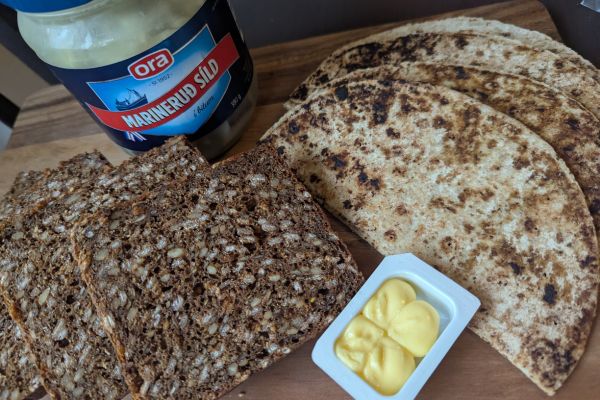
And we washed it down with a variety of craft beers and a shot of Iceland’s most famous alcohol, Brennivin. (Buy it from Duty Free on the way in to get it cheapest, or you can buy from Vinbudin. There’s more on alcohol in Iceland in my guide here.
If you want to try Brennivin, then buy a single small bottle at Duty free on the way in for 590 ISK (June 2026 price), otherwise in Vinbudin you’ll need to buy 6 of the small bottles.

For dessert, there was a selection of the candies available in Iceland. And salt licorice? Yeah, that was a good snack to have. Regularly. Along with salty microwave popcorn, a bargain snack if there ever was.
FAQs on Icelandic Food
Got questions about Icelandic food? Here are quick answers to what we’re asked most.
Is Icelandic food expensive?
Yes, generally. Eating out every meal adds up fast, and self-catering with supermarket groceries from the budget stores, Kronan and Bonus, is the main way to manage the cost over a longer trip. I’ve detailed more on food planning in my guide to planning a trip to Iceland here.
Do I have to try fermented shark?
No. Hákarl is famous, not mandatory, and plenty of people have a truly great Iceland trip without ever touching it.
What’s a typical Icelandic breakfast?
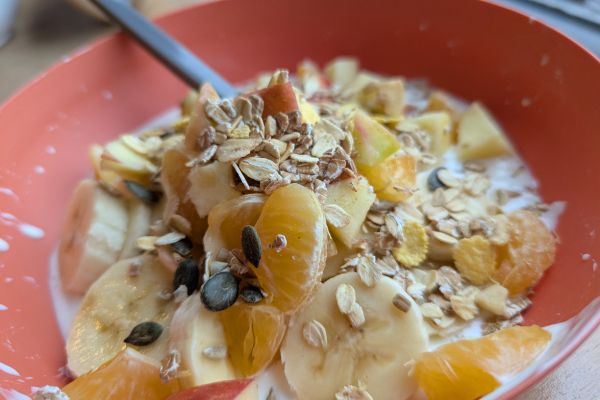
Skyr with seeds, nuts, and breakfast cereals is a good breakfast. Rúgbrauð with kindakæfa or herring, and coffee cover most Icelandic breakfast tables, simple, filling, and easy to recreate if you’re self-catering.
Are there good vegetarian options in Iceland?
Yes. Reykjavík especially has a solid plant-based restaurant scene, and supermarkets stock the usual vegetarian and vegan staples.
What is skyr?
Skyr is a strained Icelandic dairy product that sits between yogurt and soft cheese in texture, sold in dozens of flavors and eaten as breakfast, a snack, or a recovery food after a hike.
Is Icelandic seafood good?
Yes, easily. Fresh catch and short supply chains mean seafood is one of the most reliable things to order anywhere in the country.
What snacks should I try in Iceland?
Nóa Kropp, Þristur, and salt liquorice in its many forms all show up on nearly every “must-try” list.
How do I pay in restaurants in Iceland?
Iceland is pretty much a cashless society (read my guide on how to pay in Iceland here). And if you’re worried about how you tip, because many places do NOT have an “add a tip” button on the credit card payment, then read my guide to tipping in Iceland. Spoiler: You don’t need to.
ICELAND TRAVEL RESOURCES
AIRPORT TRANSFERS
24/7 pickup & drop off. Trusted, local English speaking drivers. Prebook & prepay online with cards.
Book a Transfer
HOTELS AND APARTMENTS
See choices here
Rooms with a view? Budget rooms? Need a washing machine? The best choice of hotels & apartments.
TOURS & ATTRACTIONS
Most excursion choices, small group tours, skip-line tickets, free cancellation and top local guides.
Top options here.
CAR RENTAL OPTIONS
Choose cars here
Best choice of vehicles, automatics, large or small cars, child seats. Book early for more options.
Final Words on Iceland’s Food Scene
Icelandic food is better and more varied than its reputation suggests; the fermented shark headlines get all the attention, but most of what you’ll actually eat- fresh seafood, good lamb, skyr in every flavor, and a hot dog stand worth queuing for- is honestly excellent rather than a novelty. Go in curious, order the adventurous thing at least once, and let the rest of your Iceland food guide be built one plate at a time.
ASocialNomad is a participant in the Amazon Services LLC Associates Program, an affiliate advertising program designed to provide a means for sites to earn advertising fees by advertising and linking to amazon.com, amazon.co.uk, and amazon.ca. Amazon and the Amazon logo are trademarks of Amazon.com, Inc. or its affiliates. As an Amazon Associate, I earn from qualifying purchases.

