
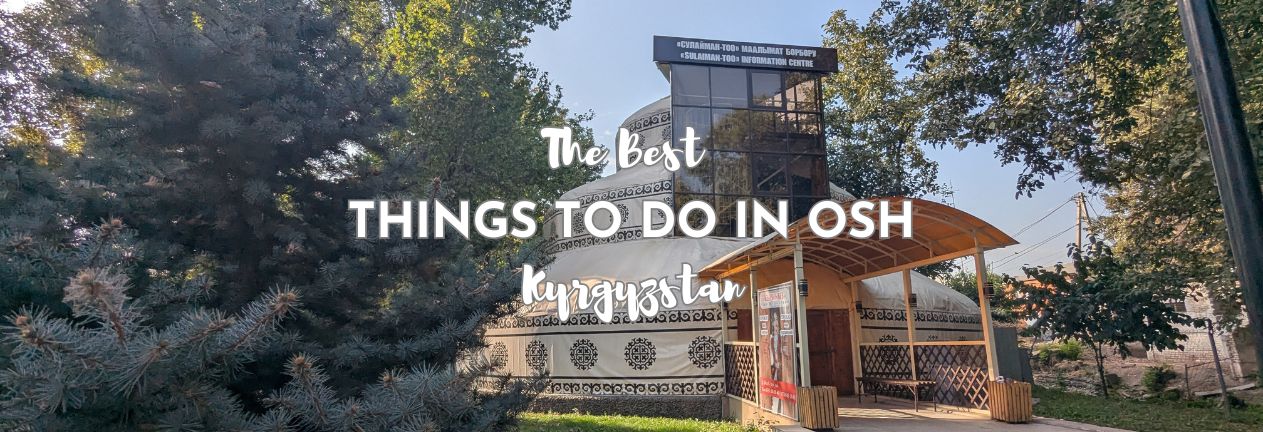
Osh is Kyrgyzstan’s second city, and in a lot of ways it’s the more interesting one. While Bishkek gets the government buildings and the wide Soviet boulevards, Osh has been trading along the Ak-Buura river for more than 2,000 years, older than the capital by a long stretch and closer in feel to Uzbekistan or Tajikistan than to northern Kyrgyzstan. We arrived here at night, showered off the dust of the road, and headed straight out for beer, snacks, and food before crashing into the most comfortable bed we’d had since Dushanbe. Osh is at 960 meters (3,150 feet) elevation, a seriously decent drop in altitude after the Pamir Highway, and that also makes the city easy to explore on foot. It’s also your gateway south, toward Uzgen, Arslanbob and the Alay mountains. Here’s what to do in Osh.
THIS POST MAY CONTAIN COMPENSATED AND AFFILIATE LINKS MORE INFORMATION IN OUR DISCLAIMER
If you’re putting together your own list of things to do in Osh, here’s what this guide covers: how to get here whether you’re coming from Bishkek, flying in, or crossing overland from Tajikistan on the Pamir Highway, the sights worth your time from Sulaiman-Too’s museum complex to the city’s scattered Soviet murals, where to eat, and a short history of a city that’s been trading on the Silk Road for 3,000 years. Two days here is enough to see it properly, more if you’re heading onward to the Pamirs or slowing down before Bishkek.
How to Get to Osh
Osh doesn’t have the same web of transport connections as Bishkek, but getting here is straightforward whichever direction you’re coming from. Most people fly in from Bishkek, a short hop of around 1 hour, or take a shared taxi over the Töö-Ashuu pass for a longer, more scenic 11 to 17 hour overland trip. Osh is also the main southern staging point if you’re arriving from or heading to Tajikistan on the Pamir Highway, more on that below.
Dushanbe to Osh (Pamir Highway)
Shared and private 4×4 transfers cross into Kyrgyzstan on the Pamir Highway, a multi-day overland route through Tajikistan’s GBAO region that ends by dropping down into Osh. Most independent travelers take somewhere between 5 and 7 days depending on how many stops they build in, and Osh is usually the first proper city you’ll see after days of high mountain passes and not much else. I’ve covered the whole route, where to stop and what the road actually looks like, in my Dushanbe to Osh Pamir Highway guide.
Bishkek to Osh
Heading north to south is the same journey as the Osh to Bishkek route, just run in reverse, same shared taxi stations, similar prices, and the same 11 to 17 hours depending on the season and how many mountain passes are open. I’ve written up the How to Go from Bishkek to Osh route in full, and the northbound direction is covered in How to go from Osh to Bishkek if you’re planning to head to Bishkek after Osh.
Osh Airport to the City
Osh International Airport is about 9 kilometers (5.6 miles) north of the city center, so it’s a quick trip in either direction. A Yandex Go taxi is the easiest option, and costs somewhere in the range of 200 to 400 KGS depending on demand and time of day. The journey time is around 15 to 20 minutes with no traffic. If you want the cheap route, marshrutka routes 107 and 142 both run between the airport and the city for a few dozen som, though you’ll need to know roughly where you’re going since there’s limited English signage. If you haven’t already, make sure you’ve got the right power adapter for Kyrgyzstan sorted before you land; plugs here are the European two-pin type.
Arriving From or Heading to Tajikistan
A lot of travelers pass through Osh as the last or first stop on the Pamir Highway between Kyrgyzstan and Tajikistan, and that brings two practical questions: where to change money, and how to arrange the crossing itself.
Changing Money in Osh
Osh has fewer dedicated currency exchange offices than Bishkek, so don’t expect the same choice of counters on every corner. However, if you’re here with Tajik somoni you want to get rid of it here, it’s harder (and you’ll get a worse exchange rate if you hang on to it until you get to Bishkek.
Avoid the exchange desks at the airport and in hotels; the rates are reliably poor, and the fees add up fast. Banks and dedicated exchange offices in the city center are the more reliable option, particularly useful if you’re arriving with Tajikistani somoni and need Kyrgyzstani som (KGS) before heading north, or the other way around if you’re heading into Tajikistan. I’ve marked on my map where the best choice of exchanges is. You can also head to Gapar Aytiev (see here) or the currency exchange by the Pekin Hotel for the exchanges that accept Tajik somoni.
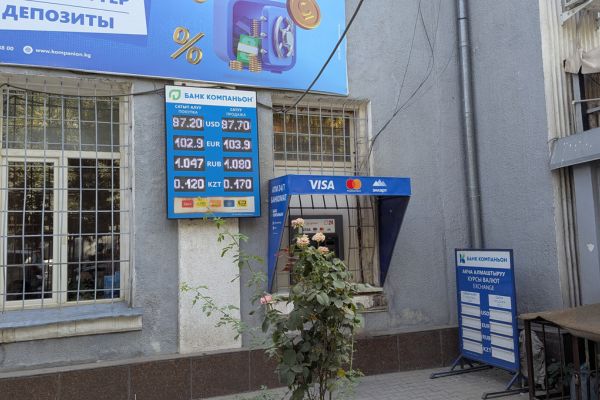
At ATMs, always choose to be charged in KGS rather than your home currency; you’ll get a fairer rate that way, and let your bank know you’re traveling before you go. For the full breakdown on ATM limits, fees by bank, and how much cash to carry, read my guide to ATM fees in Kyrgyzstan.
Onward to Tajikistan: The Pamir Highway
If you’re heading onward to Tajikistan rather than arriving from it, the Pamir Highway is the main overland route south, and I’ve covered the Dushanbe to Osh direction above. Arranging this independently means finding a shared jeep or negotiating a private driver, which takes some patience and decent Russian. If you’d rather have someone else handle the logistics, permits and fuel stops, there’s a 7-day private 4×4 transfer running Osh to Dushanbe and back, taking in the whole GBAO region including the Wakhan Corridor and the Ak-Baital Pass. It was priced from around GBP 550 per person when I last checked, so confirm the current price and itinerary before you book.
Getting Around Osh
Osh’s city center is compact and very walkable. Much more so than the much bigger Bishkek (which I wrote about here) Most of what’s in this guide, the bazaar, the mosque, the parks, the murals, is within easy walking distance of each other, and you don’t really need a taxi to get around day to day, as long as you’ve got data on your phone (see my guide to the best SIM and eSIM for Kyrgyzstan if you haven’t sorted that yet).
Where you will want Yandex Go is getting out to the bus or marshrutka station on the edge of the city, which is where the shared taxis to Bishkek and elsewhere depart from. The same Yandex Go account you’ve been using across Central Asia works here too, no separate signup needed.
How Long to Spend in Osh
A full day covers the essentials: the bazaar, Sulaiman-Too’s museum complex, and a wander through Memorial Park, but two days is a better call if you can spare them. And if you need laundry doing after the Pamir Highway, of course.
That gives you time to slow down, work through the Soviet murals in town, and explore Sulaiman-Too and not feel like you’re racing the clock. Two days is especially worth it if you’re heading off to the Pamir Highway afterward or down to Bishkek, since both are long trips and you’ll want to arrive rested rather than running on fumes.
The Best Things to Do in Osh
Here’s the rundown of what’s actually worth your time in Osh, roughly in the order you’d hit them from the city center outward.
Take a Walking Tour
I can’t talk about Osh without talking about Atabek. If you only have two hours in this city, spend them with him. Atabek runs Best of Osh, walking tours, food tours, anything you want to know about the city, and after years of booking tours all over the world, he’s right up at the top of the list. It felt less like a tour and more like wandering the city with an old friend who happened to know absolutely everything. We met him at around 09:00 (we got the meeting point wrong and he had to come and find us!), and came away knowing more about Osh in two hours than we’d have picked up on our own in a week. You can book Best of Osh directly, or if you’d rather go through a platform you already use, this is his Osh walking tour on Viator.
Sulaiman-Too – Sacred Mountain
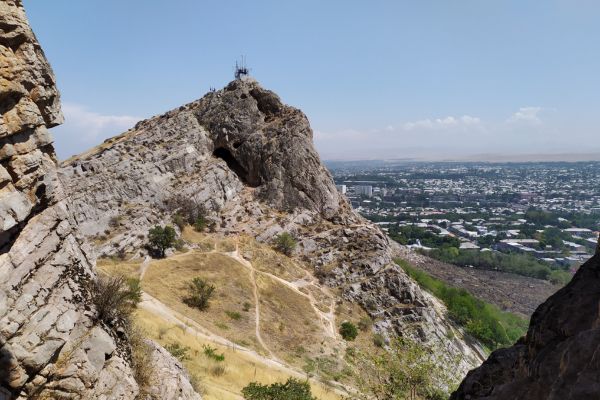
Sulaiman-Too is the reason Osh has UNESCO status. It’s a sacred mountain rising straight out of the city center with a shrine, a mosque, and centuries of pilgrim traffic layered onto its slopes. It’s easily the biggest single sight in Osh, and it deserves more than a passing mention here, which is exactly why it’s got its own dedicated guide rather than a quick write-up in this one. Head over to Exactly How to Explore Sulaiman-Too for the full climb-by-climb breakdown, both entrances, and everything worth seeing on the way up.
Sulaiman-Too National Historical and Archeological Museum Complex
It’s worth separating from the mountain climb above: the Sulaiman-Too National Historical and Archaeological Museum Complex, built into the hillside at the base of the mountain in a yurt-inspired design. Inside, exhibits cover the mountain’s long history as a pilgrimage site, worth a look even if you’re not planning the full climb.
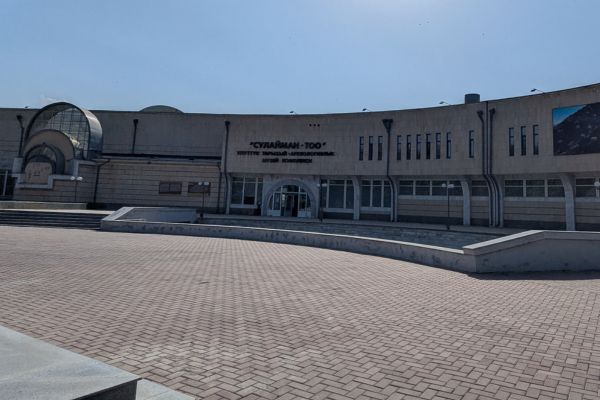
There’s not much in English here, but there’s a lot to look at. And you’ll be able to figure a lot of it out by looking at the exhibits.
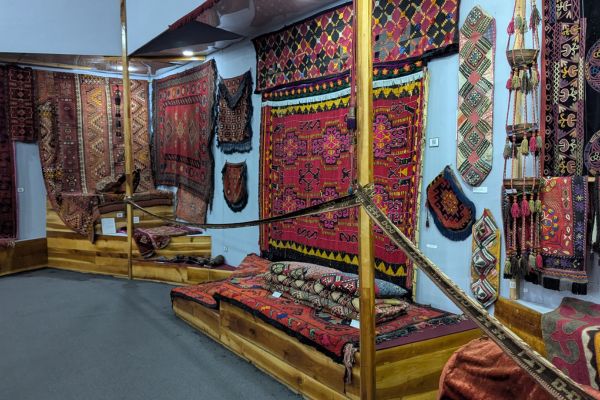
How long to spend at the Sulaiman-Too Museum Complex: around 30 to 45 minutes for the museum.
Entry Fees for the Sulaiman-Too Museum Complex: 70 KGS for the museum at the base. The mountain trail entrance fee is separate (a further 70 KGS), and the Cave Museum is a further 70 KGS, and both are covered in the dedicated Sulaiman-Too guide that I mentioned above.
Osh’s Three Storey Yurt
Just outside stands a large three-storey yurt structure, a striking bit of architecture and a good photo stop in its own right, whether or not you go inside. There’s a tourist information service housed inside it, and you can play dress up in Kyrgyz traditional clothing. (Much like we did at Kaindy Lake in Kazakhstan)
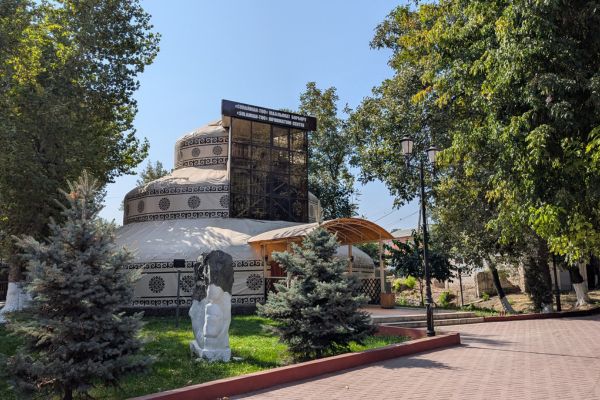
There’s a whole lot of information in here that’s worth reading about the Sulaiman-Too mountain and why people visit. So, yes, it’s worth popping your head in, even if you don’t want to dress up!
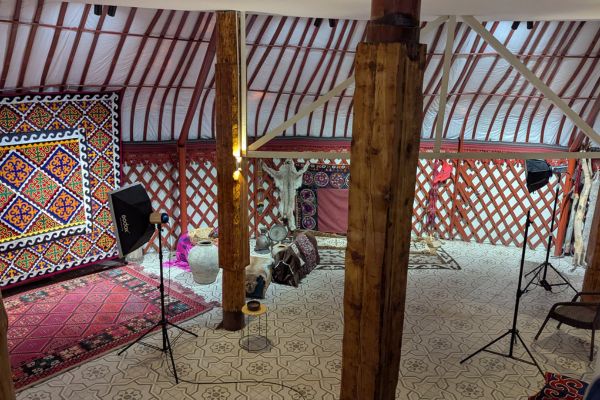
You do have to pay to go in (200 KGS), and it’s worth wandering around just to see how its constructed, If you want your photo taken in the ethnic clothing then the prices range from 500 KGS to 3500 KGS.
The Osh Memorial Park and the Missing Lenin Statue
Osh Memorial Park is on the city’s central square, home to a WWII eternal flame memorial and a memorial to the roughly 4,000 people from Kyrgyzstan sent to Chernobyl as part of the Soviet clean-up crew after the 1986 disaster.
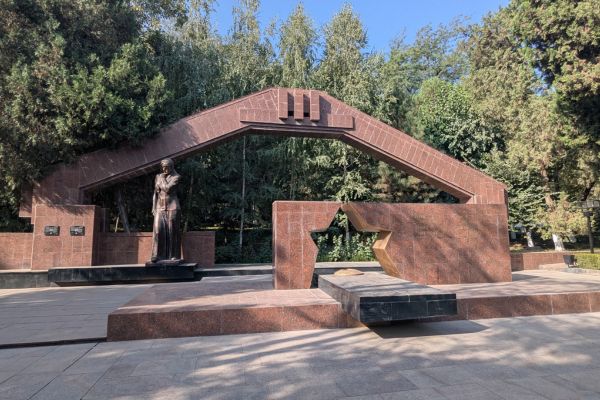
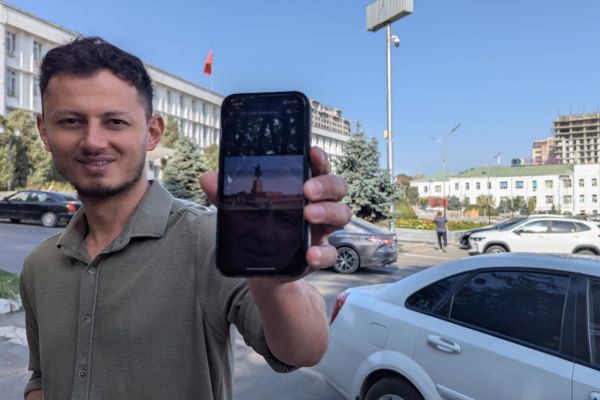
Until June 2025, a 23-meter (75-foot) Lenin statue, one of the tallest in Central Asia, stood near here facing Osh City Hall, and had done since the mid-1970s. It’s since been removed, and a 95-meter (312-foot) flagpole flying the Kyrgyz flag stands there instead.
The Monument to Alymbek Datka
On Kurmanjan-Datka Street (renamed from Lenin Street in 2025, part of a broader move away from Soviet-era names across the country) stands a monument to Alymbek Datka, a 19th-century Kyrgyz statesman from the Bargy tribe who unified the southern Kyrgyz territories and governed the Fergana Valley under the Kokand Khanate.
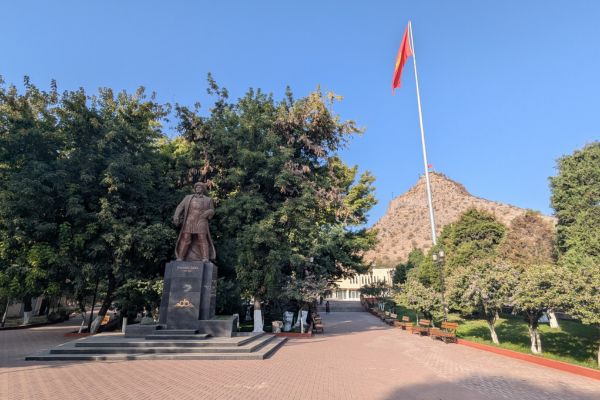
He was the first person to receive the “datka” title from the Kokand khans, and after his murder in a palace coup in 1862, his wife, Kurmanjan Datka, inherited his authority and went on to become one of Kyrgyzstan’s most celebrated historical figures, later recognized in her own right as ruler of the Alai region. The square around the monument doubles as a public gathering space, popular for local festivities, weddings and charity events, with stalls selling local specialties whenever something’s on. It’s a lovely place to wander, and you’re perfectly placed here to head into the Sulaiman-Too National Museum.
The Archangel Michael Cathedral
A short walk from Memorial Park, this Russian Orthodox cathedral has a quieter, more contemplative feel than the Soviet monuments around it. It reopened as a working church in 1992, after decades spent as a Soviet cultural center under the USSR, and it’s still an active parish serving Osh’s Russian community today.
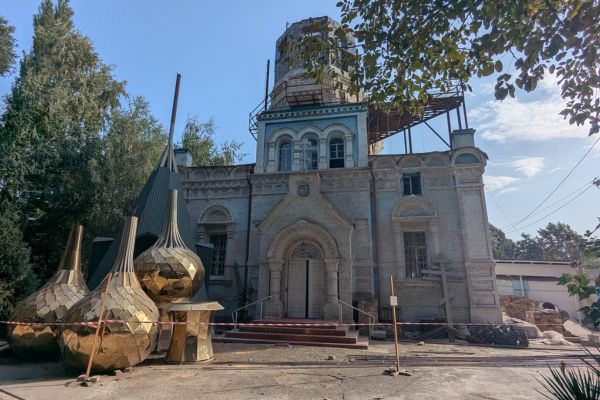
As with any working church, dress modestly (covered shoulders and knees; women will need to cover their hair) and keep visits low-key, as this functions as a normal parish rather than a museum. It is worth coming inside though, and it’s rather lovely, and just, well “normal” inside, not what you usually expect with Russian Orthodox buildings.
Navoi Park sometimes Alisher Navai Park
Navoi Park backs onto Osh’s central square and is where locals actually spend their weekends, a green riverside park with cafes, amusement rides and an old Soviet-era Yak-40 plane painted bright blue, sitting there as a slightly surreal photo stop. Like a lot of parks in Central Asia, it’s also got a fun fair bolted onto the green space, and we couldn’t resist the Ferris wheel.
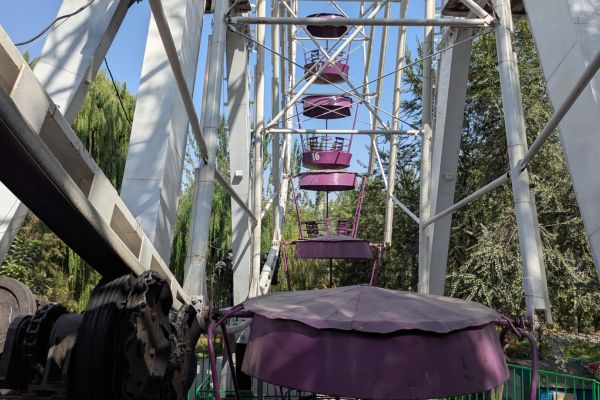
We were the only ones on it. It cost 80 KGS each for a single run, or at least it should have. I handed the guy 200 KGS for both of us and got two pairs of binoculars back as change instead, since he apparently didn’t have any actual money on him. We weren’t about to starve as a result.
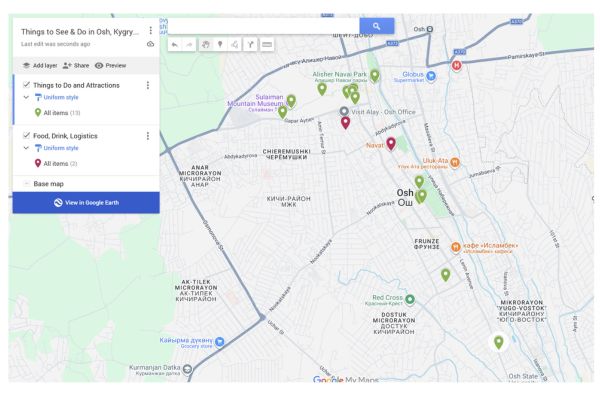
Map of Things to Do in Osh
I’ve mapped every stop in this guide so you can see how they line up across the city and plan your own route between them. Here’s the map
Where to Eat and Drink in Osh
Osh takes its food seriously, and between the bazaar stalls, chaikhanas and street vendors you won’t go hungry or go broke doing it. Here’s where to start, plus a few dishes worth hunting down even if you don’t have a specific place in mind. For the country-wide picture, including what to expect outside Osh, read my full guide to food and drink in Kyrgyzstan.
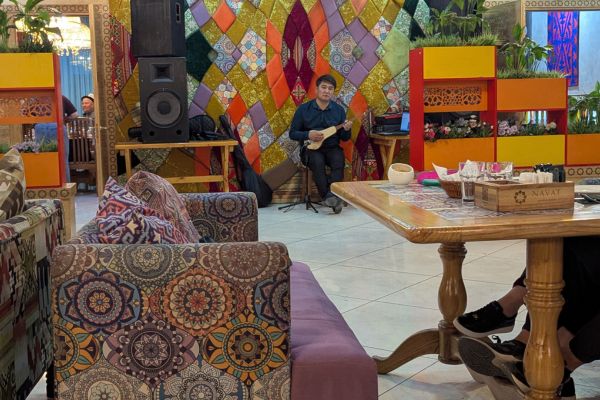
Navat Chaikhana
Navat Chaikhana serves Central Asian and Russian cuisine with outdoor seating, think lagman, beshbarmak, manti and boorsok, and it’s a seriously easy place to eat, with English menus and English-speaking staff.
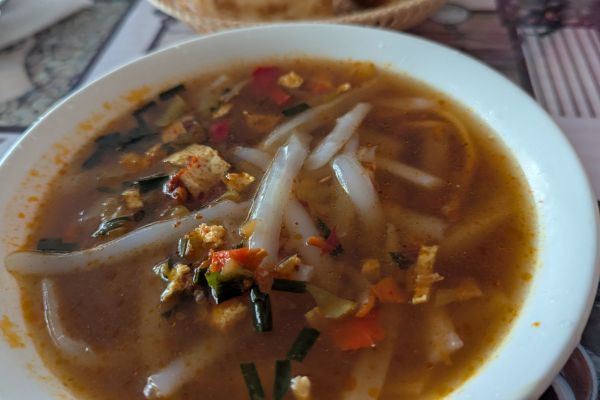
Also look out for ashlan-fu while you’re here, a cold, spicy noodle dish from Osh’s Dungan community (Chinese Muslim, originally from Central Asia) that’s become a popular hangover cure. You’ll find it at cafes and market food stalls around the city rather than at any one specific restaurant, so keep an eye out at the bazaar.
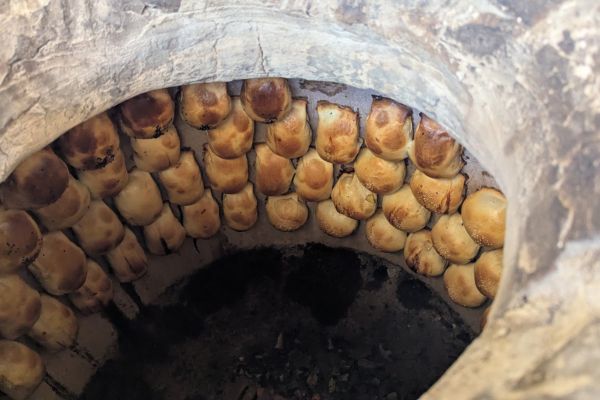
A few other dishes worth trying here in Osh: maida manti (small steamed dumplings, usually filled with meat and onion), gok chuchvara (a herb-filled dumpling served in broth), and the tandoor-baked samsa Osh is known for. Forget what you’re picturing when you hear “samosa”; this is closer to a Cornish pasty, tea-drop shaped, baked rather than fried, and filled with meat, onion, and a little potato. I’ve marked on the map where to find them (there are 3 or 4 in a line!)
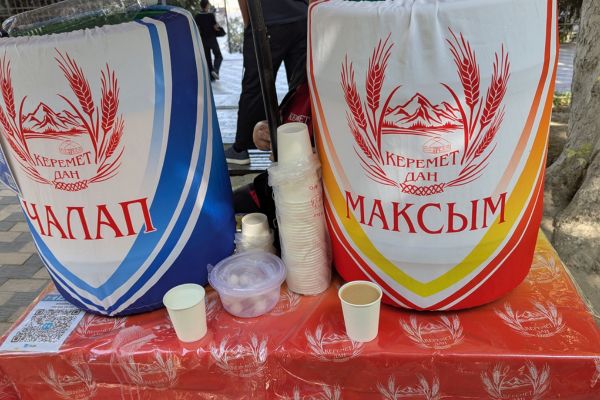
Keep an eye out too for the drink sellers, always women, set up at intervals along the main streets, selling Maksim, Kvass and Chalap from big containers; they’re usually on the edges of the parks as well. Kvass is a lightly alcoholic, cloudy, sweet and sour fermented wheat drink you’ll also find across Russia. Maksim is a traditional fermented roasted grain drink, and Chalap is a fermented dairy drink. Both are an acquired taste, pungent and strong, and one taste was enough for us. Kvass, on the other hand, we’d happily drink again.
A Brief History of Osh
Osh’s history stretches back further than almost anywhere else in Kyrgyzstan, and it’s worth knowing before you start exploring.
Early History
Osh is one of Central Asia’s oldest continuously inhabited cities, with a history UNESCO puts at more than 3,000 years. Long before Bishkek existed in any recognizable form, Osh was already a working city in the Fergana Valley, and from around the 8th century it grew into a real center of silk production on the Silk Road, trading in everything from raw silk to dried fruit and Central Asian textiles.
At the heart of it all is Sulaiman-Too, the sacred mountain rising straight out of the city center. Some historians link it to the “Stone Tower” that the 2nd-century geographer Ptolemy described as marking the midpoint of the Silk Road, and there’s evidence of a Zoroastrian shrine inside what’s now called Eagle Cave, where worshippers once honored the water goddess Vakhsh alongside a sacred fire. The mountain’s religious significance only deepened as Islam spread through the region, and it’s been a pilgrimage site in one form or another for well over 1,000 years.
Osh also has a Mughal connection you might not expect. Babur, the founder of the Mughal Empire and a descendant of Tamerlane, passed through around 1496 to 1497, built structures on Sulaiman-Too, and wrote admiringly of the city in his own memoirs, calling it one of the finest strongholds in the Fergana Valley.
Control of the city passed through a series of Central Asian khanates over the following centuries, including the Kokand Khanate, which by the 19th century governed the region through local rulers like Alymbek Datka (more on him above, in the section on his monument). That arrangement ended in 1876, when the Russian Empire annexed the region as part of its “Great Game” rivalry with Britain for control of Central Asia.
Through all of this, the Jayma Bazaar kept trading. By some estimates, it was one of the oldest continuously operating bazaars in the region, dating back roughly 2,000 years, right up until it was leveled and rebuilt on the outskirts of the city in recent years.
Soviet History
Osh became the administrative center of Osh Region in 1939, cementing its role as the south’s main city under Soviet rule. Real change came in the 1960s, when Soviet planners industrialized Osh alongside other Fergana Valley cities and actively encouraged Kyrgyz from the surrounding countryside to move in and take up factory and administrative jobs.
That shift reshaped the city’s demographics fast, and it didn’t sit comfortably alongside Osh’s long-established Uzbek trading population. Tensions over land and housing boiled over in June 1990, when Osh and the surrounding area saw brutal ethnic clashes between Kyrgyz and Uzbek residents. Estimates vary, but the violence left somewhere around 300 people dead and hundreds more seriously injured, one of the most serious ethnic conflicts anywhere in the Soviet Union in its final years.
Osh’s Soviet years also left their mark on the skyline. A 23-meter (75-foot) statue of Lenin, one of the tallest anywhere in Central Asia, went up on the city’s central square sometime in the mid-1970s and stood facing Osh City Hall for nearly 50 years. Around the same time, memorials went up nearby honoring the dead of the Great Patriotic War (what much of the world knows as World War II), and the roughly 4,000 people from Kyrgyzstan sent to Chernobyl as part of the Soviet clean-up crew after the 1986 disaster.
Scattered across the city today, you’ll still find dozens of Soviet-era mosaics and murals from this period, some altered slightly after independence, most left more or less as they were. It’s this layer of the city’s history that gives Osh’s Soviet mural trail its material, and it’s one of the more visible, walkable ways to get a feel for what the city looked and felt like under the USSR.
Post-Soviet History
Independence in 1991 hit Osh’s economy hard. The industrial base the Soviets had built up largely collapsed almost overnight, and it’s only really started to recover properly in the past couple of decades.
The most painful chapter came in June 2010, when ethnic violence between Kyrgyz and Uzbek communities broke out again, worse than in 1990. Over four days, rioting, looting and destruction killed dozens of people on both sides, destroyed more than 2,000 buildings, and pushed an estimated 100,000 ethnic Uzbeks across the border into Uzbekistan as refugees. It’s a difficult part of the city’s recent history, and one that’s still within living memory for a lot of people you’ll meet here.
Since then, Osh has worked to rebuild and reposition itself as, unofficially, the “capital of the south”. Osh State University has grown into a major regional draw, and the city’s role as the southern gateway toward Uzgen, Arslanbob, the Alay mountains and the Pamir Highway into Tajikistan has only become more central to its identity. Sulaiman-Too, the mountain that’s shaped the city for millennia, was formally inscribed as a UNESCO World Heritage Site in 2009, Kyrgyzstan’s only listing to date.
More recently, the city has changed shape again. The historic Jayma Bazaar was relocated to the outskirts in 2025, and that June, Osh’s Lenin statue came down after nearly 50 years, part of a broader, ongoing move across Kyrgyzstan to retire Soviet-era names and monuments. Lenin Street, right by where the statue stood, has since been renamed after Alymbek Datka. It’s a city that’s still visibly working out which parts of its Soviet past to keep on display and which to quietly put away.
FAQs on Visiting Osh
A few more questions that come up a lot when planning a trip to Osh.
How many days do you need in Osh?
One full day covers the essentials. Two days is a better call if you can spare them, especially if you’re heading onward to the Pamir Highway or down to Bishkek afterward and want to arrive rested rather than rushed.
Is Osh safe to visit?
Yes, Osh is safe for the vast majority of travelers. Violent crime targeting visitors is rare, and locals are welcoming. Keep half an eye on your bag in the bazaar and on crowded marshrutkas, where petty theft is the more realistic risk, and you’ll be fine. For the full picture on staying safe, keeping your passport on you, and everything else you need to know about traveling here independently, see my complete guide to independent travel in Kyrgyzstan.
Is Osh walkable?
Very. The city center is compact, and most of what’s covered in this guide is within easy walking distance. You’ll only really need a taxi to reach the bus or marshrutka station on the edge of town.
Do I need a separate Yandex Go account for Kyrgyzstan?
No. The same Yandex Go account works across every Kyrgyz city, including Osh, so there’s no separate signup needed if you’ve already got it running in Bishkek.
Is Osh worth visiting on its own, or only as a stop between Bishkek and the Pamir Highway/Uzbekistan?
On its own, easily. A lot of people treat Osh as a stopover between Bishkek and the Pamir Highway or the Uzbek border, and I get why, but it’s got enough going on- the bazaar, Sulaiman-Too, the murals, the food- to earn a proper two days rather than a rushed overnight. I like Osh. It’s laid back, easy to explore, and feels like somewhere you could hang around in for a while without running out of things to do.
PRACTICAL TRAVEL TIPS
- 🛡️ Get Travel Insurance: Civitatis includes medical expenses, repatriation, theft, luggage delays. No deductibles or upfront payments. Get a quote here.
- 🛏️ Sea view? Laundry? Private bath? Book a Room.
- 🔌 Be ready for the plug, socket & power situation.
- 📶 Get online EASILY & cheaply – One eSim for the world. Data never expires
Final Words on Visiting Osh
I preferred Osh to Bishkek to impress you. And as our first stop after the Pamir, it was lovely to just kick back and relax a bit. It’s a city you can walk end to end in an afternoon, dense with 3,000 years of history, Soviet leftovers, and some of the best food in the country, and it makes a properly easy base whether you’re just passing through or building in a couple of days. Give it two days if you can. Wander the bazaar, do the mural trail, eat more samsa than you planned to, and if you’re heading onward to the Pamir Highway or back down to Bishkek, you’ll leave Osh already looking forward to coming back.
ASocialNomad is a participant in the Amazon Services LLC Associates Program, an affiliate advertising program designed to provide a means for sites to earn advertising fees by advertising and linking to amazon.com, amazon.co.uk, and amazon.ca. Amazon and the Amazon logo are trademarks of Amazon.com, Inc. or its affiliates. As an Amazon Associate, I earn from qualifying purchases.

