
Waterfalls, lagoons, and glaciers earn a place on every Iceland itinerary, and they should. But underneath the obvious list sits a stranger, more surprising set of experiences: golfing at 02:00 under a sun that never sets, snorkeling in water clear enough to see between two continents, or standing on a line that’s about to move north without you. These are the things to do in Iceland once you’ve done the postcard version, or instead of it, if you’d rather start here. Here’s our guide to unique things to do in Iceland…
THIS POST MAY CONTAIN COMPENSATED AND AFFILIATE LINKS MORE INFORMATION IN OUR DISCLAIMER
Some of what follows is truly rare, even by Icelandic standards: a canyon nobody could see until a dam changed the water level, a golf course close enough to the Arctic Circle that tee times run through the night, and an entire nature museum built as Iceland’s answer to a rainy day. We’ll cover why this country produces so many once-in-a-lifetime experiences in the first place, then work through them one by one, before pointing you toward Iceland’s own uniquely strange museums to close things out.
PRACTICAL TRAVEL TIPS
- 🛡️ Get Travel Insurance: Civitatis includes medical expenses, repatriation, theft, luggage delays. No deductibles or upfront payments. Get a quote here.
- 🛏️ Sea view? Laundry? Private bath? Book a Room.
- 🔌 Be ready for the plug, socket & power situation.
- 📶 Get online EASILY & cheaply – One eSim for the world. Data never expires
Why Iceland Has So Many “Once in a Lifetime” Experiences
Iceland’s relationship with once-in-a-lifetime experiences really started with an economy that had to reinvent itself twice in fifty years. The herring industry collapsed around 1969 (you can learn about it at the Herring Era Museum, which I wrote about here), and the 2008 financial crash gutted the banking sector that replaced it. Tourism filled the gap, and it did so quickly: a country of 403,000 people now hosts around 2.26 million visitors a year. That’s not just a backdrop for these experiences; it’s the reason so many of them exist at all. Golf courses, horse farms, and whale-watching boats built by Icelanders for their own daily lives turned out, almost by accident, to be remarkable rather than ordinary.
The 13 Top Unique Experiences in Iceland
Here are the experiences that consistently surprise people the most, the ones that make it onto the highlight reel long after the waterfalls start to blur together.
1. Snorkeling the Silfra Fissure
Silfra sits inside Þingvellir National Park, right on the Golden Circle route, and it’s one of the strangest things you can legally do in Iceland: swim in the fissure between the North American and Eurasian tectonic plates, in glacial meltwater so clear that visibility regularly passes 100 meters.
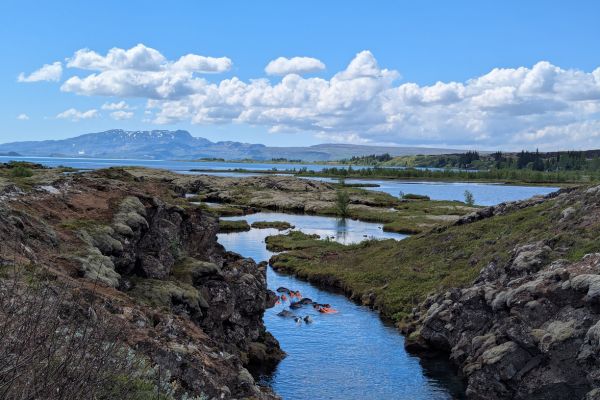
You don’t need diving experience to snorkel here; beginners are welcome, though anyone wanting to dive rather than snorkel needs a dry suit certification first. A full dry suit keeps you warm even though the water itself is close to freezing all year. This is a popular thing to do – and year-round – so reserve your place early.
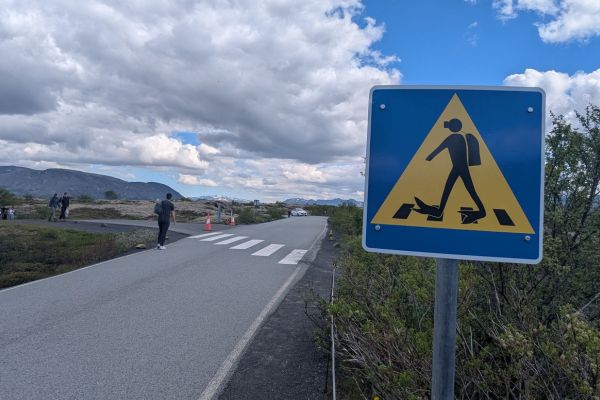
- How to get to Silfra: inside Þingvellir National Park, about 45 minutes to an hour from Reykjavik.
- How long to spend at Silfra: half a day, including gear fitting and a safety briefing.
- Cost of Silfra Snorkeling: Around US$145 per person – Book a Silfra snorkeling tour here.
2. Exploring the Lava Tunnel Tour at Raufarhólshellir
Raufarhólshellir, on the South Coast, is one of Iceland’s largest lava tunnels, and unlike a natural ice cave, you can visit this year-round. The tunnel is surprisingly spacious, up to 10 meters (33 feet) high and at least 10 meters (33 feet) wide, so claustrophobia isn’t really a concern. There’s more about Ice Caves in Iceland in my guide here.
Guides fit you with a helmet and a light before you head in, and in winter you’ll find ice formations mixed in with the twisted, colorful volcanic rock. This tour is always tagged as “likely to sell out”, so book it early.
- How to get to Raufarhólshellir: Route 1 from Reykjavik to the southeast, then Route 39; the tunnel is signposted.
- How long to spend at Raufarhólshellir: 1 to 3 hours, depending on the tour you choose.
- Entry to Raufarhólshellir: by guided tour only. Turning up without a booking sometimes works outside high season, but it isn’t something to plan around.
- Cost of Exploring Raufarhólshellir: About US$71 – Book a Raufarhólshellir lava tunnel tour here.
3. Glacier Lagoon Kayaking
Kayaking is the quiet way to experience a glacier lagoon, paddling among floating icebergs with the glacier wall somewhere behind you, a very different pace from the crampons-and-ice-axe version of a glacier visit, or the motored boat trips Jökulsárlón is the best-known spot for it. Iceland’s glaciers are amazing. Read my guide to them here.
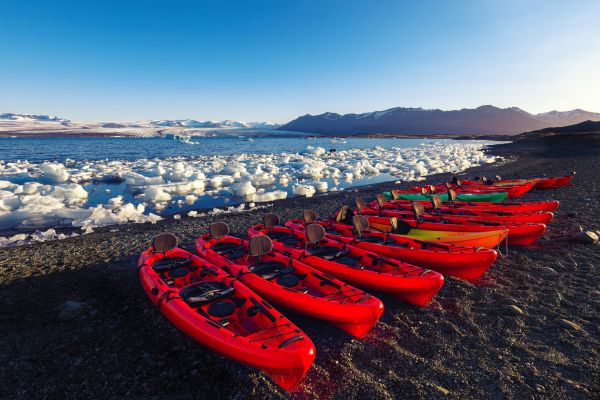
Heinaberg Lagoon, a 35-minute drive from Höfn, gives you the same experience with nobody else on the water, using easy, sit-on-top kayaks suited to complete beginners. You can check out the differences here. Book a Jökulsárlón kayaking tour here, or book the quieter Heinaberg Lagoon kayaking tour here instead.
- How to get to Jökulsárlón: directly off Route 1, in southeast Iceland.
- How long to spend kayaking at Jökulsárlón: around 90 minutes on the water.
- Cost of Glacier Lagoon Kayaking: From US$159.
4. Land on a Glacier, see Thingvellir National Park from above in this Helicopter Tour
A helicopter tour gives you the one angle on Iceland that no road trip can, straight down onto a waterfall, a lava field, or a volcano crater. The Fire and Ice tour, departing Reykjavik with two separate landings, gets you close enough to Glymur, one of Iceland’s tallest waterfalls, for genuine photos rather than a distant view from the road.
See where else you’ll see from above (and land on top of) in this once in a lifetime trip.
- How to get to the Fire and Ice Helicopter Tour: departs from Reykjavik; pickup details confirmed at booking.
- How long the Fire and Ice Helicopter Tour takes: 2 hours
- Cost of the Fire and Ice Helicopter Tour: Depends on Group size; check rates and Book the Fire and Ice Helicopter Tour here.
5. Visit an Active Volcano
Iceland has 32 active volcanic systems, compared to Hawaii’s 6, and nowhere makes that more obvious than the Reykjanes Peninsula, where eruptions near Grindavík have reshaped the landscape repeatedly in recent years. Many residents were displaced for well over two years, and the town’s own photo display shows what actually happened here, an informational stop rather than a novelty photo-op.
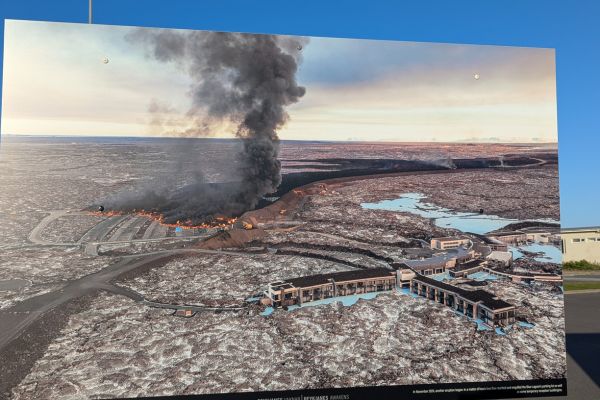
A few tours cover the volcanic activity properly, taking you hiking in the safe zone near the eruption site with a guide explaining exactly what you’re looking at.
Of course the peninsula is also famous for the Blue Lagoon, so you can combine a hike with a soak. Perfect.
- Book an erupting volcano hike and Reykjanes tour here,
- Book an active volcano hike combined with a Blue Lagoon soak here,
- or book a volcanic peninsula and Grindavík minibus tour here.
6. Soak in a Hot Spring or Lagoon
While Japan has the most documented hot springs in the world, with over 27,000 thermal sources and roughly 3,000 resort towns built around them, and its onsen culture runs deep, right down to strict bathing etiquette. Iceland doesn’t compete on raw numbers. What it offers instead is range: Iceland is generally ranked as the best overall hot spring destination in the world, ahead of Japan, specifically because you can get the full premium spa experience, a hike-to natural hot river, and a completely free, facility-free pool, all within a few hours of each other.
The bigger difference is what the hot water actually does here. In Japan, an onsen (like this amazing one we visited right on the edge of the Sea of Japan) is somewhere you travel to. In Iceland, geothermal water heats around 90% of homes, and the country runs the world’s largest district heating network, with more than 95% of all houses connected to it. Almost every town, however small, has its own municipal geothermal pool, so soaking isn’t a special trip; it’s closer to a town square. Read my guide to Geothermal Iceland and you’ll find out more.
Anyway. I’ve digressed with that background on why hot springs and lagoons are unique in Iceland, so let’s cut to the chase and discuss the big daddy of them all.
The Blue Lagoon
Iceland’s most famous lagoon, a striking milky-blue geothermal pool set in a black lava field near Grindavík, recognized by National Geographic as one of its 25 Wonders of the World. The water is a naturally occurring blend of roughly 70% seawater and 30% freshwater, rich in silica and algae, and it self-renews every 40 hours with nothing added. And it is glorious. You need to book your visit. It’s that popular.
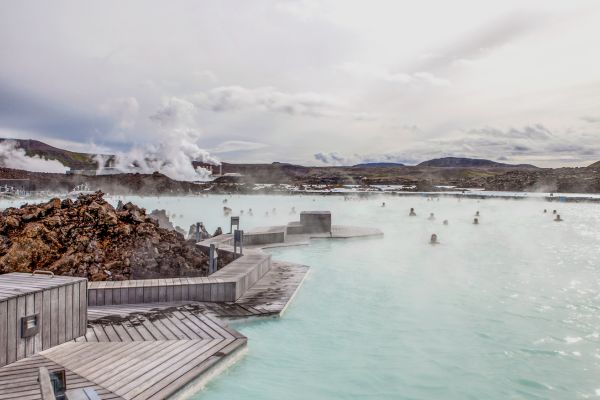
- How to get to the Blue Lagoon: on the Reykjanes Peninsula, near Grindavík, about 45 minutes from Reykjavik.
- How long to spend at the Blue Lagoon: 2 to 4 hours.
- Entry to the Blue Lagoon: Comfort admission from US$144, Premium admission from US$167. Book Comfort admission here, or book Premium admission here.
Reykjadalur Hot Spring River
Reykjadalur means “Steam Valley,” and it earns the name. A hot river runs down through a geothermal valley near Hveragerði, and once you’ve made the hike in, you can bathe in it for free.
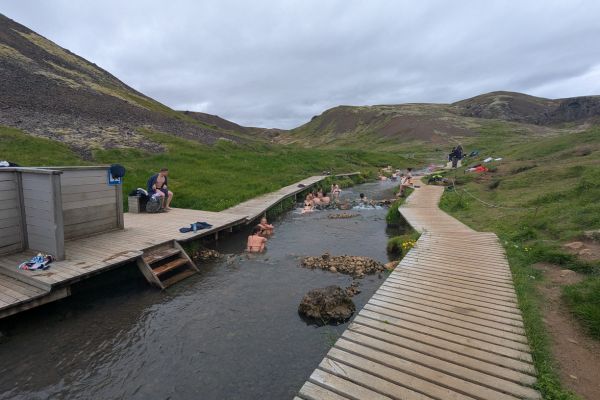
Walk upstream if the water feels too cool where you enter, downstream if it’s running too hot; the temperature shifts noticeably along the river’s length. Don’t want to hike? Ride an Icelandic horse up there instead.
- How to get to Reykjadalur: Route 1 southeast from Reykjavik to Hveragerði, about 40 minutes; the trail starts from the edge of town.
- How long to spend at Reykjadalur: around an hour to hike up, plus soaking time; the walk down is faster.
- Entry to Reykjadalur: free.
- Parking at Reykjadalur: paid at the main trailhead, or free if you park in Hveragerði itself and add a couple of kilometers to the walk.
For the other paid lagoons in the country, see our hot springs and lagoons guide, and for more free options like this one, see our guide to how to soak for free in Iceland.
7. Ride an Icelandic Horse
Call an Icelandic horse a pony and expect to be corrected. One of the things that sets the breed apart is the tölt, a smooth four-beat gait that almost no other breed has, plus the flying pace, a faster two-beat gait where all four hooves leave the ground at once. Add over 1,000 years of total isolation, protected by a law passed by Iceland’s parliament in 982 AD banning the import of any other horse breed, and a matching rule that any Icelandic horse that leaves the country can never legally come back, and you’ve got one of the purest, strangest horse breeds left in the world. My guide to Icelandic Horses is here.
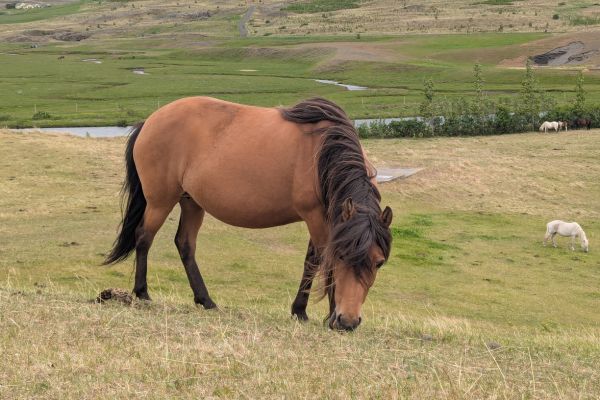
And riding an Icelandic horse, in Iceland. Yep, that’s pretty darned unique. Most tours are beginner-friendly almost everywhere in the country. Here are three places you can do it.
Icelandic Horse Riding from Reykjavik
The easiest starting point, with riding farms just outside the city and tours covering lava fields and coastal trails. Most tours include pickup from central Reykjavik. Book a Reykjavik horseback riding tour here.
Icelandic Horse Riding on a South Coast Black Sand Beach
Ride an Icelandic horse on one of Iceland’s glorious black sand beaches between Reykjavik and Vík, with glaciers and waterfalls in view the whole time. Tours depart from Hvolsvöllur. You can check availability and book a South Coast black sand beach riding tour here.
Riding Icelandic Horses in North Iceland
Around Akureyri and Lake Mývatn, flat valley terrain suits riding particularly well, and the region hosts some of Iceland’s most established horse farms. There’s more on it here
8. See Iceland’s Unique Basalt Columns
Iceland has the highest concentration and sheer volume of basalt columns anywhere in the world, spectacular formations scattered right across its volcanic landscape. For sheer density at a single site, though, the title still goes to Northern Ireland’s Giant’s Causeway, with around 40,000 interlocking, mostly hexagonal columns packed into one place. Iceland’s version is spread out instead, which arguably makes it more interesting: you keep finding it in places you didn’t expect.
Basalt columns are created when lava flows slowly cool and contract, forming geometric pillars. The rocks shrink as they cool and the stress fractures spread on the surface. It’s completely natural, and the most efficient pattern is a honeycomb of five- to seven-sided pillars. There’s a superb overview of them at Perlan (book your ticket here)
Hofsós, on the Skagafjörður coast, is one good example; the Staðarbjörg columns run right along the fjord’s edge next to the town’s swimming pool, free to visit and easy to combine with a soak. I’ve covered details on how to see them in my guide to Skagafjörður and Tröllaskagi.
See Basalt Columns at Stuðlagil Canyon
Stuðlagil, in East Iceland, is the columns worth planning a whole stop around. It’s a dramatic basalt canyon with a startlingly turquoise river running through it, and until a few years ago, almost nobody had seen it: a hydroelectric project lowered the water level of the Jökulsá á Dal river in 2009, and columns that had sat hidden beneath higher water for centuries were suddenly exposed. It’s a reminder of how central hydropower is to this country; more than 73% of Iceland’s electricity comes from hydroelectric sources, with the rest from geothermal, meaning the national grid runs on 100% renewable power.
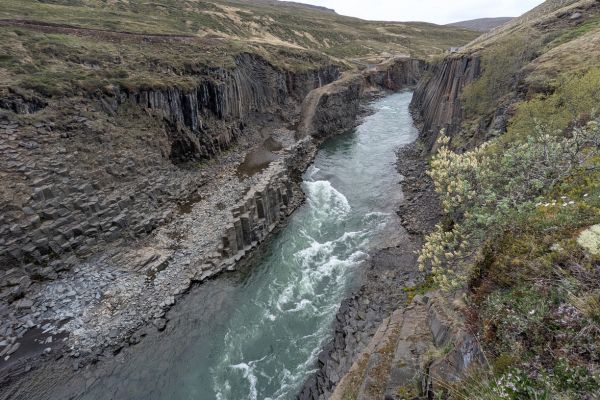
There are two ways to see it (this tour takes you right there), and it’s worth deciding which one you want before you set off, since combining both means a long drive between them. The east side requires a 2.5-kilometer (1.5-mile) hike from the parking area, but it allows you to get right down to the columns and the water. The west side has proper viewing platforms and a much easier approach; you can get down to the river, but the view of the columns at the river level is better on the east side.
- How to get to Stuðlagil Canyon: inland from Egilsstaðir, following signs for Jökuldalur.
- How long to spend at Stuðlagil Canyon: 1 to 2 hours, depending on which side you visit.
- Entry to Stuðlagil Canyon: free.
- Parking at Stuðlagil Canyon: 1,000 ISK, pay via the Parka app, at trailheads on both sides.
If you’d rather combine it with reindeer spotting on a guided day out, book this Stuðlagil Canyon and Reindeer Park tour here, departing from Seyðisfjörður.
You can also see basalt columns at the Gerðuberg Cliffs on the Snæfellsnes Peninsula (read more about that here), but there’s also a spectacular waterfall that you can see them at.
Svartifoss and the Basalt Columns
Svartifoss is famous for what surrounds it rather than its size, a modest 20-meter (65 feet) drop framed by a wall of dark hexagonal basalt columns that directly inspired the facade of Hallgrímskirkja church in Reykjavik.
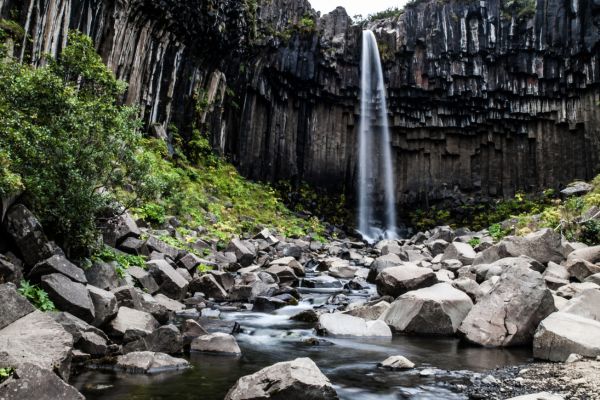
You can’t realistically get here and back to Reykjavik in a day, so you’ll need a few more. This 3 day trip gets you here and to a host of other amazing sites along the way.
- How to get to Svartifoss: inside Skaftafell, part of Vatnajökull National Park, on the South Coast route toward Jökulsárlón.
- How long to spend at Svartifoss: 1-1.5 hours round trip from the visitor center.
- Entry: free.
- Parking: 1,110 ISK, pay via the Parka app, 50% off if you’re visiting Jökulsárlón the same day.
9. Cross the Arctic Circle at Grímsey
The Arctic Circle isn’t fixed in place. It drifts north gradually as part of Earth’s long-term axial tilt cycle, and Grímsey Island, currently the only part of Iceland it actually crosses, is slowly moving off it as a result. If standing on the Arctic Circle inside Iceland is genuinely on your list, don’t wait too long: the line is expected to move north of Grímsey by 2047, after which you’d need to travel further north still to stand on it at all.
8 countries have land within the Arctic Circle – Canada, Greenland (Denmark), Iceland, Norway, Sweden, Finland, Russia, and the United States. We visited 3 of them within 10 seconds at the three-country cairn in Northern Finland. Sweden and Norway. Here’s how to do it there.
You’ll need to get to Dalvik to take the ferry to Grimsey Island, or you can take a flight from Akureyri; it takes about 30 minutes to fly the 61 miles. As well as its Arctic Circle fame, Grimsey is also one of Iceland’s best places to see puffins; see our guide to puffins in Iceland for more on that side of a visit. If you’re planning just a day trip, then it’s best to stay in Dalvik to reduce your travel time, or stay overnight at the fabulous Basar Guesthouse on Grimsey. It might just be the closest you get to sleeping in the Arctic Circle!
You’ll need to get to Dalvik to take the ferry to Grimsey Island, or you can take a flight from Akureyri; it takes about 30 minutes to fly the 61 miles.
- How to get to Grímsey: by ferry from Dalvík, or a short flight from Akureyri.
- How long to spend on Grímsey: most visitors treat it as a full day trip, given the ferry and flight schedules.
10. Play Golf Under the Midnight Sun
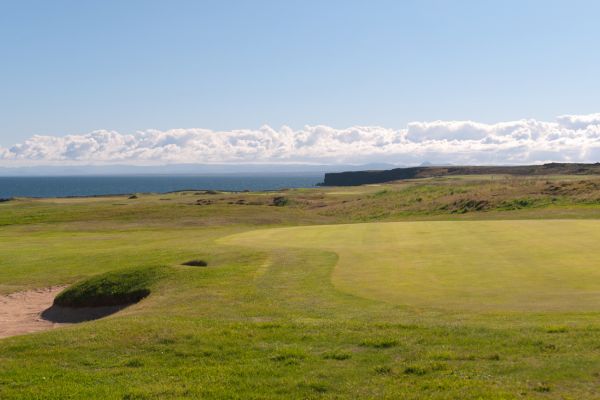
There are 65 golf courses in Iceland. It’s the highest number of per capita golf courses in the world. You’ll see at least one as you fly into Keflavik Airport. And between late May and early August, the sun barely dips below the horizon in Iceland, and golf courses across the country keep tee sheets open right through the night for exactly that reason. These five courses are worth knowing about.
Akureyri Golf Club (Jaðarsvöllur)
The world’s northernmost 18-hole golf course, and home to the Arctic Open, an international tournament held here since 1986. Regular tee times run through the night in June and July, with the latest slots around 03:00. Despite, however, what a lot of tourism copy claims: Akureyri isn’t actually above the Arctic Circle; it sits at roughly 65.7°N, while the true circle is closer to 66.5°N. If you want to stand on the Arctic Circle itself rather than just play golf near it, that’s Grímsey, covered above, not Akureyri.
- How to get to Akureyri Golf Club: in Akureyri, North Iceland; fly from Reykjavik in under an hour, or drive 4 to 5 hours.
- Green fee at Akureyri Golf Club: from 8,500 ISK.
Brautarholt Golf Course
This coastal 18-hole course about 30 minutes from Reykjavik has panoramic Atlantic views and late tee times available after 20:00 from June 1 to July 16. Book a twilight tee time around 22:30 for the last few holes under the midnight sun.
- Green fee at Brautarholt: 15,800 ISK (2026).
Keilir Golf Club
In Hafnarfjörður, close to Reykjavik and the airport, Keilir runs its front nine through dramatic lava fields and its back nine along more open, links-style coastline.
- Green fee at Keilir: 24,900 ISK (2026).
Geysir Golf Course
A 9-hole course right on the Golden Circle, directly opposite the Great Geysir hot spring area, and easily the cheapest round on this list.
- Green fee at Geysir: 2,500 ISK weekdays, 3,200 ISK weekends.
Westman Islands Golf Course
On Heimaey, fairways run through volcanic craters with the ocean on nearly every hole, and puffins are a common sight around the course in June and July, the same window as peak puffin season across Iceland.
- Green fee at Westman Islands Golf Course: 14,500 ISK (2026).
11. Visit a Unique Museum in Iceland
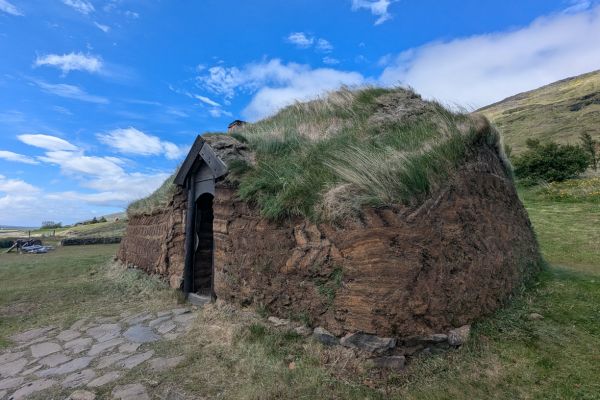
If you’d rather stay indoors, Iceland’s museums are both unique and somewhat strange: Highlights for me are the Icelandic Phallological Museum, the Museum of Sorcery & Witchcraft, and Eiríksstaðir, a reconstructed 10th-century longhouse built around the story of Erik the Red, the man who discovered Greenland, and whose son, Leif Erikson, reached North America before anyone else in Europe. See our full guide to uniquely Icelandic museums for all of them, sorted by history, animals, people, and culture.
12. Visit Iceland Indoors at Perlan
If Snaefellsnes is “Iceland in miniature” (you can see why here in my guide to the peninsula), then Perlan is “Iceland indoors”. It’s less a single museum than an entire nature center under one glass dome, and on a bad-weather day, it’s the single best stop in the capital for getting a real taste of the country without leaving the city. And it’s perfect if you have youngsters or oldsters with you who want to get on a glacier, inside a volcano, and outside for the Northern Lights, but lack the physical capabilities. Here’s what you can see at Perlan.
- Ice Cave and Glaciers Exhibition: a man-made ice cave built from real snow, alongside an interactive exhibition on Icelandic glaciers.
- Northern Lights Show: Áróra, an 8K planetarium film that guarantees the aurora overhead regardless of weather or season.
- Volcano Show: covers the Geldingadalir eruption at Fagradalsfjall, which began in March 2021.
- Látrabjarg Cliff: a large-scale, realistic model of Europe’s largest seabird cliff.
- Water in Icelandic Nature: an exhibition on the role water plays in Icelandic nature and daily life.
- Observation Deck: a 360-degree view over Reykjavik from on top of the building’s hot water tanks.
- Address of Perlan: Öskjuhlíð, 105 Reykjavik.
- Opening Hours of Perlan: daily, 09:00 to 21:00.
- How Long to Spend at Perlan: 2 hours or more.
- Entry to Perlan: tickets from US$58 per person. Book Perlan’s Wonders of Iceland tickets here.
13. Eat Fermented Shark in Iceland
Hákarl, aka fermented shark, is Iceland’s most talked-about food. And eating it definitely hits the adventurous. So much so that it comes in very small cubes. You can try it at the Bjarnarhöfn Shark Museum on the Snæfellsnes Peninsula, a family-run museum dedicated entirely to hákarl, how it’s made, why it’s made that way, and a guided tasting alongside a shot of Brennivín. On the other side of the country, the Hauganes Baccalá Factory tour with shark tasting takes you through the curing process before you taste it.
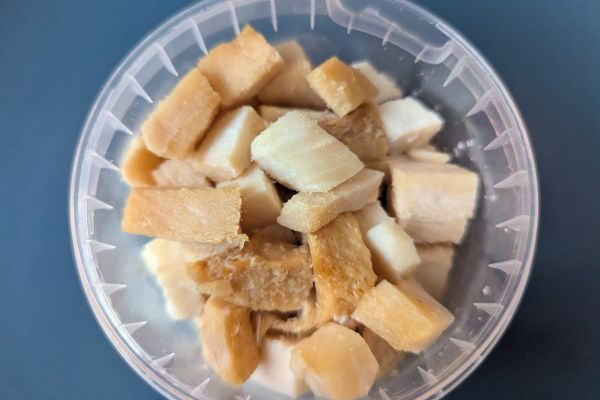
If you’d rather try it without a day trip, hákarl is sold frozen at Bónus and Krónan supermarkets, in the frozen section. Or you can try it alongside other Icelandic delicacies on the highest rated walking tour ever right here in Reykjavik.
FAQs on Unique Things to Do in Iceland
Got questions about the more unusual side of an Iceland trip? Here are quick answers to what we’re asked most.
What’s the most unique thing to do in Iceland?
There’s no single answer, but snorkeling Silfra, standing at the point where the Arctic Circle is about to move north of Grímsey, and playing golf at 02:00 under the midnight sun are the three that surprise people the most.
Is snorkeling Silfra safe for non-divers?
Yes. Snorkeling Silfra doesn’t require diving experience or certification; a dry suit keeps you warm, and guides handle the safety briefing. Diving, rather than snorkeling, is the version of this tour that needs a dry suit certification.
Are lava tunnel tours suitable for kids?
Generally yes, though it’s worth checking the specific tour’s minimum age, since the terrain underfoot is uneven and some sections require a bit of scrambling.
What’s a good unique experience for a short trip?
Silfra, the Blue Lagoon, or an active volcano tour all work well as a single half-day addition, since each departs from or near Reykjavik.
Are these unique experiences expensive?
It varies hugely. Reykjadalur costs nothing beyond parking, while a helicopter tour or premium lagoon admission sits at the other end of the scale entirely.
Do you need to book unique experiences far in advance?
For anything with limited daily capacity, Silfra, ice caves, and helicopter tours, book as early as you can, particularly in peak summer. Free spots like Reykjadalur don’t need booking at all.
Why will Grímsey no longer be above the Arctic Circle?
The Arctic Circle drifts north gradually as part of Earth’s long-term axial tilt cycle. Grímsey currently sits above the Arctic Cricle, but the line is expected to move north of the island by 2047.
Can you play golf at midnight in Iceland?
Yes. Between late May and early August, the sun barely sets, and courses including Akureyri, Brautarholt, and Keilir keep tee times open through the night.
What’s the difference between Iceland’s paid lagoons and free hot springs?
Paid lagoons like the Blue Lagoon come with changing rooms, showers, and staff; free natural spots like Reykjadalur don’t; you’re trading facilities for a lower price and a proper hike.
ICELAND TRAVEL RESOURCES
AIRPORT TRANSFERS
24/7 pickup & drop off. Trusted, local English speaking drivers. Prebook & prepay online with cards.
Book a Transfer
HOTELS AND APARTMENTS
See choices here
Rooms with a view? Budget rooms? Need a washing machine? The best choice of hotels & apartments.
TOURS & ATTRACTIONS
Most excursion choices, small group tours, skip-line tickets, free cancellation and top local guides.
Top options here.
CAR RENTAL OPTIONS
Choose cars here
Best choice of vehicles, automatics, large or small cars, child seats. Book early for more options.
Final Words on 13 Unique Things to Do in Iceland
You find out pretty quickly when you’re planning a trip to Iceland that it’s a unique country. Its isolation geographically has made it so. And many of the unique things that you can see and do in Iceland are driven by that isolation and the geography that’s made the island what it is today. Whether you try one of them, or all of them, do give them a go.
ASocialNomad is a participant in the Amazon Services LLC Associates Program, an affiliate advertising program designed to provide a means for sites to earn advertising fees by advertising and linking to amazon.com, amazon.co.uk, and amazon.ca. Amazon and the Amazon logo are trademarks of Amazon.com, Inc. or its affiliates. As an Amazon Associate, I earn from qualifying purchases.

