

Kazakhstan is the ninth-largest country in the world, so going from A to B (which is famously what we’re known for here at ASocialNomad) can take a heck of a lot longer than you might first think. There are, however, flights, long-distance buses (shudder), and overnight trains. For shorter trips you’ll find marshrutkas, taxis and ride-hailing apps, private transfers, and rental cars. It’s all just a little bit different from your experience at home though. Timetables aren’t necessarily logical. Outside of Almaty, English isn’t a given (this is a good place to brush up on at least reading the Cyrillic alphabet; then you at least know which stop you’ve just driven past. Here’s my guide on how to get around Kazakhstan, transport options, booking details and the whole shebang.
THIS POST MAY CONTAIN COMPENSATED AND AFFILIATE LINKS MORE INFORMATION IN OUR DISCLAIMER
For covering serious distances, like Almaty to Astana, say, or out to Shymkent and Turkestan, then flying or taking an overnight train always beats a road trip, although I have some suggestions if you do go by road. Long-distance buses and marshrutkas go between places like Shymkent and Turkestan and are the default budget option. Within cities, taxis and ride-hailing apps like Yandex Go and inDrive as well as local buses work really well. Almaty also has, of course, the magnificent metro system (worth a post in its own right). Then if you’re looking for airport trips, private transfers (or Yandex’s again) work well when you want a fixed price and a guaranteed pickup, and a rental car makes sense if you want the freedom to do day trips like Charyn Canyon or Kolsai and Kaindy Lakes in your own timeframe.
Entering Kazakhstan
Kazakhstan is landlocked, so the only ferry option is a potential Caspian Sea ferry, but I’m pretty sure that’s no longer running. We took a boat from Baku, Azerbaijan to Turkmenistan a few years back and it was a fabulous story to dine out on for years, but it doesn’t fit into this post. So anyways, to get into Kazakhstan, you’ve got a choice between flying in or crossing overland. Most visitors fly into Almaty or Astana, but if you’re coming from a neighboring country, particularly Uzbekistan, Kyrgyzstan or China, crossing by land is a fabulous option, and having overlanded between all three of them, as well as using the airport in Almaty, I’d always opt for overland.
Arriving in Kazakhstan by Plane
Almaty International Airport and Astana International Airport handle the bulk of international arrivals, with Almaty the more likely entry point if you’re focused on the southeast of the country, although there are 25 airports in Kazakhstan that have an international designation (who knew? I had to look it up!) Shymkent also has some international connectivity if you’re coming from Central Asia specifically. If you’re looking at going to and from the airport in Almaty, then read my guide to Almaty Airport to the City.
Arriving in Kazakhstan Overland
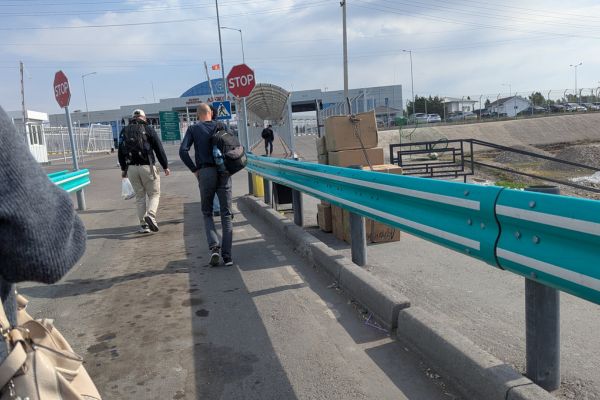
If you’re coming from Kyrgyzstan, the Bishkek to Almaty crossing is well-trodden (although now bookable online if that suits you) and covered in full in our guide to getting from Bishkek to Almaty. Coming from China, the border crossing near Urumqi is the other realistic overland option, and it’s how we entered Kazakhstan most recently ourselves. Our guide to getting from Shymkent to Tashkent covers the southern overland route between Kazakhstan and Uzbekistan.
Types of Transport in Kazakhstan
Here’s how each type of transport works in Kazakhstan, and the best way to book it, even if that means old-school buying tickets from a counter or a driver. See what transport we used in our 10 day Kazakhstan itinerary here.
Getting Around Kazakhstan by Plane: Domestic Flights
Air Astana is the country’s main carrier, along with its budget subsidiary FlyArystan and the smaller SCAT Airlines, covering routes between Almaty, Astana, Shymkent, and the smaller regional cities.
Domestic flights typically cost somewhere between US$50 and $120 one-way depending on the route and how far ahead you book. For a longer distance, like Almaty to Astana, flying is a realistic and, for some people (not us), a better alternative to a long overnight train (see our Almaty to Astana route guide for the full comparison). Book directly through the airline or through a search platform like 12Go Asia, for all your options. Book ahead where you can, especially in summer and around holidays, when prices rise and seats sell out.
Getting Around Kazakhstan by Train
Kazakhstan’s rail network is extensive, and it was the way we looked forward to traveling around the country the most. The overnight sleeper trains in particular are worth using in your travels. I’ve covered trains in full elsewhere, so rather than repeat it all here: read my complete guide to trains in Kazakhstan for how the network works and how to book, and our guide to overnight trains in Kazakhstan for whether the sleeper experience is actually worth it (and the short answer? Heck yes).
Getting Around Kazakhstan by Bus
Long-distance buses cover some of the routes between cities that don’t have a direct flight or train link. This is the cheapest way to get around if you’re not in a hurry, as in some cases, you’ll need to make stops in hub towns along the way. However, you should expect modern, reasonably comfortable coaches on the main intercity routes. All inter-city buses (and marshrutkas) in Kazakhstan depart from what’s lovingly called a “central” bus station. Which is never central, always on the outskirts, requiring transport to and from your hotel/hostel. Often it’s not even really what you’d define as a bus station either, sometimes just what looks like a parking lot with signage. So don’t be expecting a huge amount of facilities.
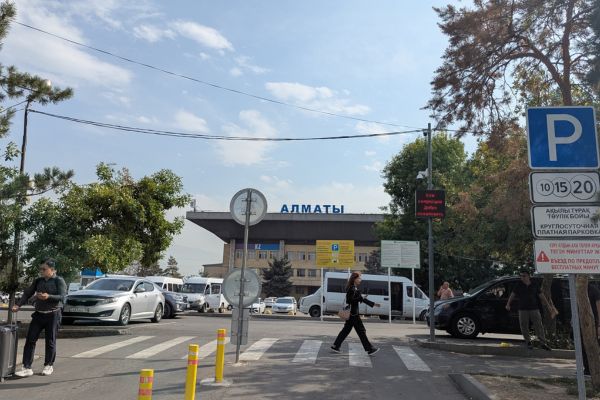
Tickets for buses are 99% of the time, even now, bought in person at the station rather than online, and departures run on a published timetable rather than the leave-when-full system marshrutkas use. For buses that you can book online, the first place to check is 12goAsia, and then the website of the bus stations themselves, which are usually just in the Kazakh language and sometimes Russian, but rarely English.
Sayran Bus Station in Almaty: International (China and Kyrgyzstan) Buses and long-distance domestic buses
Sayakhat: (No website): the building has been knocked down now, but you can still get shared taxis to Saty (for Kolsai Lake and Kaindy Lake – more details here)
Astana: has two bus stations Astana-Saparjai-1 and Saparzhai-2, inside the Nurly Zhol train station.
Marshrutkas in Kazakhstan
Marshrutkas, the local name for shared minibuses, are the primary transport mode for shorter routes and anywhere buses don’t reach. It’s the same across all of Central Asia. They usually leave when full rather than on a fixed schedule, so there’s always some waiting around involved. If you do arrive and find one about to leave, then you’re going to get the worst seat on the bus.
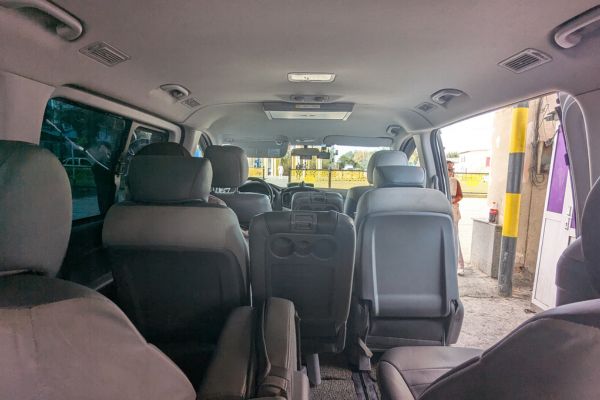
We were the first on a marshrutka going from Shymkent to Turkestan, and ended up waiting an hour for it to set off. On the return journey, we were last on and still waited 20 minutes before we left. Sometimes it’s not logical
They’re rarely comfortable, whatever seat you’re in, and you can expect a full minibus, extremely limited legroom, and your bag on your lap if there’s no room to stow it. They’re cash-only for foreigners (as you can’t use the Kaspi app – read my guide to Kazak currency and payments to understand more), cheap, and take you places nowhere else (apart from a private transfer) does, which makes them worth putting up with. We used them ourselves heading from Shymkent to Turkestan, but you’ll find them everywhere, including the international crossing from Almaty to Bishkek, where marshrutkas wait on the other side of the border to take arriving passengers onward, if their bus gets stuck in customs.
Using Tours to Travel Around Kazakhstan
Some of the best places to visit near (and in the ninth largest country in the world that word near is doing a lot of work) Almaty are difficult to reach without your own transport or a tour, and that’s worth factoring into your plans. Charyn Canyon, Kolsai and Kaindy Lakes, and Big Almaty Lake are all multiple hours-long drives out of the city.
A guided tour solves that makes it a whole lot easier, with entrance fees and a guide included. See each of my guides above for the specifics, or search GetYourGuide’s Kazakhstan tours to compare options.
Taxis and Ride-Hailing in Kazakhstan
Yandex Go and InDrive are the two ride-hailing apps that are in use in Kazakhstan. They’re both similar to how Uber works elsewhere. Open the app, set a pickup and drop-off, get an upfront fare, and pay. InDrive is a little different: you negotiate for your rate (online, before the driver even turns up), and so it’s a little more involved, but both are reliable, and neither requires a Kazakhstani SIM card or bank card to use. You do, however, need mobile data, which makes a local SIM or eSIM worth sorting out early (see my guide to the best SIM card for Kazakhstan for the full breakdown of eSIM versus a local SIM).
Yandex is also available as car pooling and private scheduled “City to City”. It works really well, as you can see in my guide on going from Shymkent to Tashkent and also from Shymkent to Turkestan.
Street taxis are of course still there, especially outside the ride-hailing apps’ coverage, but expect to negotiate a price upfront if there’s no meter running, and don’t be surprised when a driver quotes tourists a higher rate than locals. Stick to Yandex or Indrive where you can; it’s much easier and a lot less hassle (and I say this as a one-time taxi driver myself!)
Private Transfers in Kazakhstan
A private transfer is worth booking for airport transfers, especially on an early flight or with a lot of luggage, or for point-to-point trips where you want a fixed price and a guaranteed pickup rather than negotiating on the day. Although Yandex is also good for this.
Daytrip covers routes across Kazakhstan with the option to add sightseeing stops along the way, which is useful if you’re covering a longer route like Almaty to Astana anyway. See my guide to Almaty Airport to the City and Almaty to Almaty Airport for the arrival and departure details specifically.
Rental Cars in Kazakhstan
Self-driving is realistic for a lot of what you can see close to Almaty; Charyn Canyon, Kolsai and Kaindy Lakes, and Big Almaty Lake are all manageable in a rental car, especially if you’re in a family or group. You’ll need your home driving license plus an International Driving Permit, your passport, and a credit card for the deposit; most companies set a minimum renter age around 21–23. Expect to pay roughly US$30–60 a day for a small car. If you’re planning on driving outside Almaty, then you MUST make sure that the rental company allows it (as not all do).
Main roads between cities are generally paved and in reasonable shape, but rural roads can be rough, unlit, and occasionally unpaved, so night driving outside the cities isn’t something we’d recommend. Rent a car here to compare options.
Transport in Almaty
Almaty has a real subway system, aka the Almaty metro. It’s small, but covers a large distance and is clean. It’s a single line, with planned extensions, but on the basis that the construction of the initial line took 23 years, don’t expect it any time soon. And it’s worth a trip in its own right, as many of the metro stations are works of art. I wrote about them here.
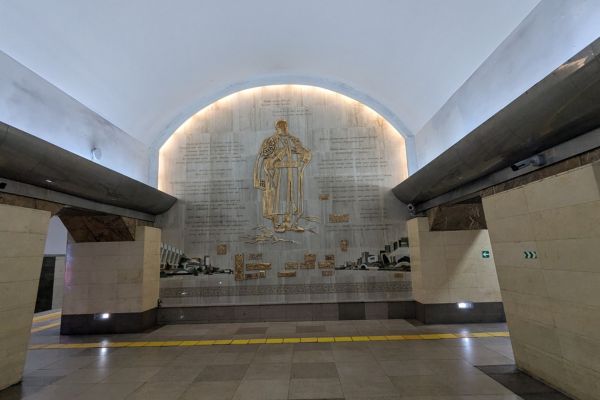
Single trips cost 120 KZT, paid with a smart token (it’s just a bit of plastic), or a contactless credit or debit card. There are local buses for where the metro doesn’t reach, and Almaty is very walkable in the center. For more on what to see, do, stay and eat, see our Almaty Travel Guide.
Booking Transport in Kazakhstan
12Go Asia covers train and some bus bookings across Kazakhstan and is worth checking before you travel, especially for routes you want locked in ahead of time.
Daytrip is better for private point-to-point transfers with the flexibility to add sightseeing stops along the way. Marshrutkas can’t be pre-booked at all; you just turn up and go, so build considerable flexibility into your plans around them.
FAQs for Transportation in Kazakhstan
A few quick answers to the questions we hear most about getting around Kazakhstan.
What’s the cheapest form of transport in Kazakhstan?
Marshrutkas and long-distance buses are the cheapest way to cover ground. Much cheaper than flying or a private transfer, but you’re losing out on comfort and speed to save money.
Is Yandex Go available in Kazakhstan?
Yes, and it’s the ride-hailing app most people end up using here. It works without a local SIM card or bank card, just mobile data, and gives you an upfront fare before you commit.
Is Uber available in Kazakhstan?
No, Uber doesn’t operate in Kazakhstan. Yandex Go and inDrive do the job here and work just as well.
Do I need a car to get around Kazakhstan?
Not for the cities – taxis, ride-hailing apps, and the Almaty metro cover that easily. A rental car makes more sense if you want to do day trips like Charyn Canyon or Kolsai and Kaindy Lakes independently, on your own schedule.
Are overnight trains worth it in Kazakhstan?
Heck yes. For a long route like Almaty to Astana, an overnight train saves you a hotel night and gets you there rested, and it’s one of our favorite ways to cover ground in Kazakhstan. See our guide to overnight trains in Kazakhstan for how to book one.
PRACTICAL TRAVEL TIPS
- 🛡️ Get Travel Insurance: Civitatis includes medical expenses, repatriation, theft, luggage delays. No deductibles or upfront payments. Get a quote here.
- 🛏️ Sea view? Laundry? Private bath? Book a Room.
- 🔌 Be ready for the plug, socket & power situation.
- 📶 Get online EASILY & cheaply – One eSim for the world. Data never expires
Final Words on Transportation in Kazakhstan
Kazakhstan’s size means you’ll likely use several different types of transport over the course of a trip, and that’s part of what makes it interesting rather than something to dread. Fly or take the overnight train for longer trips, use marshrutkas and buses in between, and let Yandex Go and inDrive get you around cities.
ASocialNomad is a participant in the Amazon Services LLC Associates Program, an affiliate advertising program designed to provide a means for sites to earn advertising fees by advertising and linking to amazon.com, amazon.co.uk, and amazon.ca. Amazon and the Amazon logo are trademarks of Amazon.com, Inc. or its affiliates. As an Amazon Associate, I earn from qualifying purchases.

